

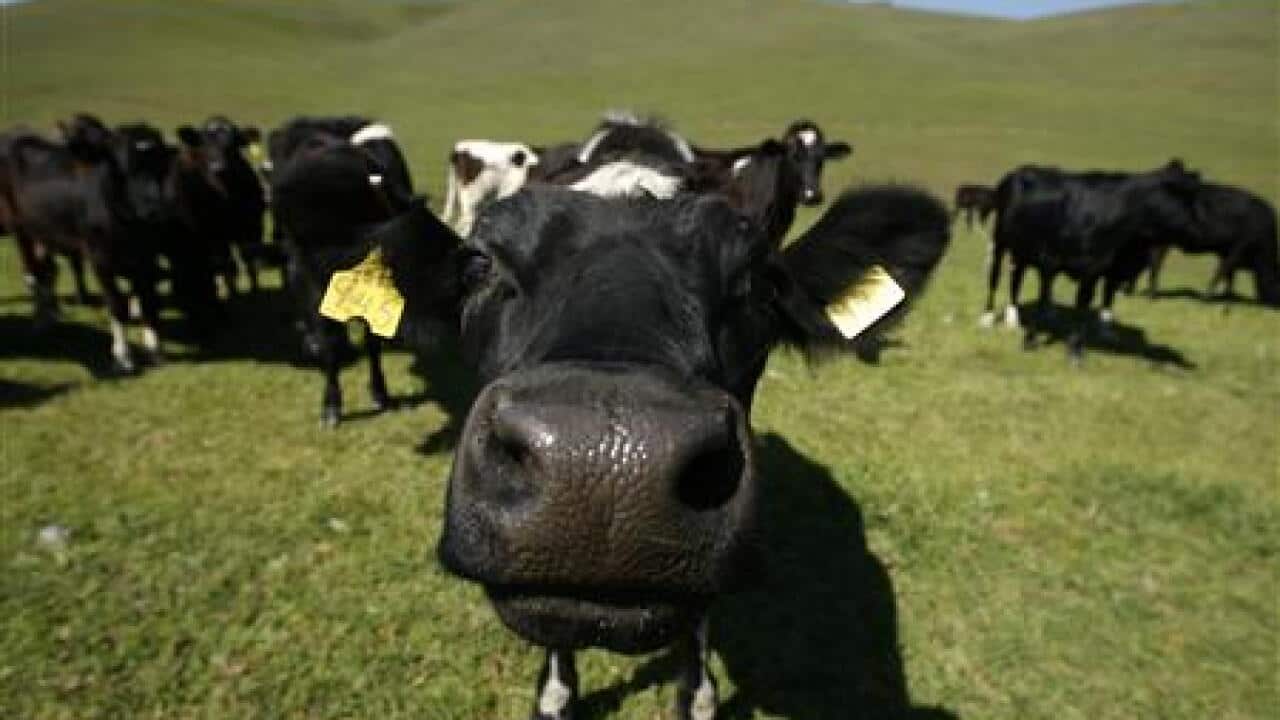
Australia's huge cattle herd in the north might be burping less planet-warming methane emissions than thought, a study released on Friday shows, suggesting the cows are more climate friendly.
Cattle, sheep and other ruminant livestock produce large amounts of methane, which is about 20 times more powerful at trapping heat than carbon dioxide. One cow can produce about 1.5 tonnes of greenhouse gas emissions a year.
Half of New Zealand's greenhouse gas emissions come from agriculture and most of that is from sheep and cattle. Most of the cattle and sheep emissions are, contrary to popular belief, from burping.
Scientists at Australia's state-backed research body the CSIRO say the amount of methane from cattle fed on tropical grasses in northern Australia could be nearly a third less than thought.
The findings were based on results from specially built respiration chambers using Brahman cattle fed tropical grasses and challenge old calculations used by the government to estimate emissions from cows.
News that makes sense
Your trusted source for staying up-to-date with the world around you. Get free daily news updates and analysis, straight to your inbox.
"The industry is more methane friendly than was previously thought based on the new measurements," research leader Ed Charmley told Reuters by telephone during a field day near Townsville in northern Queensland state.
About half of Australia's approximately 27 million head of cattle are in the north, with the northern cattle herd accounting for about 4.5 percent of the nation's total greenhouse gas emissions.
A 30 percent reduction in emissions would total about 7.4 million tonnes, or roughly the amount of a large coal-fired power station.
The study could help the government refine the way it calculates the nation's annual greenhouse gas accounts, with agriculture responsible for 15 percent of the nation's total greenhouse gas emissions.
Scientists say changing the diets of sheep and cattle can reduce emissions from agriculture. And such steps could also earn carbon credits in a new emissions trading program being debated in the Australian parliament.
(Reporting by David Fogarty; Editing by Nick Macfie)