


With an election usually comes hope, anticipation and the prospect of change. But they are not the prevailing emotions of many Cambodians ahead of Sunday’s vote.
“They upset, they disappointed, they feel threatened ... frustrated, they do not enjoy the election,” a local man who did not wish to be named told SBS News.
This young political activist, who until recently, was a regular dissenting voice of the government is now too afraid to publicly criticise current leader Hun Sen and his regime. And that’s the feeling among many.
“It’s very difficult to answer your question there because I feel little bit afraid,” another Cambodian said.
Quiet streets
News that makes sense
Your trusted source for staying up-to-date with the world around you. Get free daily news updates and analysis, straight to your inbox.
A day before the election, the streets of capital Phnom Penh are almost empty as many return to their home provinces to vote. It is a stark contrast to the last general election five years ago when neighbourhoods were alive with mass rallies, protests and promises of change.
The Cambodian National Rescue Party came close to victory, winning 44 per cent of the vote and nearly topping the government’s 49 per cent
“In 2013, the political campaign is more lively, in 2018, is not as exciting as previous elections,” one local woman said.
But last year, the party was dissolved, it’s Kom Sokha leader jailed, and members banned from politics. Civil servants and human rights groups say ever since it has become increasingly difficult for them to do their jobs.
Soeng Sen Karuna, head of the investigations unit at one of Cambodia's oldest human rights organisations ADHOC, told SBS News his staff are finding it increasingly different to their jobs.
"We have never experienced such hardship before … Lately has been the hardest time."
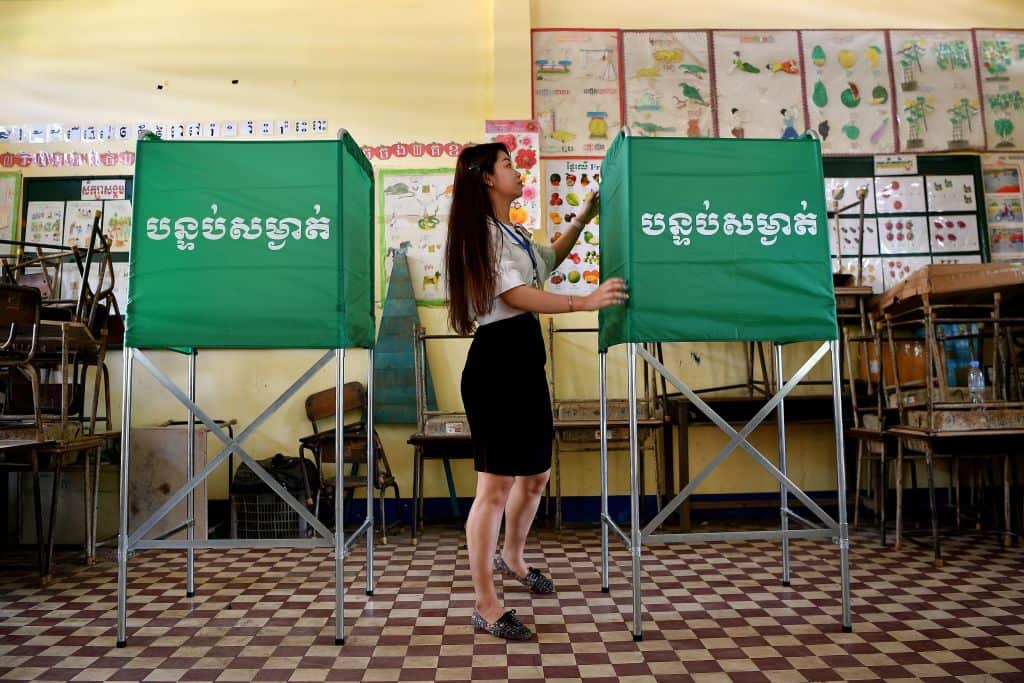
Mr Karuna says in the past, locals usually volunteer to observe elections but this year is different.
"No-one has the courage to answer calls for observers to do electoral monitoring work at polling stations because they are afraid that will get involved with government accusations."
Australia’s role in Cambodia
Not all Cambodian’s all have lost faith in democracy.
“Going to vote makes me happy, we are the citizens, we are happy to go vote,” one woman said.
And plenty of people are set to back Hun Sen’s pledge of continued peace and stability.
But today’s Cambodia is a far cry from the vision the world had for a post-Khmer Rouge country, where global empathy for the country’s plight saw the United Nations launch an unprecedented effort to help reinvent democracy.
Former Foreign Minister Gareth Evans said Australia played a key role in the UN operation.
"In 1993, an election was held, peace was established and it was a very big achievement for Australia and the international community."
"We also hoped that we would bring genuine democracy, we also hoped that we would bring genuine respect for human rights."
Australia Army Lieutenant General John Sanderson commanded the UN mission, and his legacy is honoured at a park in central Phnom Penh. The sculpture is crafted from rifles handed in during peace effort, serving as a reminder to never to repeat the sins of the past.
But 25 years on, Mr Evans, who was instrumental in the re-establishment of Cambodia’s democracy, says the country is backsliding into a dictatorship and Australia’s response has been lukewarm.
"Partly because the present government invested so much in the refugee dumping program to try and get people out of Nauru and Manus and get Cambodia to accept."
Australia will not send diplomats to monitor this weekend’s election, according to an ABC report.
But a government spokesperson told SBS News:
"We will continue to raise our concerns at the highest levels of the Cambodia government to allow its citizens to exercise their democratic rights."