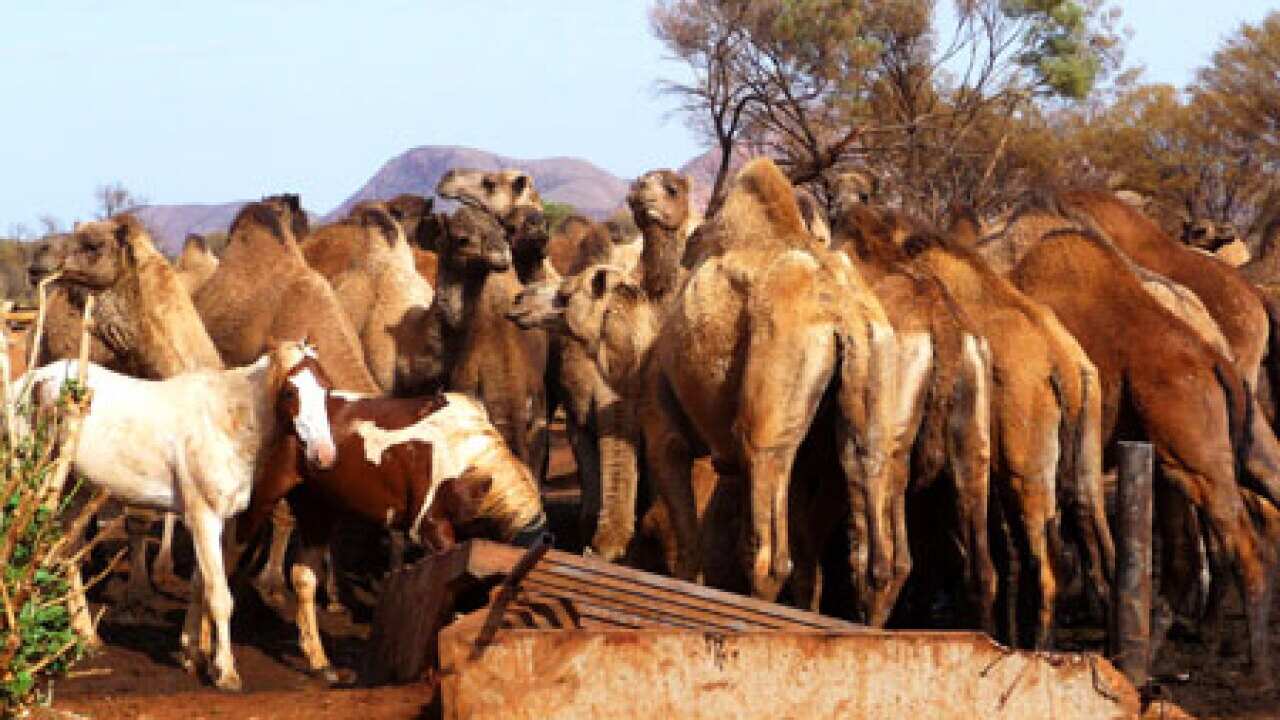
Indigenous Australians whose lands are over-populated with camels could harvest the animals for financial gain, an industry expert says.
Camel hides, hump fat, flesh and even teeth are prized in a variety of countries around the world, says Paddy McHugh - who has 30 years' experience in the industry.
Camel blood can also be sold to universities in Australia for research purposes, he says.
However, there is controversy over the logistics of catching Australia's surplus camels.
Some groups call for a mass cull, but Mr McHugh says that would be a waste.
News that makes sense
Your trusted source for staying up-to-date with the world around you. Get free daily news updates and analysis, straight to your inbox.
"Here we are with all this conflict in Alice Springs at the moment .. and if there was ever an industry that suited the Aboriginal people, it's probably the camel industry," Paddy McHugh says.
"Sixty per cent plus of all feral camels in Australia are on Aboriginal lands," he says.
"Why can't we do something with them?", he asks.
Supporters of a cull argue that it's not viable to round camels up live due to the remoteness of those parts of Australia and the vast numbers of the animals.
"We know it's viable," says Mr Mc Hugh.
"We have pulled camels out of vast desert country now and sold them overseas, we've run them through abbatoirs, we know it's viable," he says.
A foreign buyer even approached him offering to pay $7 per camel tooth - for a consignment of thousands of teeth, Mr McHugh says.
Watch this report on YouTube:
Watch the full interview with Paddy McHugh, a 30 year veteran of the camel industry







