in brief
- The 19 October vote will ask whether the province should hold a referendum to leave the country.
- Polls suggest the vote wont go ahead, but echoes of Brexit are apparent.
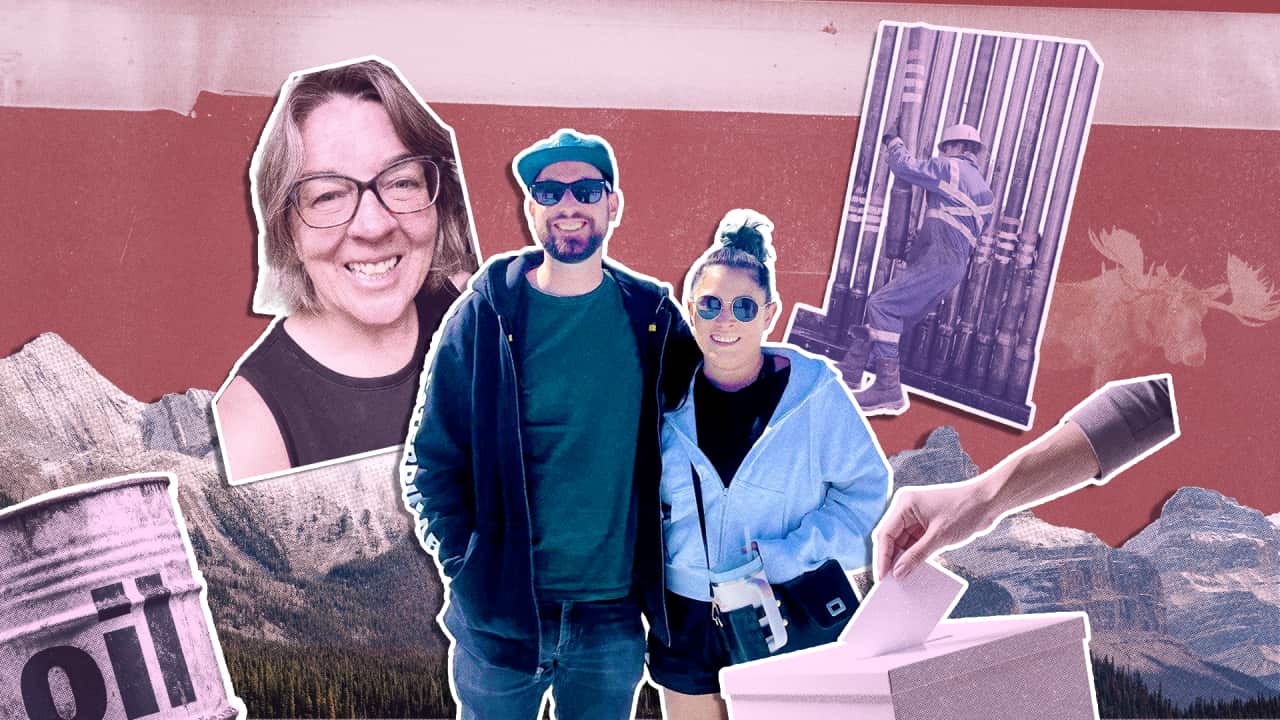
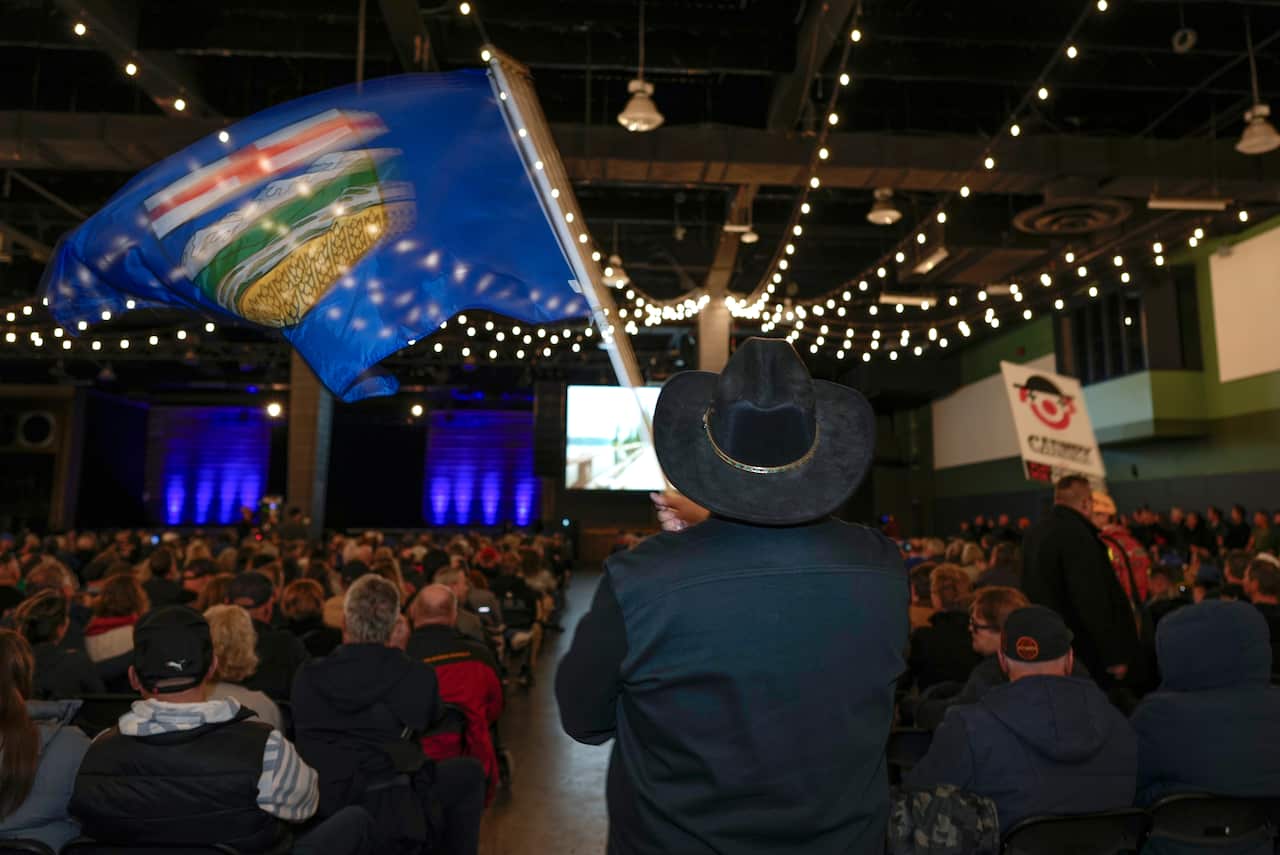
On his drilling rig, Mathew Anthes sees Alberta's fierce provincial pride up close: hard hats marked with Alberta flags, not Canadian ones.
"Everyone's proud to be Albertan, but they wouldn't necessarily say that they're proud to be Canadian," Anthes said.
Born and raised in Canberra, Anthes lived for much of his life in Melbourne beofre moving to the little town of Rocky Mountain House in the province of Alberta, Canada, in 2018.
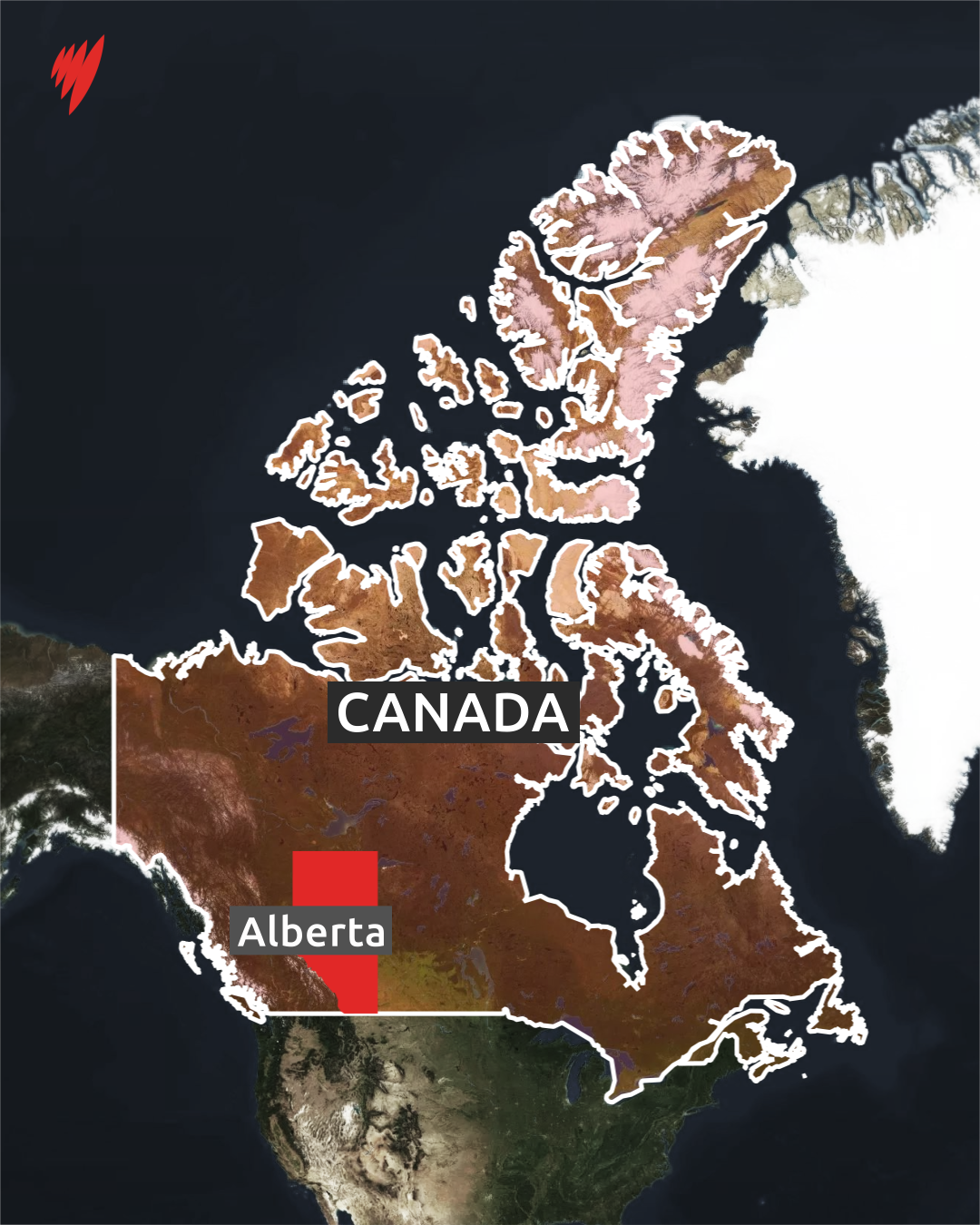
Like many people in the region, he works in the oil and gas industry. The province contains virtually all of Canada's oil reserves, something that those who wish to separate from the rest of the country believe will ensure Alberta's prosperity as an independent territory.
Indeed, the concept of 'Albexit' has its roots in the 1973 oil crisis, when locals clashed with the federal government over the wealth the fossil fuel provides the rest of the country.
News that makes sense
Your trusted source for staying up-to-date with the world around you. Get free daily news updates and analysis, straight to your inbox.
In 2026, with another oil crisis sweeping the globe, Albertans will finally be going to the polls in October to vote on a motion that could begin the process of separation from the rest of the country.
The question being put to voters is: "Should Alberta remain a province of Canada or should the Government of Alberta commence the legal process required under the Canadian Constitution to hold a binding provincial referendum on whether or not Alberta should separate from Canada?".
The vote, like all ballot measures in Canada, is not mandatory, as it is in Australia. However, polling by the not-for-profit Angus Reid Institute suggests that up to two-thirds of the 5 million Albertans would vote against having a vote to leave Canada.
Albexit
The referendum is being likened to the ballot measure that saw the United Kingdom remove itself from the European Union.
That is not least of all because the premier of Alberta, Danielle Smith, is the moderate leader of a right-wing United Conservative Party (UCP), who many believe has only called the vote to appease more hardline members of her party — much like the British Conservative prime minister, David Cameron.
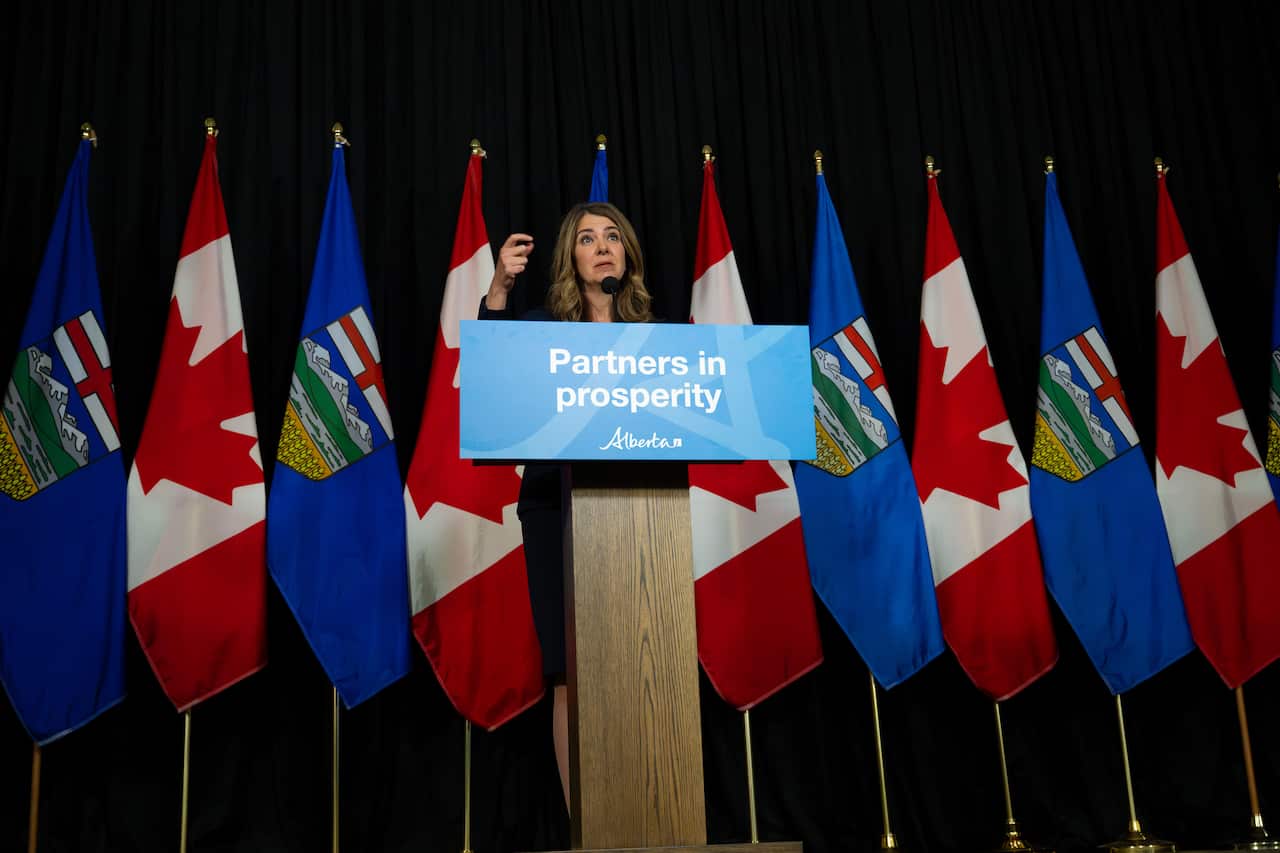
Smith, in a televised address on Thursday, said that she had to respect the will of the 700,000 Albertans who signed two petitions calling for a vote on the issue.
"Kicking the can down the road only prolongs a very emotional and important debate, and muzzling the voices of hundreds of thousands of Albertans wanting to be heard is unjustifiable in a free and democratic society," she said.
"It’s time to have a vote, understand the will of Albertans on this subject, and move on."
Canadian Prime Minister Mark Carney was head of the Bank of England at the time of the Brexit vote. He has warned that the Alberta referendum is a "dangerous bluff" that could well backfire.
"I saw first-hand what happened in the United Kingdom when the view was 'Vote for this, it will be a soft exit and then we’ll negotiate, etc'," he said.
"They're still, 10 years later, trying to undo what people didn’t think they were voting for."
Anthes, 39, said that it would be wrong to write the "separatists" off.
"I think it's a little bit of a pipe dream," he said. "But a few weekends ago, there must have been two to three hundred people walking up and down the main street with Alberta flags, trying to get you to sign up... it was a big turnout.
"Every weekend there's a van sitting there with guys out the front that you can go and talk to, and they want you to sign up, and a lot of lot of my friends and colleagues, they're all for it."
As a Canadian-Australian dual national, Anthes would have a vote in the referendum, and while he said he will likely vote against leaving, it's mainly because he thinks it simply won't happen.
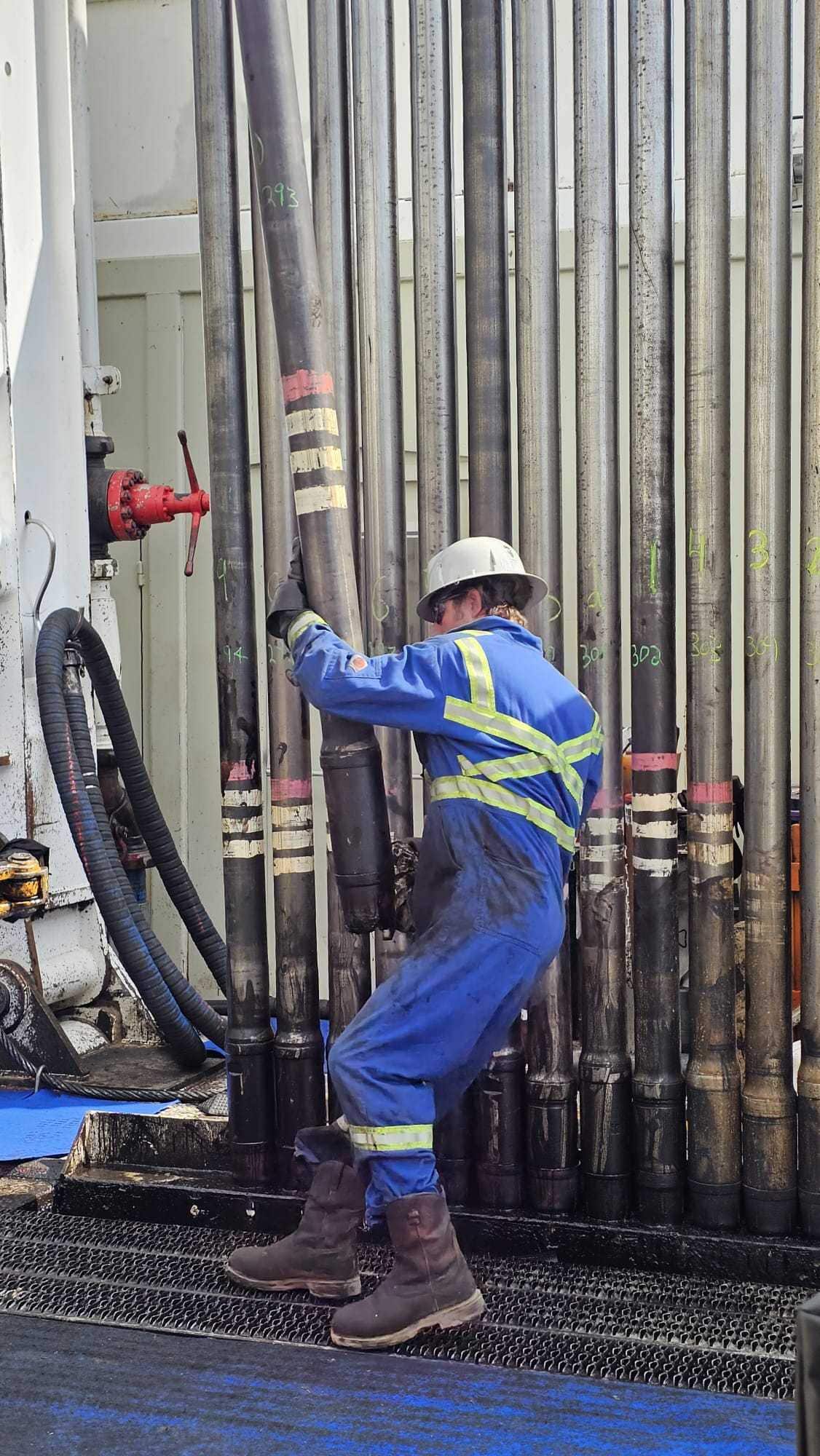
Still, the sense that the population aren't being listened to is a familiar populist refrain that Anthes said is unlikely to be dispelled from the region even after a negative vote.
"I feel that the same kind of mindset of the more rural aspect of the Trump ideology is here," he said of the region known as the 'Texas of Canada'.
"It's a very conservative place. It's quite religious. Where I am, your churches are packed every weekend. I wouldn't [say] it's backward, but it kind of sometimes feels like that."
Making life more complicated
Anthes' belief that the concept has not been well thought out is shared by Trent Brookhouse, another Australian who grew up in Cairns, Queensland, and now lives Alberta's biggest city, Calgary.
"If Alberta left Canada, it doesn't mean it automatically keeps all the [Canadian] trade agreements. It doesn't mean it's going to be stronger. Canada is stronger together."
Brookhouse works a fly-in, fly-out schedule in the mining industry in the province of Ontario. He's concerned the potential departure could make life very complicated for him.
"I get taxed as if I live in Ontario but when I do my taxes at tax time, they have to recalculate it, because I live in Alberta," he said. "If you add in the independence to all of that, what does that mean for me?"
Having become a Canadian citizen in March, he is also not sure whether an independent Alberta would honour his dual nationality.
"That could make me have to question where I live," he said.
The 51st state?
Last year, Smith met with Donald Trump at his Mar-a-Lago home in Florida. The United States president has repeatedly floated the idea of Canada becoming the country's 51st state, and her visit prompted accusations that she was siding with the US as the neighbouring countries entered a trade war.
"What I asked the president was, do you want to buy more oil and gas from Canada? And he said yes," Smith told reporters about her trip to the US.
When Carney took over from Justin Trudeau, one of his first moves was to ink a major energy deal with Smith to expand the West Coast oil pipeline that could eventually funnel 1.2 million barrels per day from Alberta to the Port of Vancouver for export to Asia.
Ex-environment minister Steven Guilbeault, who stepped down on Wednesday following the deal, accusing the country of climate "backsliding," has said the pipeline emboldened the separatists.
"What we are doing right now is we are rewarding bad behaviour," he said, rejecting the argument that the deal had to be made to dampen the movement.
Mitch Sylvestre, head of the leading independence group the Alberta Prosperity Project, has said that he doesn't think his movement is seeking to join the US.
However, American broadcaster NBC News has reported that the group has been meeting with US State Department officials to discuss the logistics of Alberta joining the country, including adopting its currency and border controls.
"For those of us who are very much in support of Alberta becoming a sovereign country, it's heartening to us at each of the three meetings that we've had with the US administration to be informed that the entire US administration is supportive of Alberta becoming a sovereign country," Dennis Modry, a co-founder of the Alberta Prosperity Project, has said.
The comments were made after US Treasury Secretary Scott Bessent said that the province was a "natural partner for the US" as "they have great resources."
A vocal minority?
For Australian Sally Lockhart, who moved to Canada in 1997 and has lived for the past 13 years in Calgary, the entire separatist movement feels "suspicious."
Lockhart, who grew up in country Victoria, believes most Albertans want the province to remain a part of Canada, and argues support for separation comes largely from those in regional areas who she says don't appreciate how good they have it.
"Alberta is one of the wealthiest provinces in Canada, and these oil and gas guys, I don't think they realise what they're getting themselves into," she says.
"I actually don't think they would be well off at all, because I think the US would just bleed it dry, and they become another Midwest state that just happens to have a happens to have some oil."
The recent survey from the Angus Reid Institute, which polled 800 Albertan adults, found 60 per cent of respondents backed the status quo while 35 per cent wanted to begin the process for a referendum on separation.
Support for remaining in Canada was strongest among urban voters, according to the poll, with Calgary and Edmonton — Alberta's two largest cities — backing federalism at 58 per cent and 73 per cent, respectively.
Rural Alberta was evenly split, with 48 per cent supporting and 48 per cent opposing the proposal, according to the poll, which did not explore respondents' reasons for wanting to stay in or leave Canada.
Lockhart also notes that negotiation for separation would have to be made with First Nations' groups who, unlike in Australia, signed treaties with the British Crown over the use of their land.
"Alberta has been around for a lot shorter period of time than what these treaties have been in place for," she says.
"There's a lot of red tape to go through that's going to take years and years and years, and this separation talk is creating instability because people don't want to invest here if they don't know what's going to happen."
Indeed, the lack of consultation with First Nations' groups in the province was what initially blocked the citizens' initiative petitions for a separatist vote.
While the two petitions gained well above the number of signatures needed to trigger introduction to the provincial legislative assembly, they were blocked by a judge who said they would override treaty agreements.
Smith, in announcing the vote, rejected the judge's argument, but her plan does not appear to have placated the separatists.
The Angus Reid Polling found 51 per cent of respondents found the question confusing and 56 per cent believe Smith has handled the separation issue poorly — including nearly a third of her own voters.
Separatist leaders expressed outrage over the wording of the ballot question and the "referendum to have a referendum," according to a report from Canadian media outlet Global News.
Still, as reported, the separatists will take the opportunity they have been granted and run with it.
For Australians like Brookhouse, they will be anticipating the vote with some trepidation.
"No one took Brexit seriously," he says. "Right now people in Alberta — mainly people in Calgary — don't take it seriously, but it's happened before around the world."
For the latest from SBS News, download our app and subscribe to our newsletter.







