in brief
- The RBA has modelled three short-term economic outlooks based on the duration and impact of war in the Middle East.
- One prominent economist says the RBA's current policy "raises the risks of a recession for no reason".
The Reserve Bank of Australia (RBA) sees three potential short-term economic futures for the nation: a baseline scenario and two substantially worse outcomes, with unemployment possibly rising to rates not seen since the early years of the COVID-19 pandemic.
RBA Governor Michele Bullock noted in her speech yesterday that the Tuesday's 0.25 percentage point rate rise will have "no impact" on war-related inflationary pressures that are yet to be fully felt in Australia, and projected inflation will peak in June.
However, Bullock warned in her speech on Tuesday that government spending to assist households would make it harder for the RBA to keep a handle on inflation.
Treasurer Jim Chalmers, in responding to those comments on ABC News Breakfast on Wednesday, said that the budget will be "responsible" and will not include extra stimulus.
"The issue is the budget won't be pumping a lot of extra stimulus into the economy. In fact, overall, we'll be winding back spending in the budget," he said.
News that makes sense
Your trusted source for staying up-to-date with the world around you. Get free daily news updates and analysis, straight to your inbox.
"There won't be a heap of extra stimulus spending in the budget. We are managing the budget in the most responsible way we can."
These are the scenarios that predict major economic consequences in Australia.
The RBA's baseline forecast
Rising fuel prices, driven by the Iranian blockade of the Strait of Hormuz and damage to oil infrastructure in Gulf nations, are the primary driver of inflation, the RBA says.
This is both through "first order" effects, like an increase in petrol and diesel prices, and "second order" effects, such as the resulting increase in production costs for food and other items.
The RBA's baseline forecast assumes that the worst of the disruptions to global energy supply are resolved by the end of the year.
It also assumes that Brent crude — the primary global benchmark for oil prices — peaks at an average of around US$100 per barrel by July.
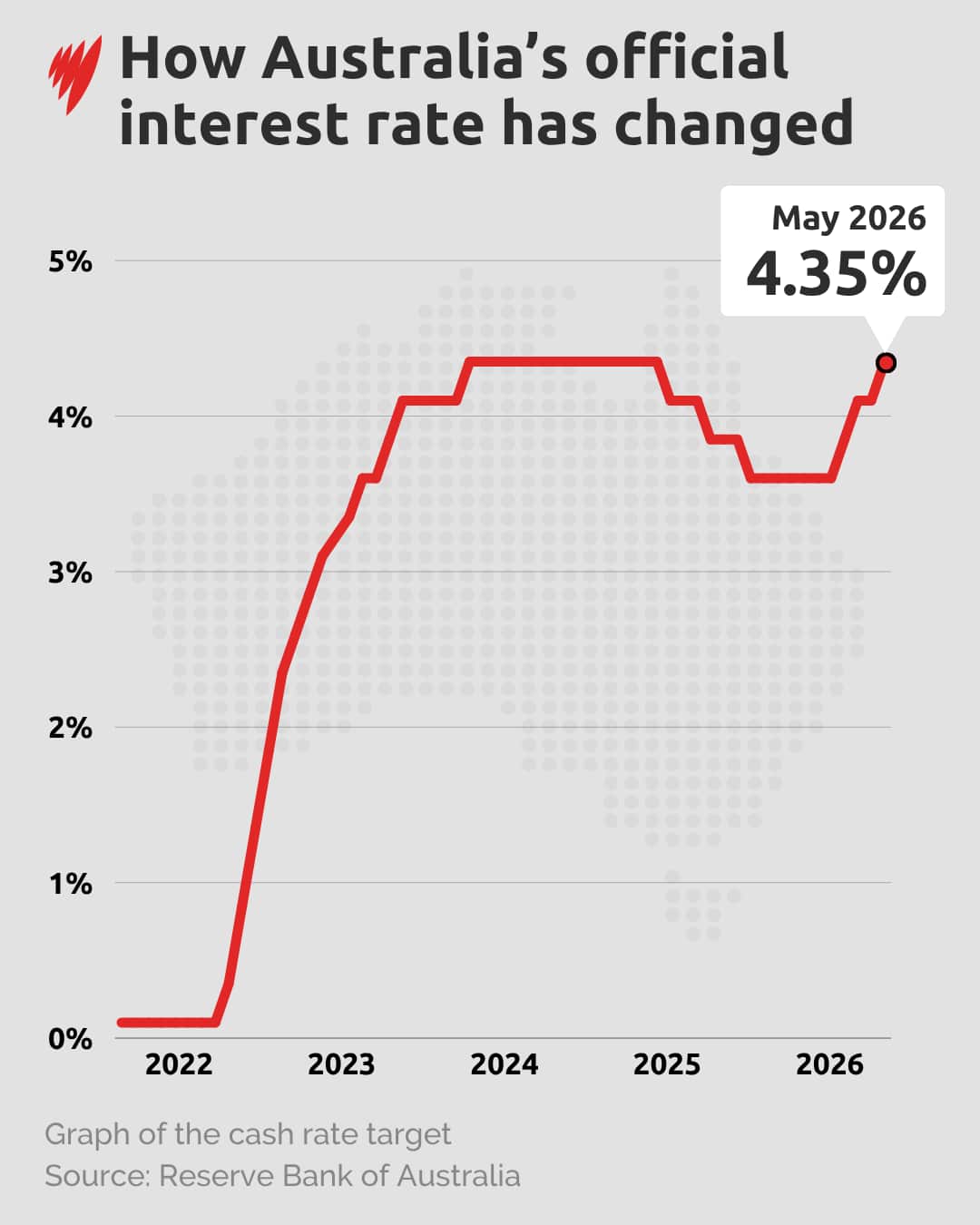
If that's the case, headline inflation will peak at 4.8 per cent in the June quarter and will remain above 4 per cent by the end of the year.
Markets are already pricing in that inflation at this level would prompt the RBA to increase interest rates by 60 basis points to 4.7 per cent.
Commonwealth Bank and ANZ Bank analysts have since predicted that the RBA would leave the cash rate at 4.35 per cent, while NAB and Westpac are forecasting another increase in June.
Deputy Liberal leader Jane Hume has said the source of inflationary pressures is a weak economy that, through poor management, has been made more susceptible to shocks like the war in the Middle East.
"Australia is one of the few major advanced economies that's actually increasing rates right now," Hume told ABC's AM program.
"In fact, we have the highest cash rate of any major advanced economy, and that's because we have the highest inflation in the developed world."
The RBA also noted in its May Monetary Policy Statement that "inflation was already too high before the Middle East conflict" — something that Hume attributed to excessive government spending.
Adverse scenarios
The RBA's adverse scenario forecasting suggests headline inflation could peak above 5.2 per cent in June and that the unemployment rate could hit 5.1 per cent by the end of 2028.
Australia's unemployment rate has not risen above 5 per cent since October 2021 — although that was substantially less than its 10-year peak at around 7.4 per cent in July 2020.
In these scenarios, the Middle East conflict is protracted and further damage is done to energy infrastructure. The Strait of Hormuz remains closed, and shipping flows resume in the first quarter of 2027, but do not return to pre-conflict levels until the end of 2028.
If this were to happen, they suggest that Brent oil prices could peak at around US$145 per barrel by July and drop to US$90-95 over the next 18 months.
The difference between the RBA's two adverse scenarios is how far consumer spending declines. In a protracted conflict, both global and economic demand could recede as people respond to higher prices.
If consumer spending does decrease substantially, gross domestic product (GDP) could drop to as little as 0.5 per cent by the end of the year.
"It's possible that we have given too much weight to the inflationary risks, and we haven't given enough weight to the possibility that consumption will pull back quite a lot," Bullock said of the RBA's assessment.
"At the moment, we think in our baseline scenario that that's not going to happen. Growth is going to be anaemic, but the economy will still grow — but there's always that risk."
Worst-case scenario
Bullock was asked on Tuesday what the outlook might be if oil supplies did not keep pace with demand during a prolonged conflict scenario and if fuel rationing were to occur.
"It could get very bad," she said. "But if that were to happen, I think we're in a very different world, and we'd be looking very differently at the way things are panning out in the economy."
Localised fuel shortages have been seen in some parts of the country, particularly NSW, but the government has said this is due to panic buying rather than a genuine lack of supply.
Since the conflict began, the government has increased the number of days of reserve fuel by 10.
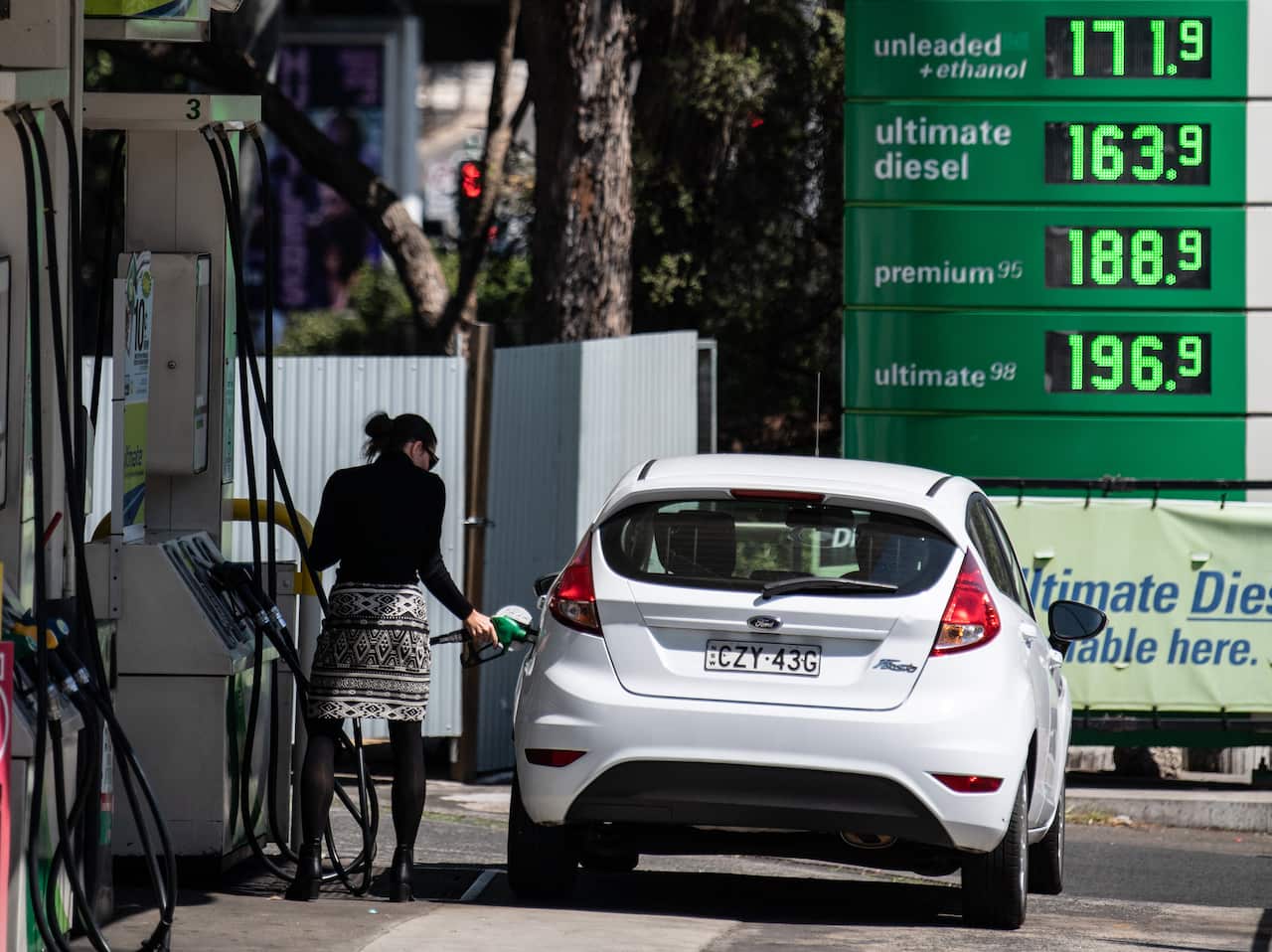
On Wednesday, Prime Minister Anthony Albanese also announced that a $10 billion near-term fuel and fertiliser security package would be included in next week's budget.
The RBA governor suggested that the bank would be taking very different measures should the fuel crisis escalate to the point of rationing, but added that the RBA doesn't yet expect that to happen.
However, its May statement notes that Australia "could" face such an outcome and that the result would be even higher costs and higher unemployment.
"The size of the effects of any fuel shortages on the economy are uncertain and depend on a range of factors," the document states.
Criticism of the RBA's decision to raise rates followed from economists and not-for-profit groups that say it could add more economic pressure on Australians', something the governor herself acknowledged.
According to Australia Institute chief economist Greg Jericho, the RBA's move "raises the risks of a recession for no reason".
"Inflation is not being driven by anything other than the Iran war," he told SBS News.
"We're talking about a supply shock, and in a supply shock, what should happen is the government should assist households who are being hurt by something that has nothing to do with them."
His comments chime with statements made by the Australian Council of Social Services (ACOSS), which has called on the government to "urgently" lift welfare payments and target assistance to those in need during next week's federal budget.
"People on low incomes are already under pressure from rising prices, and that pressure is only going to worsen in the months ahead," ACOSS CEO Cassandra Goldie said. "'The RBA and governments must work together to contain inflation while keeping unemployment low and supporting people without paid work."
For the latest from SBS News, download our app and subscribe to our newsletter.







