
Sunny Australia has a high rate of melanoma, but has a lower rate for the number of years lost to cancer than most nations, a new online cancer atlas suggests.
Cancer Council Australia joined the American Cancer Society (ACS) in Melbourne today for the launch of a new online Cancer Atlas.
The online map compares cancer statistics to population data from the 1960s.
Speaking at the Melbourne launch, ACS' Dr John Seffrin said the project was a means for anyone, not just researchers and academics, to easily look through global comparisons of cancer statistics.
The easily-accessible information could help decision makers to access relevant information about ways to address the issue, he said.
John R Seffrin, head of American Cancer Society, talks about the importance of collaboration between governments, NGOs and private enterprise.
"The most important message that we have today that we've never been able to give before, over the last century, is that we know basically the things that need to happen to bring cancer under control," Dr Seffrin said.
Addressing the challenges would require collaboration between NGOs, government and private sectors, he said.
The NGOs were particularly important, since they could move quickly without regulations governments must deal with, Dr Seffrin said.
Obesity is growing and poses greater risks for cancer rates across the globe, including Australia.
While Australia was good at tobacco control, the nation’s ability to deal with obesity was lagging, Cancer Council Australia CEO, Professor Ian Olver said.
“Unchecked, obesity will ultimately surpass tobacco as the major cancer killer in Australia,” Professor Olver said.
Australia - higher risk of cancer, better survival rates
Australia has a lower rate for years lost to cancer, compared to every 100,000 people, according 2008 data.
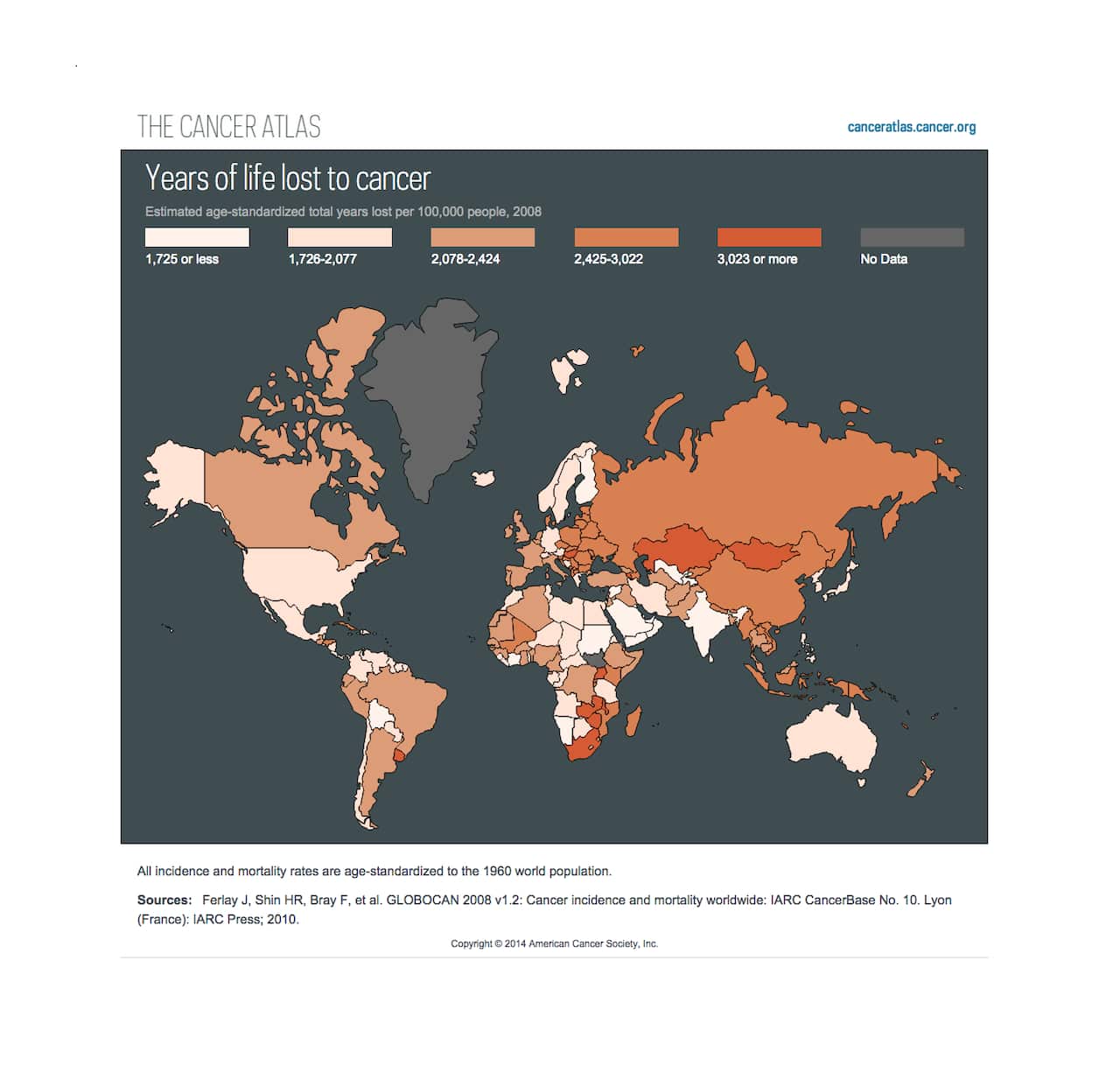
Map: Years of life lost to cancer, compared to 1960 standardised population figures. Pic: American Cancer Society.
The cumulative risk of cancer in Australia by age 75 is high (2012 cancer data).
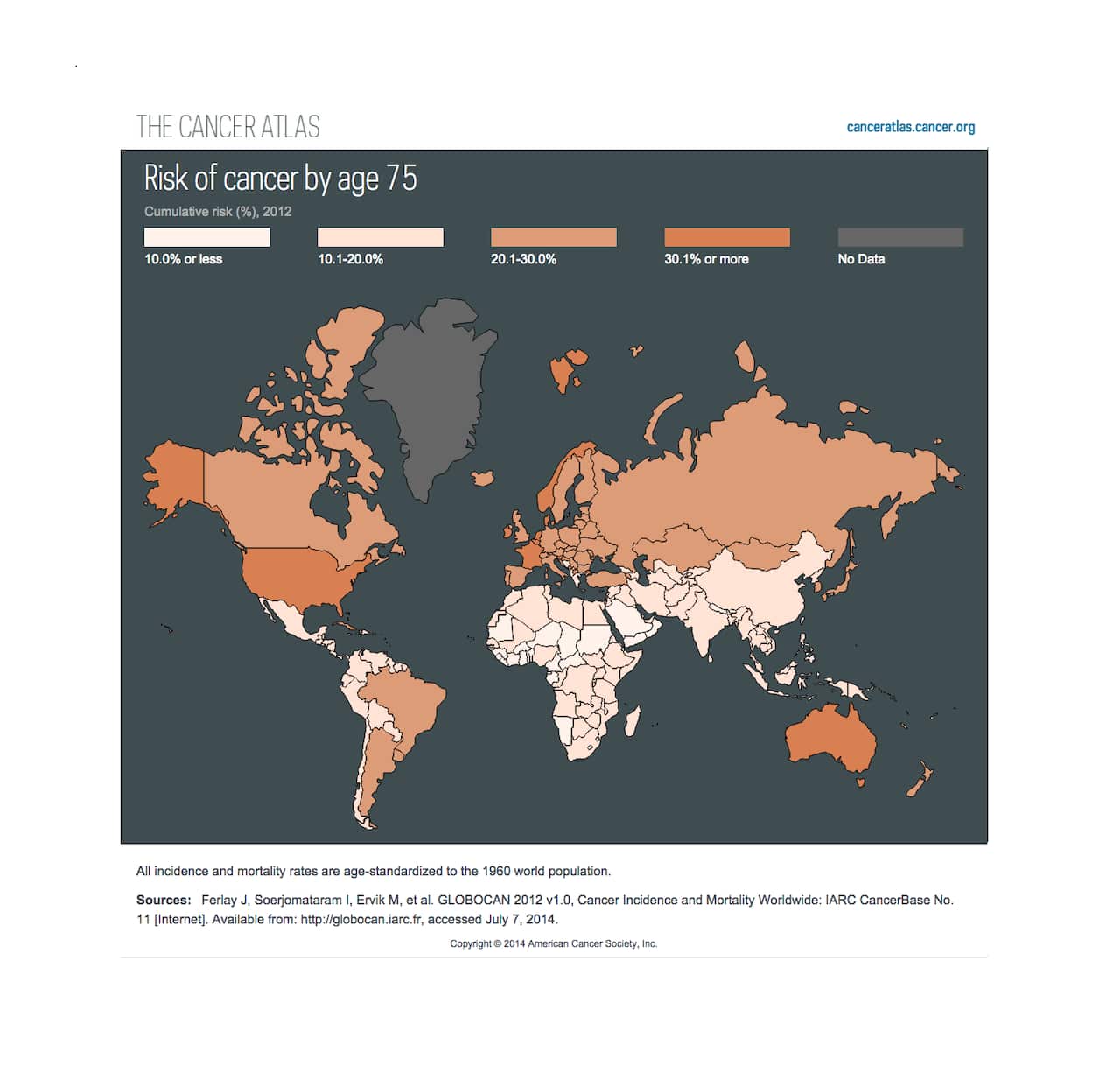
Map: Risk of cancer by age 75, darker areas are higher risk, compared to 1960s population data. Pic: American Cancer Society
The rates of melanoma in Australia are the highest in the world. However, women and men are most likely to suffer with breast and prostate cancer (2012 cancer data).
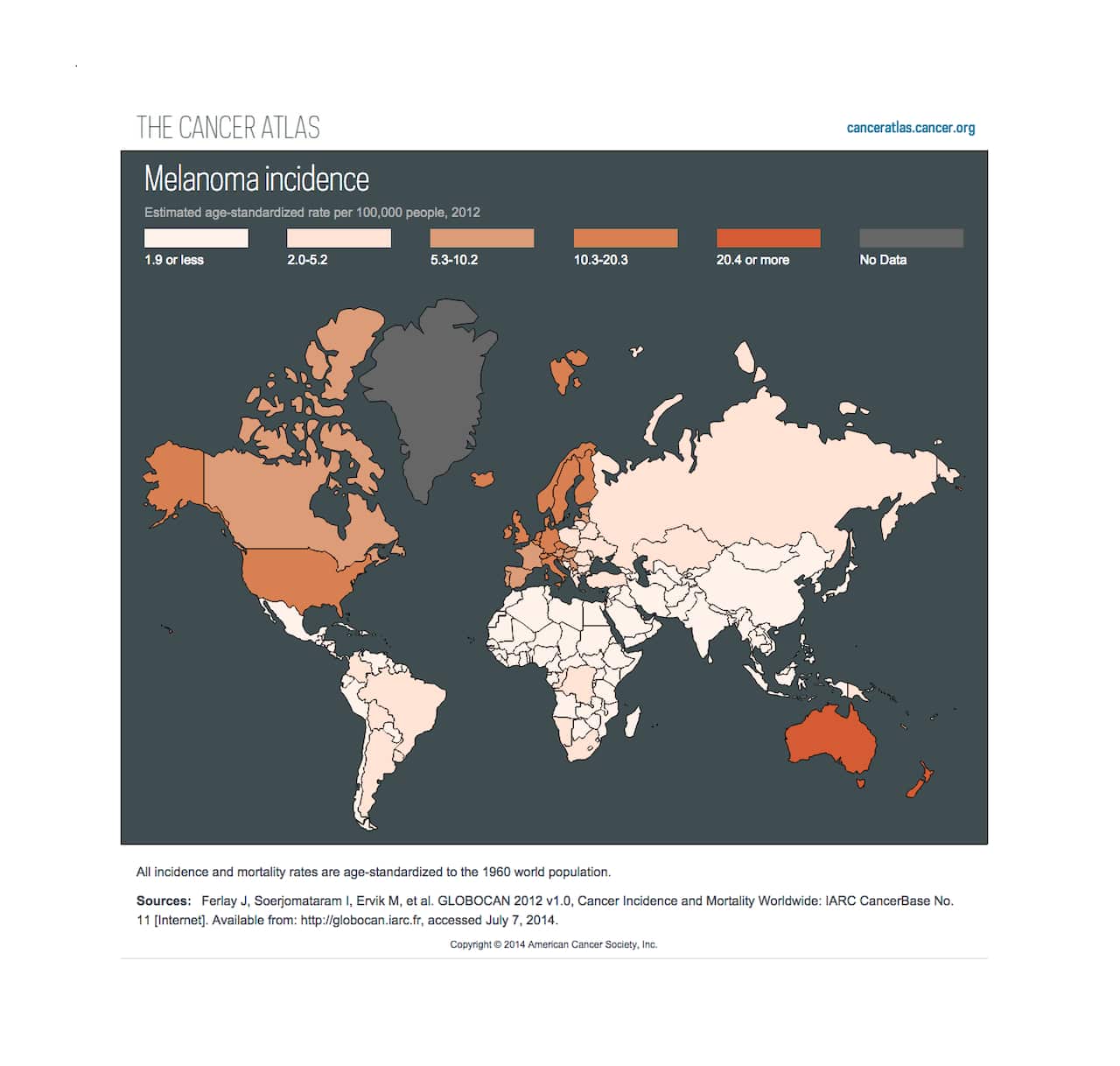
Map: Melanoma incidence compared to 1960s standardised population data Pic: American Cancer Society.





