IN BRIEF
- The Home Affairs Minister says there will be impacts on industry from the migration changes.
- Reforms will affect international students, backpackers and visa overstayers.
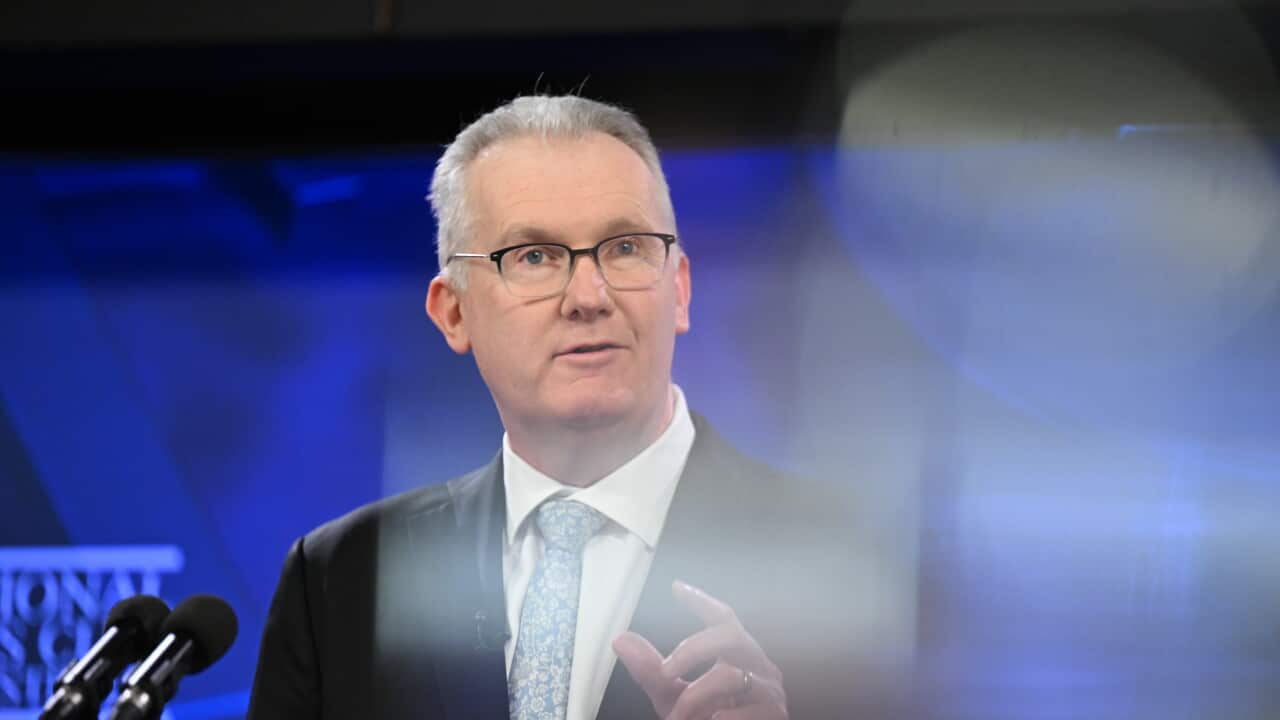
Home Affairs Minister Tony Burke says he can't quarantine any sector of the economy from the impact of his planned immigration overhaul, as the government faces warnings of a spike in food prices from a potential backpacker labour shortage.
The government wants to reduce the number of working holidaymakers, crack down on visa overstayers and tighten allowances for international students as part of a broader move to reduce migration numbers.
Farmers and the Nationals have criticised changes set to affect backpackers who they rely on to pick fruit in the regions. The reforms will introduce a ballot system and cap for backpackers wishing to extend their visit to a second or third year. Only 45,000 working holiday-makers will be able to stay in Australia for a second year, and only 5,000 for a third year — down from 57,000 and 31,000 respectively.
The National Farmers' Federation said changes to backpacker visas risked Australia's food security, farm safety and regional economies which rely heavily on working holidaymakers. The body also warned of a spike in food prices if the agricultural sector faced a worker shortfall.
News that makes sense
Your trusted source for staying up-to-date with the world around you. Get free daily news updates and analysis, straight to your inbox.
In an interview with SBS News, Burke said there will be challenges for industry to adjust to the changes.
"No matter what you do, if you are lowering (immigration) numbers, there are challenges across the visa system and across the Australian economy," he said.
"I can't quarantine any sector of Australia. What I can do is make sure —as numbers are lowered, and they need to be lowered because of the challenges we have with housing supply — I want the rest of the economy to have the softest landing possible."
One in five international students to be impacted
The government's plan to stop some international students from bringing their families to Australia could affect around one in five people, amid warnings of an economic hit that some may choose other countries to study.
International students and those on graduate visas will no longer be able to bring family members with them to Australia under the reforms.
PhD students and some Pacific and ASEAN students are exempt from the proposal.
Burke told SBS News around 19 per cent of the cohort bring in family members to Australia. It's unclear if that includes PhD students, who are more likely to bring family than undergraduates.
"International students tend to be younger, and so family obligations are a very different issue," Burke said.
Asked whether the proposal, which could affect 19 per cent of the cohort, would amount to a major revenue hit on universities and the economy, Burke insisted demand for student spots will bridge any gap.
"It's actually not, for the very simple reason that at the moment, we have more students wanting to study in Australia than we have places," he said.
"Whereas for skilled workers, everyone who an employer can find, they take, because that's completely demand-driven. There's no planning level on temporary skilled visas at all.
"You don't have the same impact for students, nor do you have the same size of demand simply because people tend to be younger."
There are around 680,582 international students in Australia. About 295,000 new international students are due to commence next year, in student cap figures unchanged from this year.
Universities Australia welcomed the carve-out for PhD students, saying Australia was competing globally for researchers and highly-skilled people.
The Group of Eight representing Australia's research-intensive universities said it educated about half of PhD students — about 12,000, with half of those requiring secondary visas for dependants.
"Most of our undergraduate international students are quite young. They're ... 18, 19, 20, and many of them aren't coming here with their parents, frankly," CEO Vicki Thompson told ABC News.
Other measures that will affect students include preventing stopping visa hopping, with a new qualification scale to allow only foreign students transferring to higher-level courses (bachelor's to master's, for example) to extend their visas.
For the latest from SBS News, download our app and subscribe to our newsletter.







