
What was once written off as a relic is making a quiet rebound.
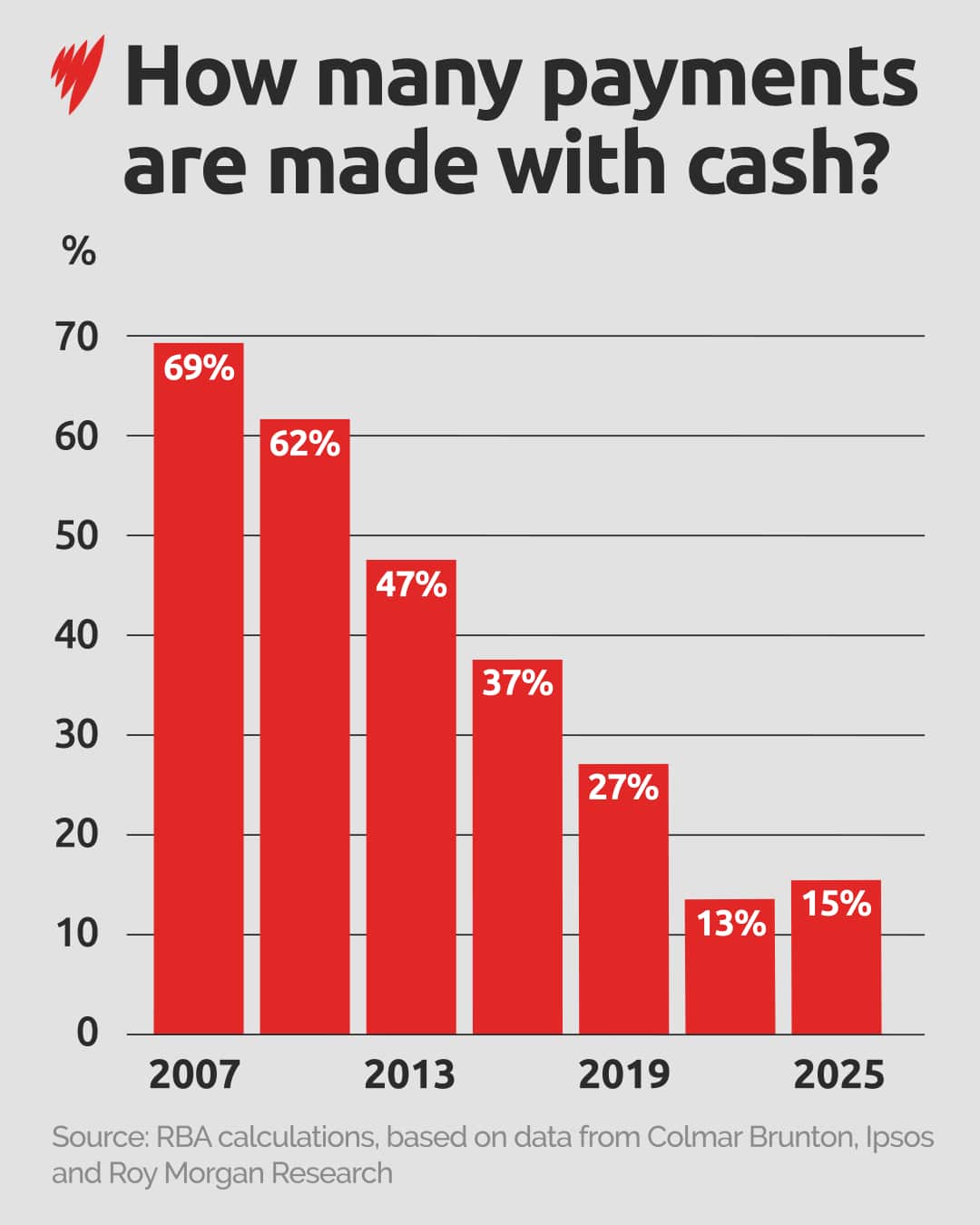
New data from the Reserve Bank of Australia (RBA) shows Australians used cash more in 2025 than in 2022 — the first increase recorded since the RBA started tracking payments in 2007.
Around 15 per cent of payments were made in cash in 2025, up from 13 per cent in 2022.
For years, cash had been on a steady downward trajectory as tap-and-go cards and digital wallets took over.
That trend has now stalled, with many Australians saying they still hold cash as an emergency backup.
News that makes sense
Your trusted source for staying up-to-date with the world around you. Get free daily news updates and analysis, straight to your inbox.
The quiet rebound
In 2025, half of all Australians used cash in a typical week.
In value terms, cash accounted for 8 per cent of payments — similar to 2022 — and is used most commonly for smaller transactions, with around one in four payments under $10 made in cash.
RBA's 2025 survey is the first since tracking began in 2007 to show an increase in cash use, with the RBA saying the results highlight "the important role of cash in an inclusive and resilient payments system".
For years, the promise of a cashless society in Australia has loomed.
RBA governor Michele Bullock said in 2025 that cash would "be around probably for another ten years".
RMIT associate professor of finance Angel Zhong told SBS News in 2025 that she believed Australia would be "functionally cashless" by then.
"That means the majority of payments will be in digital method. But it doesn't mean that you can't use cash," she told SBS News.
Who's using cash?
Older Australians tend to use cash more than other age groups — around 10 per cent of survey respondents above 65 and over used it for all their transactions in 2025. Those on lower incomes and in regional areas were also slightly more likely to reach for notes.
But the survey found cash use was stable across every age group, income bracket and location.
Around 7 per cent of respondents were high cash users, meaning cash made up at least 80 per cent of their transactions — roughly the same share as in 2022.
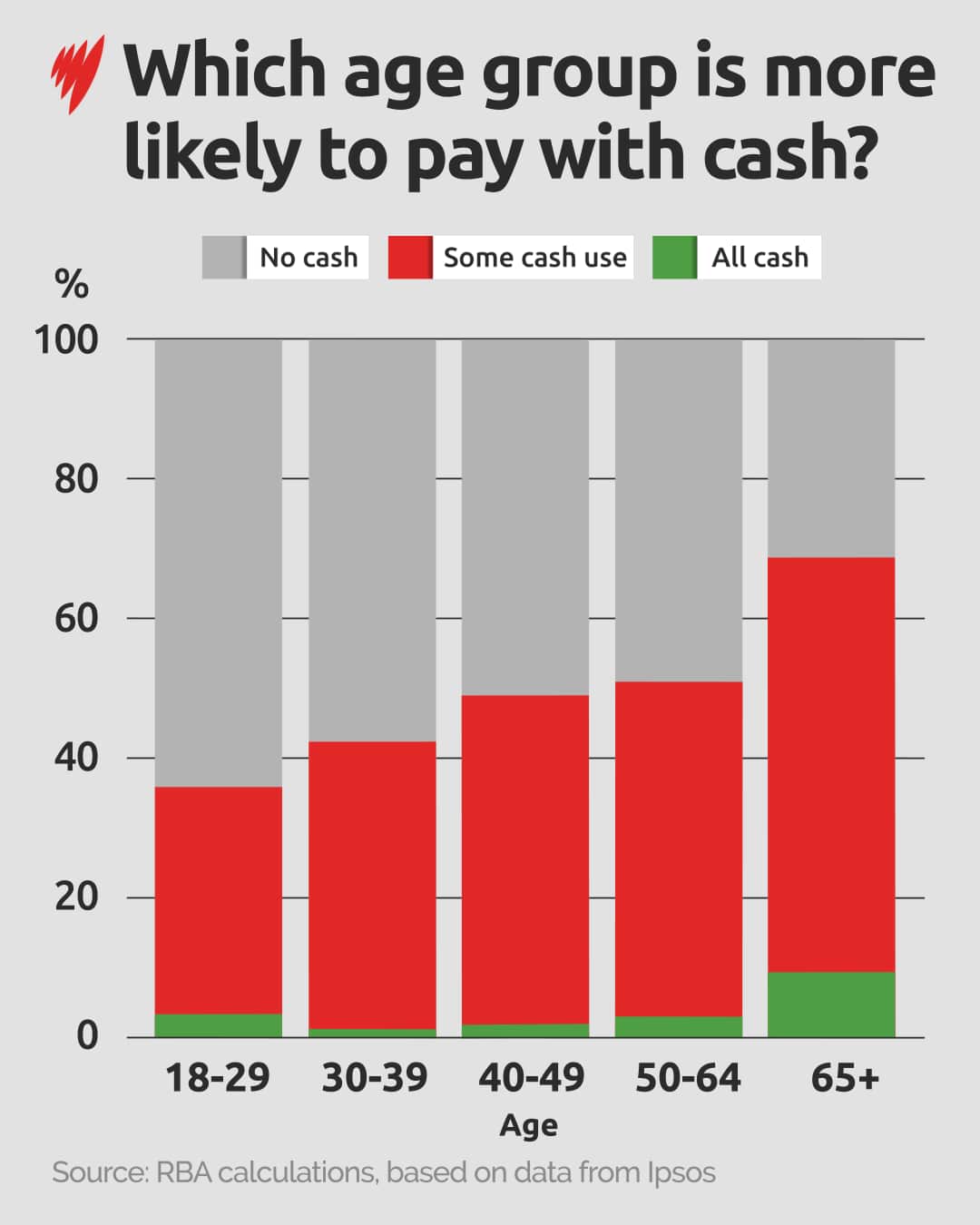
Those who didn't use cash at all also held steady, at around half of respondents.
Every previous survey since 2007 had shown a decline across all demographic groups.
Why are people using cash?
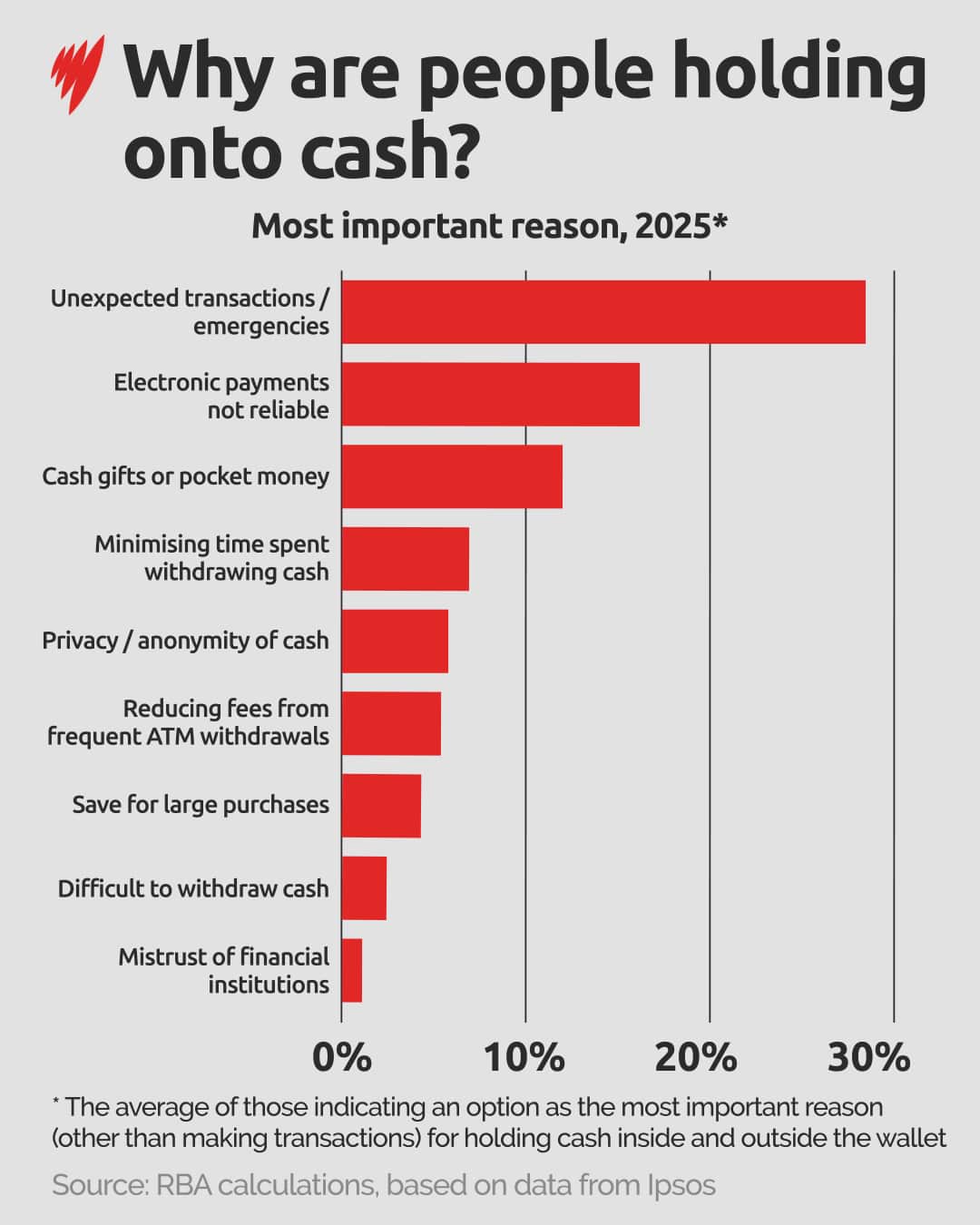
It's about more than just habit. When asked why they need cash, Australians pointed to a mix of practical and personal reasons.
The most common was that some merchants only accept it. After that came budgeting — using cash as a tool to control spending — followed by paying family and friends, and concerns about security and privacy.
Around 20 per cent said they used cash specifically to avoid card surcharges, a figure that may shift after the RBA announced surcharge fees on debit and credit card transactions will be scrapped later this year.
Many Australians also keep cash as a backup, with three-quarters holding enough in their wallet to cover them in case electronic systems went down.
Cash also varies by context, with it more likely to be used for leisure spending, like a trip to the cinema, than for everyday staples.
Despite the predictions of a cashless society, a third of Australians say they would face hardship or major inconvenience if cash became difficult to access or merchants stopped accepting it.
The report also highlighted the importance of cash for Australians who struggle with online banking, residents in remote and First Nations communities where digital infrastructure is unreliable, people with disabilities, or those escaping financial abuse.
The federal government has moved to protect access to cash, pushing forward regulations that require fuel and grocery retailers to accept cash from 1 January 2026.
The RBA has committed to supporting the federal government's policy objective to keep cash viable "for as long as Australians want or need to use it".
For the latest from SBS News, download our app and subscribe to our newsletter.







