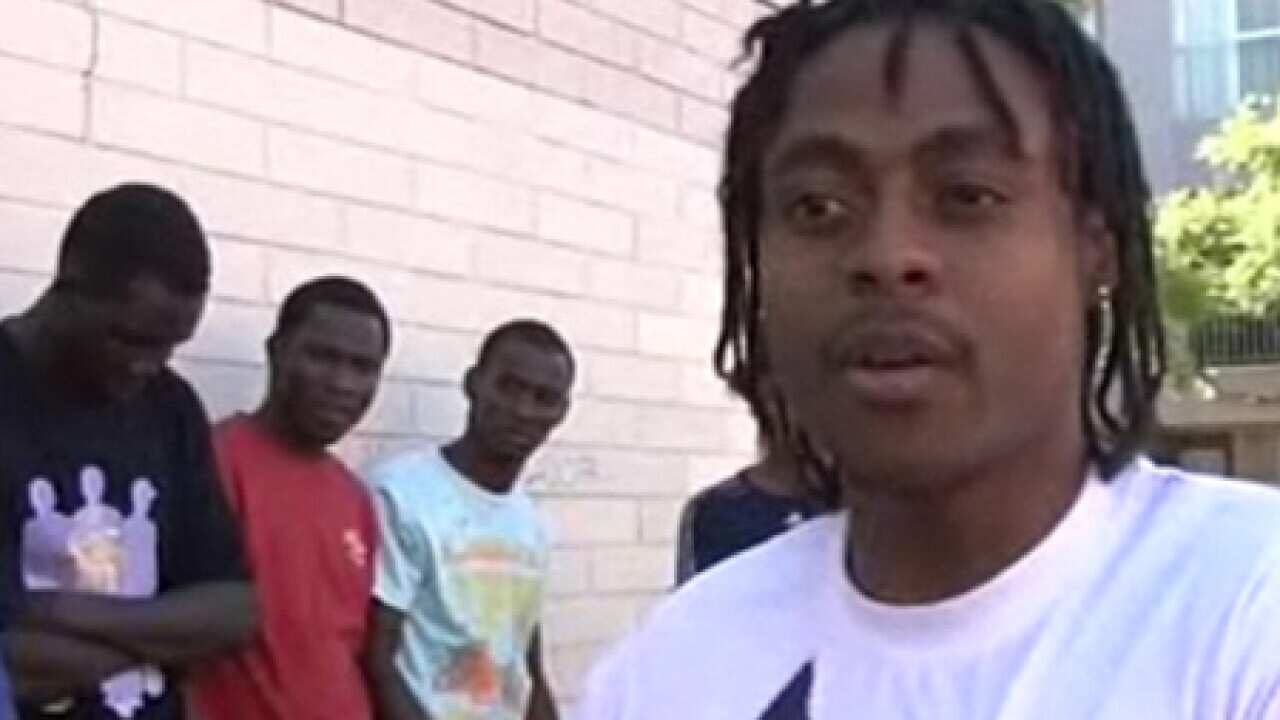
Across Sudan and the new separate country of South Sudan, people speak in 134 different languages.
It is a staggering array, perhaps paling in comparison only to the countless tales of persecution the same people have faced over decades of civil war and regional conflict.
The deep residue of that persecution and the unending language issues are just the beginning of why the Sudanese represent one of the toughest challenges for those involved in conducting the Census next Tuesday, August 9th.
Proportionately, the Sudanese community may be one of the fastest-growing of all of Australia's ethnic communities, as it was at the time of the previous census, in 2006.
But as the new census approaches, Bureau of Statistics official, Mark Harding says ensuring an accurate count of the community is one of the big concerns.
News that makes sense
Your trusted source for staying up-to-date with the world around you. Get free daily news updates and analysis, straight to your inbox.
When you're talking about an area that will have some Housing Commission or other areas where we can sometimes find it harder to get a count anyway, there's (also) the language barrier in place", he says.
"And then there's the fear barrier in place of people not wanting to open their door to a collector because they don't understand and they haven't been here for a previous census, it's a new thing, it's government, and they're not sure about it. Very understandable barriers, but all in place for a single community, for a single person."
The 2006 census showed more than 19,000 Sudanese-born Australians, a number that was growing at almost 30 per cent a year.
Within the Sudanese community, an estimated 85 per cent of the refugees came from the mostly Christian, black African South.
After a truce brokered in 2005, the South finally became the world's newest country when it celebrated its independence last month.
As many members of the community see it, the South Sudanese had suffered persecution from the Sudan government based in Khartoum, in the mainly Muslim, Arab north.
And head of the Australian Population Census program, Paul Lowe, says that's still creating difficulties.
"If you look at their background, and the violence that they've come from in their country, and the way that they've been treated by the government...they have some mistrust," he said.
"So I think it's important that we get the message out to them that, in Australia, we are independent from government, their information is private and confidential, we certainly don't pass it on to government agencies"
Mr Lowe suggests there seems to be another issue at times even when Sudanese households do complete their census forms.
He says some households appear to give incomplete pictures of their actual households.
"We've heard some anecdotal information we've received about people not reporting the correct number of people in their households.
"You know, they may be in supported accommodation, or they may be in Housing Commission houses, for example, and they are really overcrowded, but they didn't want to report the correct numbers because they thought they may get into trouble from the Housing Commission."
Lowe stresses that the right numbers help provide the right services.
"I just want to stress we do not pass on that information to any other agency whatsoever."
Mark Harding, from the Bureau of Statistics, says there are also fears in the community that completing the census could put people back in Sudan, or South Sudan, at risk.
He says officials have been using a wide range of grassroots approaches, trying to alleviate such concern.
"We have these form-filling sessions where we've got special collectors and support staff from various existing groups", he says.
"I've talked with a soccer group that works with refugees and runs soccer matches and things, just as a very grassroots way of getting the message out to people who we wouldn't otherwise have any voice with, or any way to talking to. So we're sort of leaving no stone unturned."







