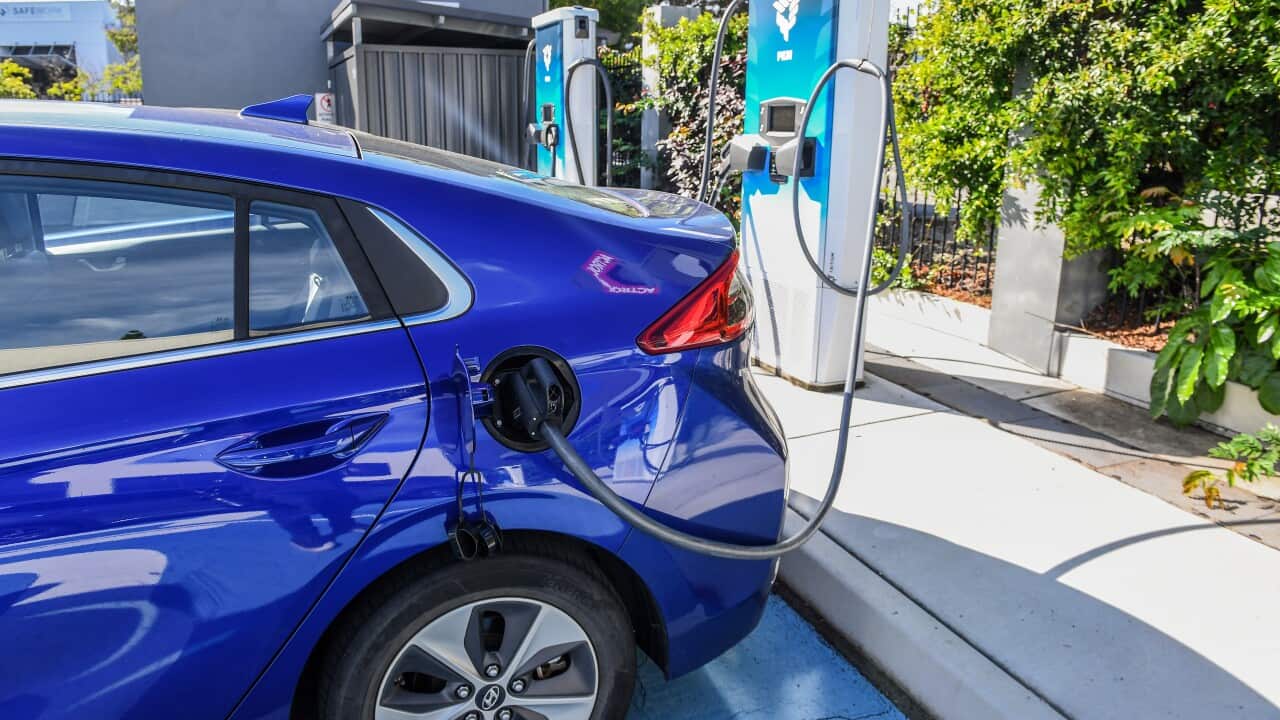
Electric vehicles and cheese are among the items that will become cheaper for Australians as a result of a historic agreement signed with the European Union after close to a decade of negotiations.
On Tuesday, Prime Minister Anthony Albanese and European Union (EU) Commission President Ursula von der Leyen signed several agreements, including a free-trade deal between Australia and the EU.
The prime minister described it as a "win-win" for Australia and Europe, marking a "significant moment" with the world's second-largest economy.
The deal — which gives Australians exporters greater access to a market of around 450 million consumers — was modelled by the EU and projected to add $10 billion to Australia's GDP by 2030.
News that makes sense
Your trusted source for staying up-to-date with the world around you. Get free daily news updates and analysis, straight to your inbox.
But it will also cut more than 99 per cent of tariffs on EU goods coming into Australia.
"It is a fair deal, and one that delivers for your businesses and one that delivers for ours. I think you call that hitting it for six," Von der Leyen said in her address to parliament.
Here are the sweeteners inside the deal most likely to impact consumers.
Cheaper electric vehicles
A new category will be created under the Luxury Car Tax, which generates $1.1 billion for the government, to make electric vehicles cheaper.
Any zero-emission vehicles valued under $120,000 will not be subject to the 33 per cent tax.
The levy currently applies to cars worth over $80,500, or $91,000 for fuel-efficient vehicles, with the cost passed onto motorists.

The change won't be exclusive to European nations, making electric vehicles from other nations cheaper. This includes China, which makes up 80 per cent of Australia's EV imports.
A separate five per cent tariff on imported cars has also been cut, affecting car makers like BMW and Mercedes.
Germany's ambassador to Australia, Beate Grzeki, told SBS the deal would be advantageous to German carmakers, and said she supports it, referencing shifting global conditions.
"There are advantages here, particularly with regard to the luxury tax. This means fewer cars will fall under the higher tax, which is good news for German manufacturers, who tend to operate in the higher price segment."
Easier job access across European countries
Australians on working visas inside Europe will have greater qualification recognition, making a pathway for easier access to jobs in other countries.
The EU has agreed to create a streamlined process that allows qualifications recognised in one nation state to be recognised in other member states, reducing duplication of processes.
This will allow working professionals to travel within the EU for different work opportunities.
Under the new trade agreement, professionals working across legal, accounting, architecture, engineering and health services will have greater certainty around meeting EU requirements.
Cheese, biscuits and pasta price cuts
Australia has dropped its 5 per cent import tariff on European goods.
It will slash the cost of importing European cheeses, wine, spirits, biscuits, chocolates and canned tomatoes, eventually making them cheaper at the checkout.
Australian producers will also retain the rights to current naming conventions for Parmesan and kransky.
However, they will eventually have to change the names of items such as feta, romano and gruyere for exporting purposes, as they are not sourced from the traditional European regions where the name originated.
- This story was produced in collaboration with SBS German and includes additional reporting by the Australian Associated Press.







