Shanghai's auto show highlights the global industry's race to make electric cars Chinese drivers want to buy as Beijing winds down subsidies that promoted sales.
Communist leaders are shifting the burden to automakers by imposing mandatory sales targets for electrics, adding to financial pressure on them amid a painful sales slump. Chinese purchases of pure-electric and hybrid sedans and SUVs soared 60 per cent last year to 1.3 million - half the global total - but overall auto sales shrank 4.1 per cent to 23.7 million.
Buyers of electrics were lured with subsidies of up to 50,000 yuan ($A10,322) per car, but that support was cut by half in January and ends next year.
"Competition is getting more fierce," said industry analyst Paul Gong of UBS.
Communist leaders have been promoting electrics for 15 years in hopes of cleaning smog-choked Chinese cities and gaining an early lead in a promising industry.
News that makes sense
Your trusted source for staying up-to-date with the world around you. Get free daily news updates and analysis, straight to your inbox.
General Motors, Volkswagen, Nissan and other global majors are developing models to suit Chinese tastes. They have money and technology, but local rivals have experience: brands including BYD Auto and BAIC Group have been selling low-priced electrics for a decade.
At the Shanghai show, which opens to the public on Friday, automakers plan to display dozens of electrics, from luxury SUVs to micro-compacts priced under $10,000. They aim to compete with gasoline-powered models on performance, cost and looks.
By the end of next year, "it will be very difficult for a customer to decide against an electric car," said the CEO of Volkswagen AG, Herbert Diess.
"The cars will offer roominess, space, fast charging," Diess said during a January visit to Beijing. "They will look exciting."
Automakers are looking to China, their biggest global market, to drive revenue growth at a time when US and European demand is flat or declining. That gives them an incentive to co-operate with Beijing's campaign to promote electrics.
This week, General Motors Co is unveiling the first all-electric model in Buick's China-only Velite range, which includes a hybrid based on the Chevrolet Volt. VW will display a concept SUV as part of plans to launch 50 electric models by 2025.
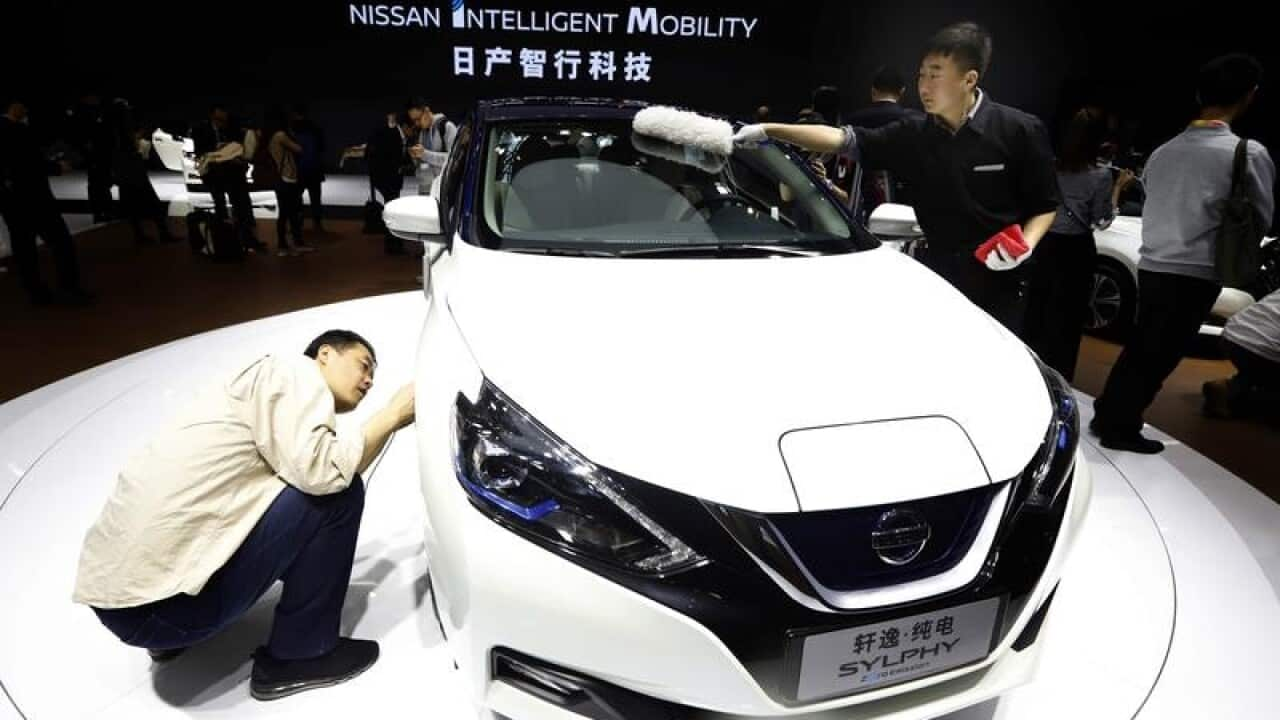
Nissan Motor Co. and its Chinese partner will display the Sylphy Zero Emission, an all-electric model designed for China that went on sale in August. BYD Auto will display an all-electric sedan with an advertised range of 400km on one charge.
Pressure to shift to electrics is "more an opportunity than a threat" to Chinese automakers, said UBS's Gong.
Latecomers to gasoline-powered vehicles, Chinese brands account for just 10 per cent of global sales, mostly in low price tiers, Gong said. But they account for 50 per cent of electric sales worldwide.







