
Worse, many Chinese analysts say, North Korea could pursue a grand bargain designed not only to bring the isolated nation closer to its two former Korean War foes, but also diminish its reliance on China for trade and security.
Such an outcome — a reversal of 70 years of history — remains a long shot, amid doubts about whether the North would agree to relinquish its arsenal of nuclear weapons.
Still, China finds itself removed from the centre of the rapidly unfolding diplomacy, and unusually wary about Mr Kim’s objectives in reaching out to his nation’s two bitterest enemies.
Mr Kim’s meeting with the South Korean president, Moon Jae-in, is set for Friday, and a meeting with President Donald Trump — the first ever between leaders of the two nations — is expected to follow in May or early June.
In a sign of just how much is suddenly on the table, South Korea recently confirmed that it was in talks with the North and with the United States about signing a treaty to end the Korean War, which halted in 1953, but never formally ended.
With events moving so quickly, and Beijing finding itself largely left on the outside, analysts said China and its leader, Xi Jinping, must at least consider what they called worst-case contingencies.
“The loss of prestige is a big problem for China and Xi, who wants everyone else to view China as an essential actor of international relations, especially in the Northeast Asian context,” said Zhang Baohui, a professor of international relations at Lingnan University in Hong Kong. “Now, suddenly, China is no longer relevant.”
In a declaration over the weekend that North Korea would suspend nuclear and missile tests, Mr Kim spoke as if the North was already a nuclear power, and no longer needed weapons tests, a direct challenge to the Trump administration’s stated goal of denuclearization.
Washington has declared that the coming negotiations are about getting rid of the arsenal.
Still, Mr Trump apparently wants to claim a place in history as the US leader who formally ended the Korean War — even though he tweeted Sunday morning that he was not rushing into a deal.
And Mr Moon is eager to edge toward the reunification of the two Koreas. So China fears the outcome could be either a North Korea or a unified Korean Peninsula leaning toward the United States.
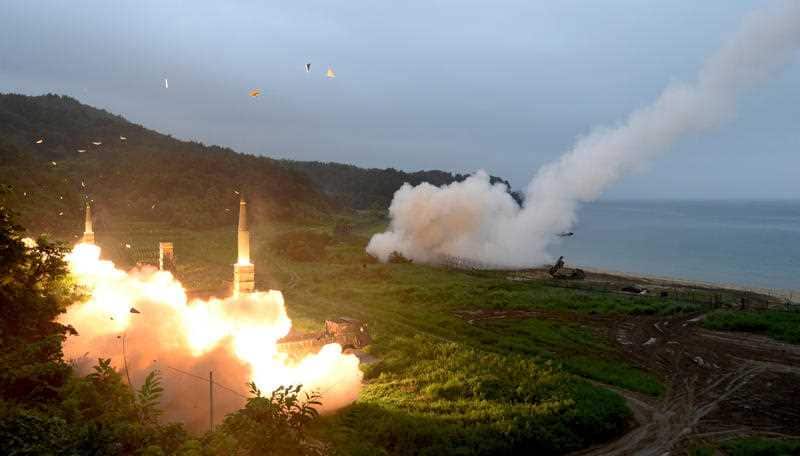
Since the 1950-53 Korean War, when China fought on the side of the North against the United States and its ally in the South, the alliances have been immovable. The North has provided a convenient buffer for China against having US troops on its border; the South serves as a base in the region for the US military.
In negotiations over the denuclearization of the North, Beijing has to worry whether all that could suddenly be in play, Chinese analysts said.
“If a grand deal can be struck between Kim and Trump, in the form of denuclearization in exchange for normalization of bilateral relations, then Northeast Asia may see a major realignment,” Zhang said. “China does not run Kim’s foreign policy and they know that.”
The possible new alignment on the Korean Peninsula that most concerns Beijing is a loose unification between North and South Korea with US troops remaining in the South.
As part of its conciliatory moves before the meetings, the North has dropped its demand for the departure of the 28,000 US troops stationed in the South as a condition for denuclearisation.
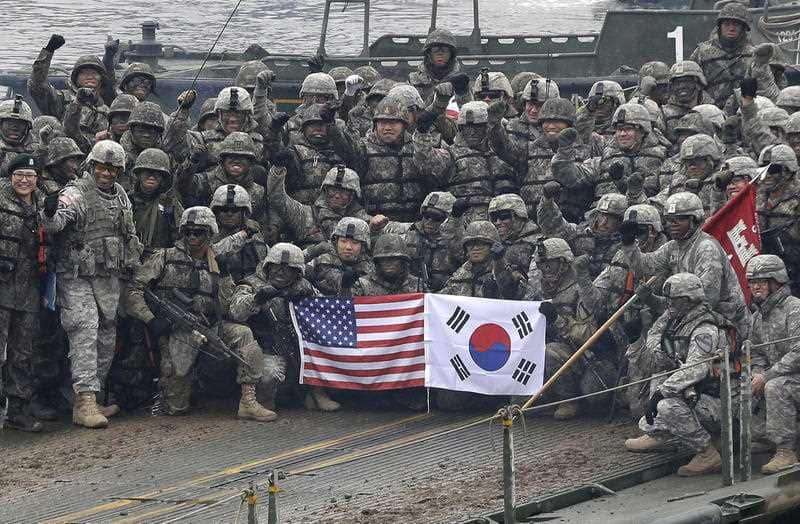
“A unified, democratic Korea aligned with the US will be dangerous to the communist regime in China, though not necessarily the Chinese nation,” said Xia Yafeng, a North Korea expert at Long Island University.
From China’s point of view, a favourable outcome from the meeting between Mr Trump and Mr Kim may simply be a less dangerous version of the status quo, Mr Xia said.
There could be a “nice photo” of the two men, with vague promises from the North Korean leader to get rid of his nuclear weapons, and then long negotiations in which China would have a big say, he said.
What is curious is that China has for decades spoken in favour of a peace treaty to end the Korean War. Premier Zhou Enlai of China mentioned ending the Korean War in a 1971 interview with The New York Times columnist James Reston, Mr Xia said.
China, however, has a very specific view of what such a treaty would entail: the withdrawal of US troops from South Korea, which would leave both Koreas leaning toward China.
“A peace treaty is good for China in that it will presumably denuclearise North Korea, and more important, it will end the legality of the US military alliance and troop presence on the peninsula,” said Yun Sun, a North Korea expert at the Stimson Center in Washington.
Since North Korea is looking for security guarantees from the United States in return for denuclearisation, that guarantee “will hopefully include the withdrawal of US troops,” she said.
But, like his grandfather and father who ruled North Korea before him, Mr Kim has shown signs of wanting to reduce China’s influence.
When the young leader made a surprise visit to Beijing three weeks ago to meet Mr Xi for the first time, the two men seemed to repair somewhat the traditionally close relationship between the two countries that had been in the freezer since Mr Kim came to power in 2011.
In fact, the visit was probably not so much a gesture of rapprochement as a deft move by Mr Kim to play China against the United States, just as his grandfather had maneuvered between China and the Soviet Union, Chinese analysts said.
Mr Kim’s purpose was to give the impression to the Americans that he was entering the meetings with China at his back, they said. Mr Xi accepted an invitation from Mr Kim to make a return visit to Pyongyang, but there were no signs that would happen before Mr Trump meets with Mr Kim, a Chinese government spokesman said.
Analysts say that since coming to power, the young Mr Kim has resented his country’s almost total economic dependence on Beijing, which has only increased under the tough United Nations economic sanctions that China voted for last year.
About 90 percent of the North’s foreign trade in essential items — coal, minerals, seafood, textiles — passes through China, and China is its biggest supplier of fuel.
At the urging of the Trump administration, China approved the sanctions that have severely cut the North’s access to fuel and hard currency. North Korean ties with China seemed to hit a low, with Mr Kim refusing to even meet a Chinese envoy in November, and conducting a ballistic missile test instead.
Perhaps wary of alienating the North, and unhappy with Mr Trump’s decision to impose tariffs on Chinese imports, Beijing was no longer so willing to punish the North, Chinese analysts said.
There are already signs that trade is picking up along China’s border with North Korea, Chinese traders say, which could mean a relaxing after six months of near total trade embargo.
Hours after the North’s announcement Saturday of its suspension of nuclear tests, one outspoken Chinese state-run newspaper, the Global Times, said the United Nations should “immediately discuss the cancellation of part of the sanctions against North Korea.”
Further, the United States, South Korea and Japan should lift their unilateral sanctions against the North, the paper said.





