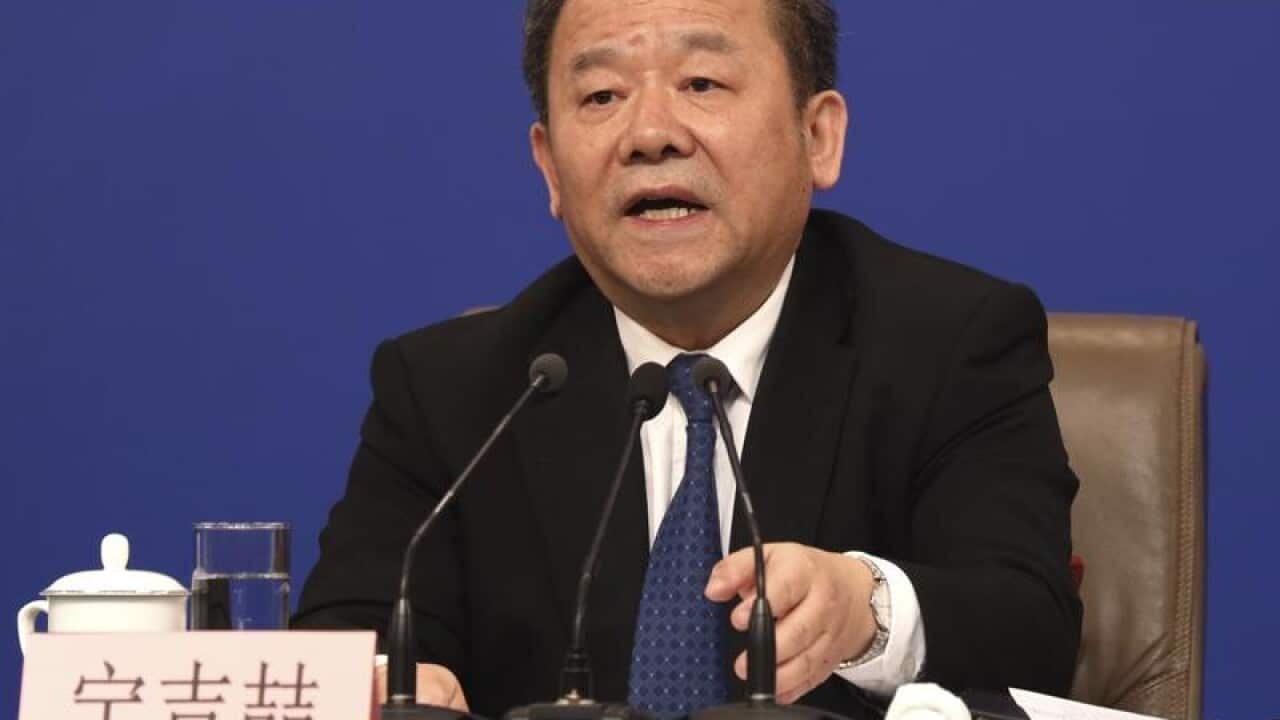
China will bar government authorities from demanding overseas companies hand over technology secrets in exchange for market share, a top economic official says, addressing a key complaint of the US.
The provision is contained in a foreign investment law to be debated at the current annual session of the National People's Congress, Ning Jizhe, vice chairman of the Cabinet's economic planning agency told reporters at a news conference on Wednesday.
The law will "clarify the system for advancement and protection of foreign investment," Ning said.
The legal system will ensure that foreign businesses "cannot be required to transfer technology by administrative means, providing a more encompassing and beneficial legal guarantee," he said.
Ning's statement came a day after Chinese Premier Li Keqiang announced a robust annual economic growth target and promised in a speech to the congress' opening session that foreign companies will be "treated as equals" with their Chinese competitors.
News that makes sense
Your trusted source for staying up-to-date with the world around you. Get free daily news updates and analysis, straight to your inbox.
Accusations that China demands the disclosure of technology secrets are a key stumbling point in the US-China trade dispute that has significantly disrupted commerce between the world's two largest economies, affecting farmers, liquor exporters and China's key manufacturing industries.
China's emergence as a competitor in smartphones, telecom equipment, solar power and other technologies has increased the range of products available to consumers and helped to drive down prices.
But it rattles Washington and other governments that worry Chinese competition is a threat to their industries and employment.
Such concerns underscore a stand-off between the US and China over Huawei Technologies, the world's biggest maker of telecom infrastructure for new high-speed 5G networks.
Washington has been pushing hard to exclude the Chinese company from building the backbone of the future internet.
News reports say Washington and Beijing might be close to an agreement to end the trade battle and avoid further tariff hikes.
But no firm agreements have been announced on the core of the dispute: US pressure on Beijing to roll back its plans for state-led creation of global competitors in robotics and other technology.
Washington, Europe and other trading partners say China's policies violate its market-opening obligations and give an unfair advantage to domestic firms.







