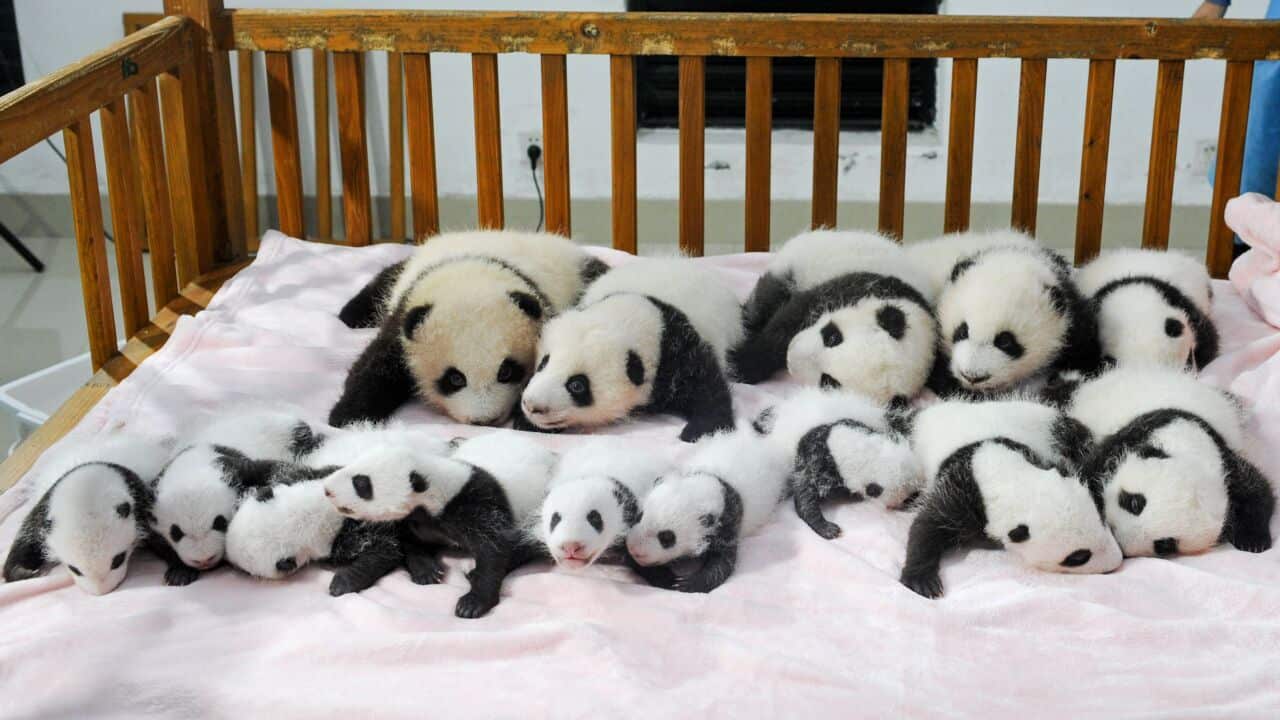
While Adelaide residents Wang Wang and Funi have failed to produce the southern hemisphere’s first baby panda after years of coaxing, researchers in China have shown off no less than 14 new cubs.
The new arrivals were all conceived artificially at the Chengdu Research Base of Giant Panda Breeding in Chengdu, in China’s southwest Sichuan province.
Pandas are notoriously bad at reproducing naturally, but this year has been the most successful in two decades for China’s panda breeding program.
There are thought to be only about 1,500 pandas living in the wild in central China and several hundred in captivity.
China’s panda breeding program keeps the species alive as well bringing in tourist dollars.
China earns significant income hiring out panda couples to foreign zoos, like Adelaide Zoo and Edinburgh Zoo in the UK.
The pair of pandas at Adelaide zoo – Wang Wang and Funi – arrived on a decade-long loan from China in late 2009. The zoo's reproductive team was hoping this season would be third time lucky for the cubless pair, after two unsuccessful earlier seasons.
But both natural mating and artificial insemination appeared to have failed, with no pregnancy for seven-year-old Funi as the very short annual breeding period -- typically just 48-72 hours a year -- drew to a close.
A panda cub was born in Taiwan in July and there have been several other births in recent months in the United States and Spain, all the result of artificial insemination.