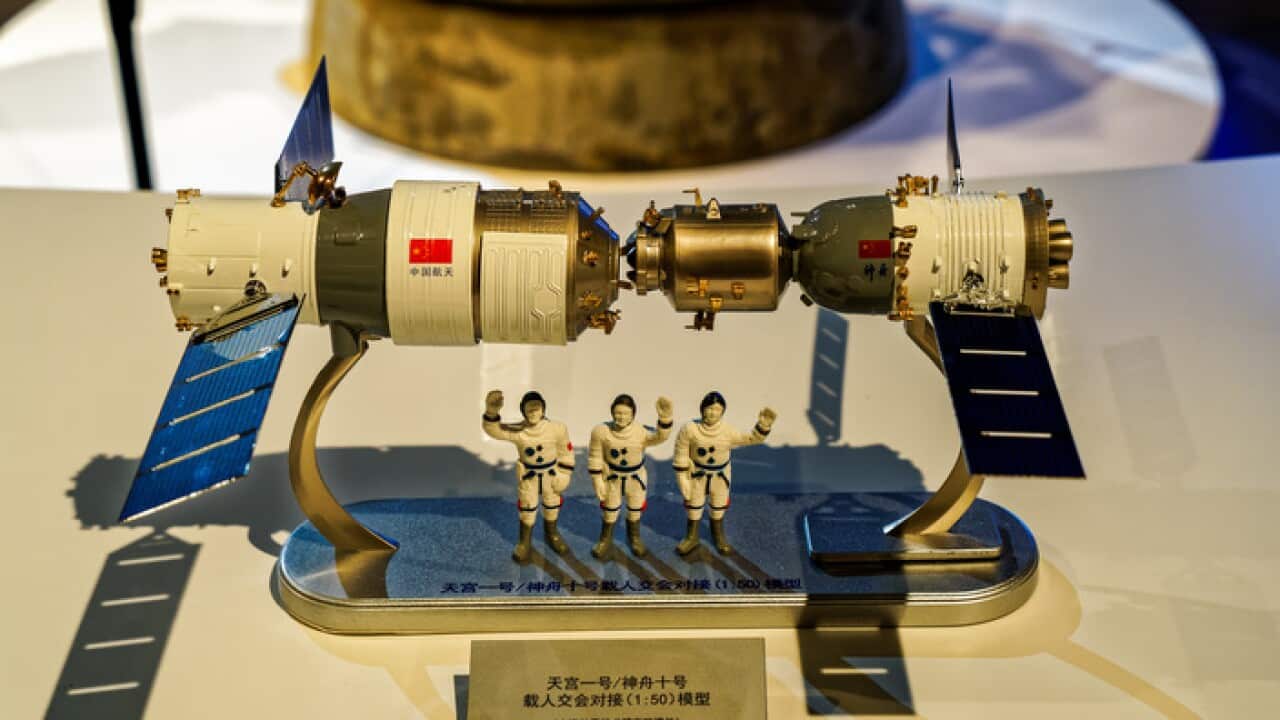
It is unlikely that any large parts of China's Tiangong-1 space lab will reach the ground when it falls to Earth, and China has been in close touch with the United Nations about its progress, China's foreign ministry says.
The craft is expected to re-enter Earth's atmosphere at some time from this week, according to China's manned space program, but no one knows for sure where.
Speaking at a daily news briefing on Friday, foreign ministry spokesman Lu Kang said the government had been continually informing the UN space agency of the latest information about the Tiangong-1.
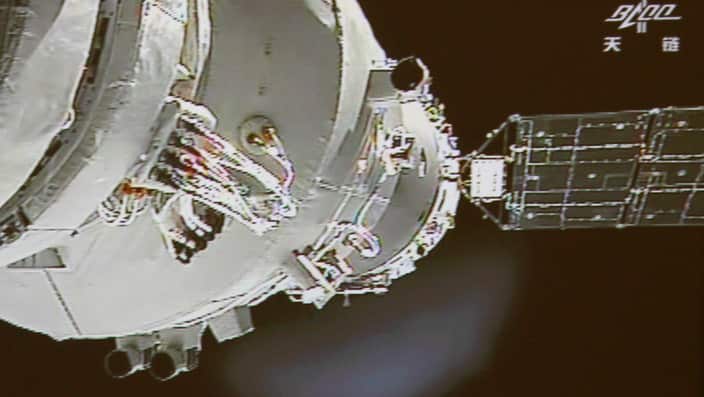
China had been responsible and transparent, Lu said.
News that makes sense
Your trusted source for staying up-to-date with the world around you. Get free daily news updates and analysis, straight to your inbox.
"If there is a need, we will promptly be in touch with the relevant country," he said.
"As to what I have heard, at present the chances of large fragments falling to the ground are not very great, the probability is extremely small."
The 10.4-metre-long Tiangong-1, or "Heavenly Palace 1", China's first space lab, was launched into orbit in 2011 to carry out docking and orbit experiments as part of China's ambitious space program, which aims to place a permanent station in orbit by 2023.
It was originally set to be decommissioned in 2013 but China has repeatedly extended its mission, leading some scientists to believe that it has gone out of control.
Advancing China's space program is a priority for President Xi Jinping, who has called for Beijing to become a global space power with both advanced civilian space flight and capabilities that strengthen national security.







