
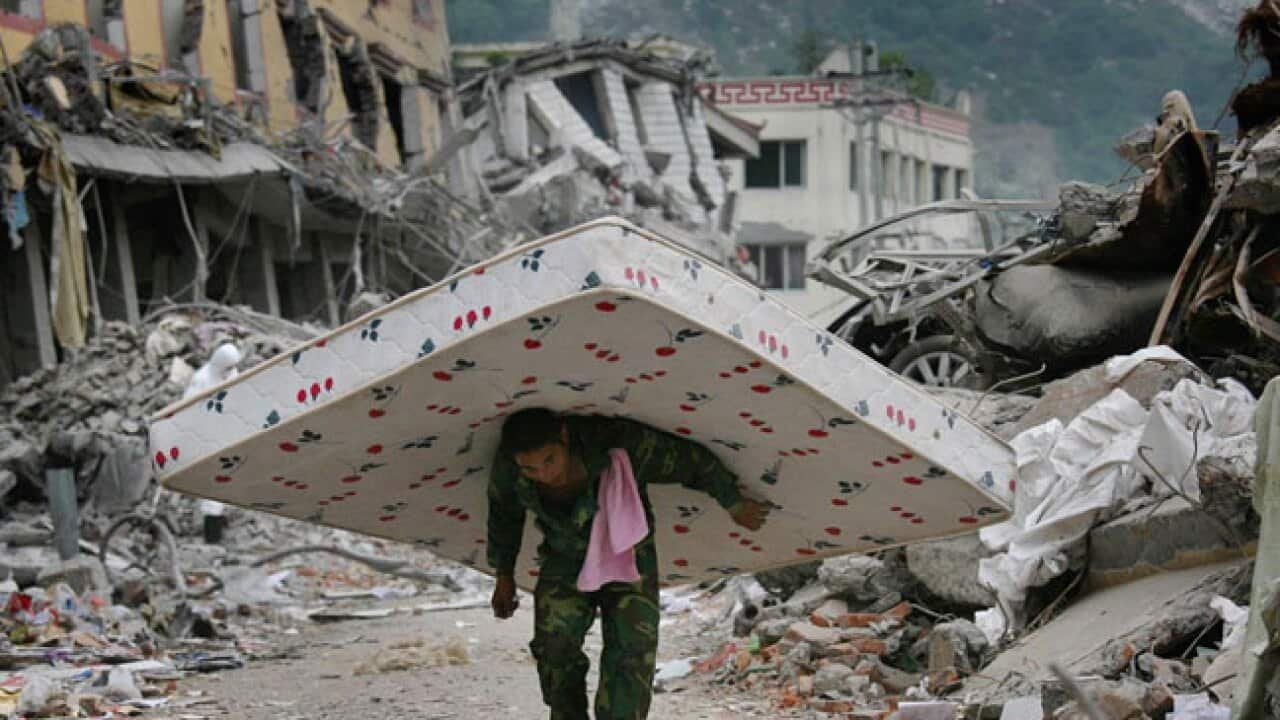
The 2008 Wenchuan Earthquake shocked the world, killing close to 70,000 lives on the fateful day of May 12.
Across the Province, five million people were left homeless and forty kilometres away from the epicentre many farmers from the Tianma Township also lost their homes.
Farmer Peng Yanqun said it all happened without warning.
"We are all farmers. When the earthquake happened we were all working in the farms. It was around two in the afternoon, we were all working outside."
"It was shaking everywhere. Everyone was scared. We were all terrified and went into hiding. The houses were all damaged. Though they didn't collapse but they're not habitable anymore. "
Three years later the destruction has brought new opportunities for the 183 families of this village.
Peng Yanqun lost everything.
"Yes definitely. Without this disaster, our old house would still be there. We'd still be living in the old house. Now we've all been moved here under combined planning."
"There were many changes. Now we have everything, like natural gas, everything, optical fibre and running water, we started using everything. It's a lot better than before," she said.
And the force of Mother Nature turned strangers into allies. This restaurant from the provincial capital, Chengdu, was amongst the first to lend a helping hand.
Peng Yanqun said the effects were long lasting.
"After the disaster, I felt that the effects on the quake-stricken area were severe, it was desolate and miserable, and the victims had neither homes nor food. I felt very strongly about what I saw. Our company also felt obliged to help by donating food and housing."
With help from far and wide, the conditions of local farm villages have advanced by some twenty years from the earthquake reconstruction.
Dujiangyan Municipal Government's Foreign Affairs Office Deputy Director, Zhao Wen Qiao said he is looking at the positives.
"With a normal growth rate, the city you are seeing today should not be like this. But the earthquake brought our city an opportunity to develop, through foreign assistance, central government's leadership and the efforts of the citizens of Du Jiangyan, Today's Du Jiangyan has rebuilt its infrastructure, including schools, hospitals and all the other areas with greatly accelerated speed"
The new developments may mean progress but it's attracted criticism from one of the region's most famous residents who's now living in exile.
"Integrating the development of urban and rural areas enables urban and rural people to live their own lives. It means centralising resources in better ways. For instance, rural houses used to be scattered."
"So it is unreasonable to build the road or natural gas facilities for individual families. So we gather those scattered individual homes and build water, electricity and other facilities for them, which can reduce their living costs with obvious improvements to their live," he said.
Whether its hope or loss, the impact has left a lasting impression. Moving moments captured during and after the earthquake are now eternalised in an exhibition.
A selection of images from various quake stricken areas of Sichuan will travel to Australia early next year as part of the Sydney city's Chinese New Year Festival.





