In brief
- The nuclear-capable launch came hours after Australia and Fiji signed a major defence alliance.
- A Chinese navy statement described the weapon as a "strategic missile carrying a training simulation warhead".
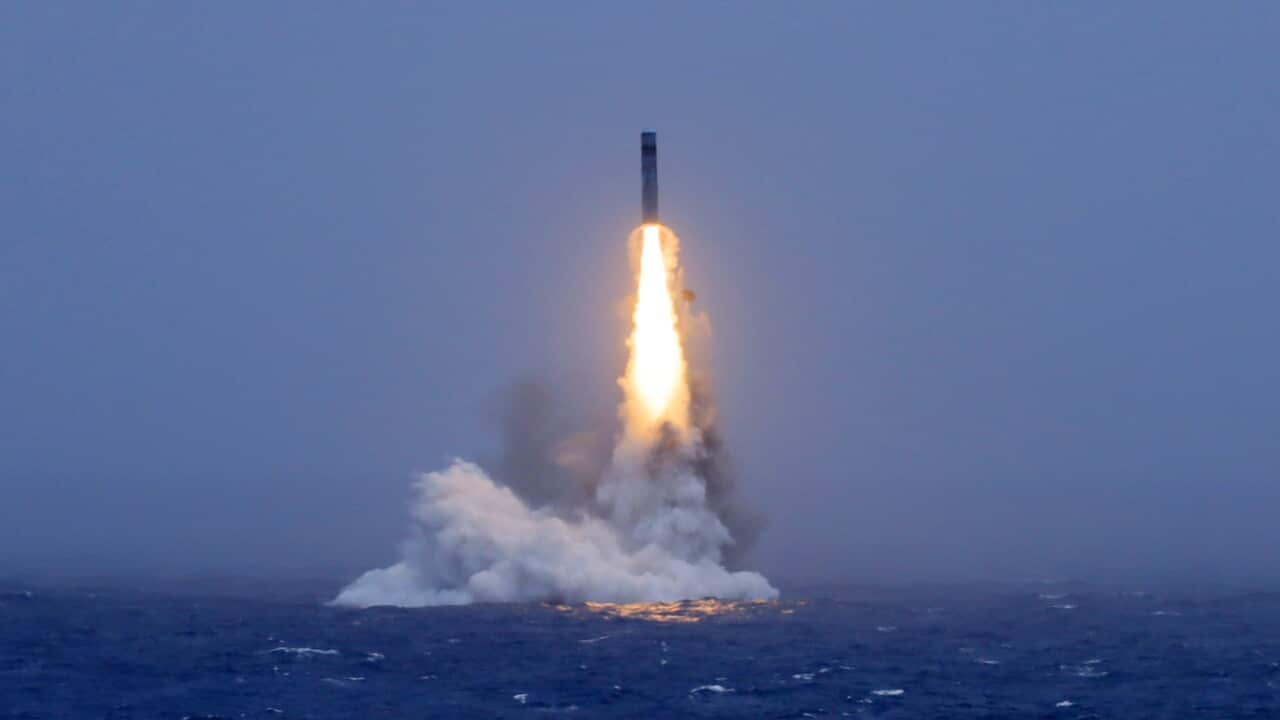
China's decision to fire a nuclear-capable ballistic missile into the South Pacific on Monday — its third such launch into the region in more than four decades — has drawn an alarmed response from Canberra.
But defence analysts say the test speaks less to any single provocation than to the scale of Beijing's long-term military ambitions on Australia's doorstep.
China confirmed it had successfully fired the missile — carried by a strategic nuclear submarine — into international waters, landing just outside the exclusive economic zones of Kiribati and Tuvalu. The launch came just hours after Australia and Fiji signed a major defence alliance committing each country to come to the other's aid if either is attacked.
A Chinese navy statement described the weapon as a "strategic missile carrying a training simulation warhead", while state media Xinhua called the test a "routine arrangement", not directed at any country and notified in advance.
Analysts are increasingly warning that the region — inclusive of Australia — may not be prepared to respond to that kind of technology, should it need to.
News that makes sense
Your trusted source for staying up-to-date with the world around you. Get free daily news updates and analysis, straight to your inbox.
China's missile launch criticised
Defence Minister Richard Marles, who is also the deputy prime minister, told ABC News on Tuesday: "This is China demonstrating a much greater range in terms of being able to deploy a nuclear weapon," adding Australia had raised its concern with China "directly".
"There really isn't an explanation as to why they are building the capabilities that they are and that is fundamentally destabilising."
Prime Minister Anthony Albanese later said it was a "provocative act" and Australia "[didn't] want to see any action that is destabilising or which undermines the peace, security of the Pacific and region."
Defence Industry Minister Pat Conroy confirmed the Chinese government had been planning the long-range test for "some time" but only informed Australia in the hours beforehand.
"We've been very clear that we're seeing the biggest military build-up in our region since World War Two, and it's not being accompanied by sufficient transparency," he told ABC's RN Breakfast on Tuesday.
Conroy said he believed the launch was "more likely to be a coincidence rather than linked" to the Fiji agreement, though he added that was "obviously" a question for the Chinese government.

Jennifer Parker, an adjunct professor at the University of Western Australia's Defence and Security Institute and a former naval officer, cautioned against reading too much into the launch itself.
"I think we should be worried, more broadly, about China's military capability, and their aggressive employment of that capability in the region," she said, adding that missile tests are not in themselves unusual.
But Michael Shoebridge, director of Strategic Analysis Australia, viewed the move as more pointed. He noted the significance of its destination: the South Pacific is covered by the 1985 Treaty of Rarotonga, which establishes the region as a nuclear-weapons-free zone and whose signatories include Australia and much of the Pacific.
China has ratified two of the treaty's protocols, including a commitment not to test nuclear explosive devices within the zone.
"It's a statement by Beijing that it doesn't care about any of that and it's pushing into our neighbourhood," Shoebridge said.
Taiwan's national security council chief, Joseph Wu, said in a post on X that the launch was "a provocation that destabilises the Indo-Pacific" and that China had proved itself to be "a bully on the block".
Questions of timing
The launch, hours after Australia and Fiji signed the Ocean of Peace Alliance committing each to the other's defence, prompted immediate speculation it had been timed as retaliation.
The Chinese military's elite Rocket Force previously fired a dummy warhead near French Polynesia in September 2024 — its first long-range launch over international waters since 1980. This latest test again pushed a nuclear-capable weapon deep into the South Pacific, seemingly timed against Australia's latest Pacific deal.
Parker said she considered a direct link unlikely, citing the logistics involved.
"To undertake a test like this, you want to have your tracking ships, your missile tracking ships in the right places, which takes time to get them there," she said, adding that submarines "don't normally go to sea with ballistic missiles with dummy warheads".
She argued the timing may even have worked against Beijing's interests. "We tend to find that when China makes these aggressive moves … there tends to be a lot of pushback internationally," she said.
"Intentionally timing it around the time that Australia is launching a defence treaty called the Ocean of Peace is actually probably fairly counterproductive for China."
Shoebridge read the sequence differently, placing weight on the decision to launch rather than the preparation behind it.
"They were setting this test up long before the Australia-Fiji Treaty was signed, but the Chinese chose now to push the button, and they made an active choice to launch this missile right as the Australia-Fiji agreement was signed," he said.
He believed the test was retaliatory "in part", but also part of a broader trajectory. It followed live fire drills a Chinese naval task force conducted in the Tasman Sea in February 2025, which forced commercial flights between Australia and New Zealand to divert at short notice.
"It's a statement from China they're going to play a bigger security role in our near neighbourhood," he said.
The message to Canberra, as he characterised it: "Australia, you can sign all the pieces of paper with anyone you like. We have raw military power."
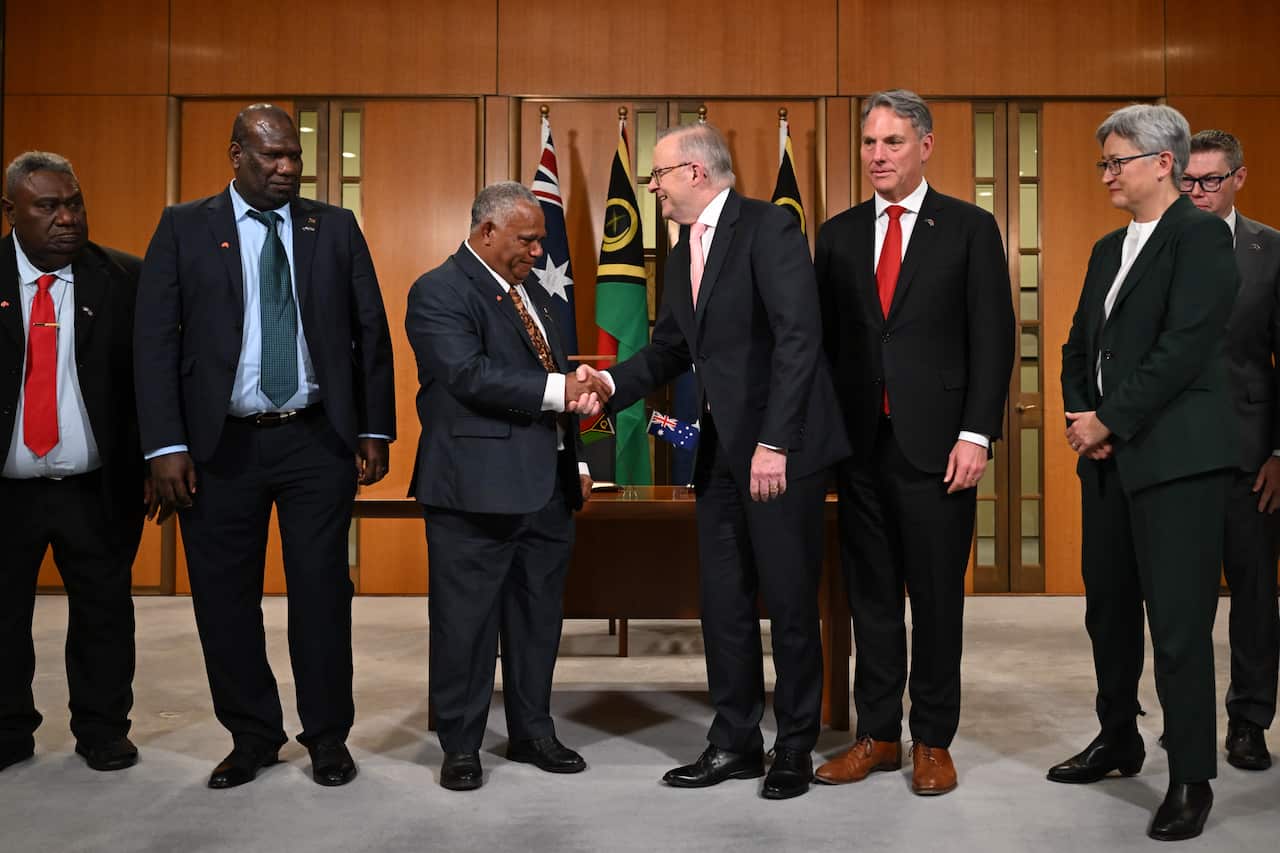
Both analysts agreed Beijing was uneasy about Australia's deepening ties in the region.
That unease surfaced overnight, when China's embassy in Vanuatu issued a statement responding to the Nakamal Treaty signed between Australia and Vanuatu late last month. It declared that "any agreement that is exclusive or directed against China is firmly opposed by the China side" and warned against any attempt to treat Pacific Island countries as a "backyard".
Parker said China's interest in the region was fundamentally strategic.
"If you control the Pacific, you control the key sea lines of communication between Australia and the US and in the event of a crisis or conflict, those sea lines of communication would be critical," she said.
A security foothold beyond the first island chain, she added, was "a critical strategic move" for Beijing.
Preparedness and the gaps at home
Both analysts questioned Conroy's World War Two framing when applied to the launch itself, while accepting the deeper concern it gestured toward.
China's growing capability, reach and willingness to use it aggressively, Parker said, "is [rather] the biggest change to our strategic circumstances since World War Two". In some respects, she added, it's "more dramatic than what we experienced in 1941 and 1942", when Japan's advance through South-East Asia brought the threat to Australia's north.
China's industrial capacity relative to the United States, she noted, far outstrips Japan's at that time, a gap that would matter in any protracted conflict.
Shoebridge called the minister's characterisation "a bit of hyperbole", but said the test exposed "a glaring problem" for a government that had been "celebrating the stabilisation of the Australia-China relationship" — something pursued since 2022 that has seen Beijing lift trade barriers even as strategic frictions persist.
"Australia's military is incapable of protecting even itself from these Chinese systems," he said.
"We've got some glaring missile defence gaps that need to be closed."
Australia currently has no integrated air and missile defence system capable of intercepting a ballistic missile of the kind China tested, a gap successive governments have acknowledged.
Parker said the country needed to "bolster our defence capability spending" and address shortfalls across air and missile defence.
High headline spending was misleading, she said: while defence outlays sit at record levels in dollar terms, "as a percentage of the economy that we dedicate towards defence, we are nowhere near historic levels".
Australia spends around 2 per cent of GDP on defence — well below Cold War-era peaks — though, under the National Defence Strategy released in April, the government has committed to reaching 3 per cent by 2033, still short of the 3.5 per cent the US has urged of Australia.
She credited the government's diplomatic work in the region, describing the recent Pacific agreements as having "some success". The expansion of the surface combatant fleet — set to roughly double the navy's major warships under a 2024 plan — reflected "really historic" decisions, she said.
Shoebridge urged caution on that front. "We've just got to be careful with these regional security deals like the one with Fiji, that Australia isn't writing cheques we can't cash," he said.
"We need to close some of those missile defence gaps to be credible with our regional partners."
For the latest from SBS News, download our app and subscribe to our newsletter.







