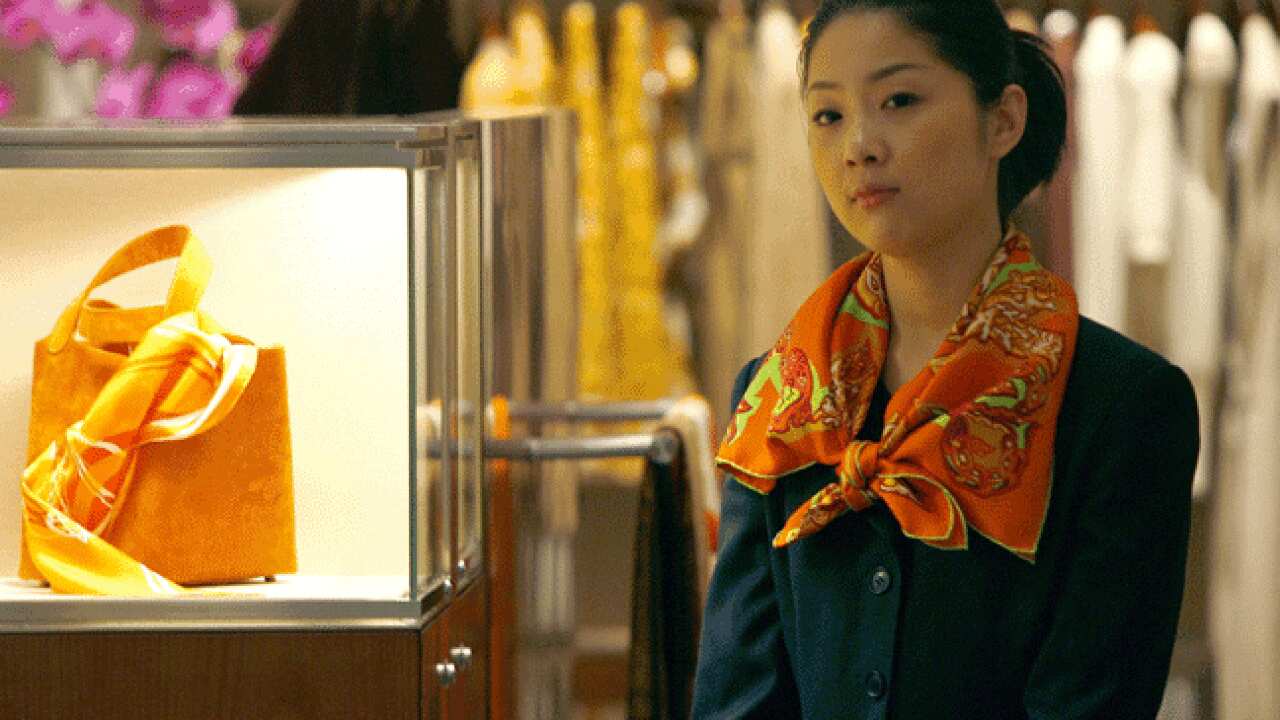
How to properly peel an orange, hold an oyster fork, and pronounce luxury brand names -- wealthy Chinese are paying handsome sums to learn such skills as they seek to match their high-end lifestyles with high-class etiquette.
A two-week course at the newly opened Institute Sarita in Beijing costs 100,000 yuan ($16,000), but that has not dissuaded dozens of students from across the country from signing up.
Most are women in their 40s whose wealth rose fabulously along with China's breakneck growth in recent decades, says founder Sarah Jane Ho.
News that makes sense
Your trusted source for staying up-to-date with the world around you. Get free daily news updates and analysis, straight to your inbox.
Their parents survived traumatic hardships under the late leader Mao Zedong, while their children enjoy privileged lives exposed to Western concepts. And they are caught in a constant culture shock, says Ho.
"Today's nouveau riche women in China are the first to take on all these roles of wife, mother, daughter, businesswoman in this new drastically changed world. There are no precedents, no rules, no person for them to refer to," she says.
"What my clients want is really a guide, a new Confucius. What they need is a frame of reference and this is what I provide."
For many participants, the hefty price tag to acquire such knowledge can seem trivial. Ho says her students "easily spend three times that amount" to acquire the furs or jewellery introduced in class.
Besides learning to dress with elegance, the women familiarise themselves with wine, elite sports such as golf and riding, English tea service, floral art and table decorating.
One student erred on a recent lunch hostessing exam when she laid a knife with the blade facing out rather than in, Ho said.
They learn how to help their husbands and chat with their men's business associates -- reviewing acceptable topics of conversation unlike typically blunt enquires such as "How much do you earn?" or "Why did you divorce your wife?" -- and how close to stand to others.
"Personal space is something new in China," says Ho, who tells students to "keep your elbows close to your body".
The institute, which hosts students at a luxury hotel and formally opened in March, is based on the traditional finishing schools once reserved for young women from well-to-do families in the West, where they have largely disappeared.
Ho, a Harvard graduate who speaks five languages, herself attended the Institut Villa Pierrefeu, often called the last Swiss finishing school.
Many of her students decide they need help after finding themselves stumped at a fancy engagement, often a Western-style meal.
"They don't dare start (eating) for fear of being ridiculed, for example, with escargot," said the institute's head chef, who she recruited from the French embassy.
Jocelyn Wang, 24, says the intricacies of Western dining protocol were among the most valuable lessons of her 10-day course at Institute Sarita.
"I think the way someone eats -- how they hold their fork and knife, the way they eat their food -- can say a lot about their etiquette and their temperament," she says, adding that such topics were not widely taught in China.
"My parents may have learned from experience or from TV or the Internet," she says. "I wanted to be more specialised."
During her 9-to-6 sessions she says she used rulers to measure the precise placement of forks and knives and toured art galleries, taking notes and collecting class handouts along the way.
But the detailed instruction also impressed upon her the need for non-teachable qualities such as poise, taste and confidence.
There are differences between aristocracy and nouveaux riche, says Wang, who is studying globalisation for a master's degree in London.
"We have a really good life, at least materially speaking, so we can't just be unrefined."
Harvard sociologist Martin Whyte said Chinese interest in etiquette was to be expected in a society enjoying newfound wealth but lacking a strong, recent "aristocratic tradition".
They "recognise that being viewed as 'nouveau riche' makes them vulnerable to popular criticism", he said in an email, likening rich Chinese today to 19th century Americans.
"They feel a need to demonstrate to the world that they are not just crude money-grubbing upstarts, but have some cultural refinement and civility, and thus might be viewed as honourable wealthy, rather than resented," he said.







