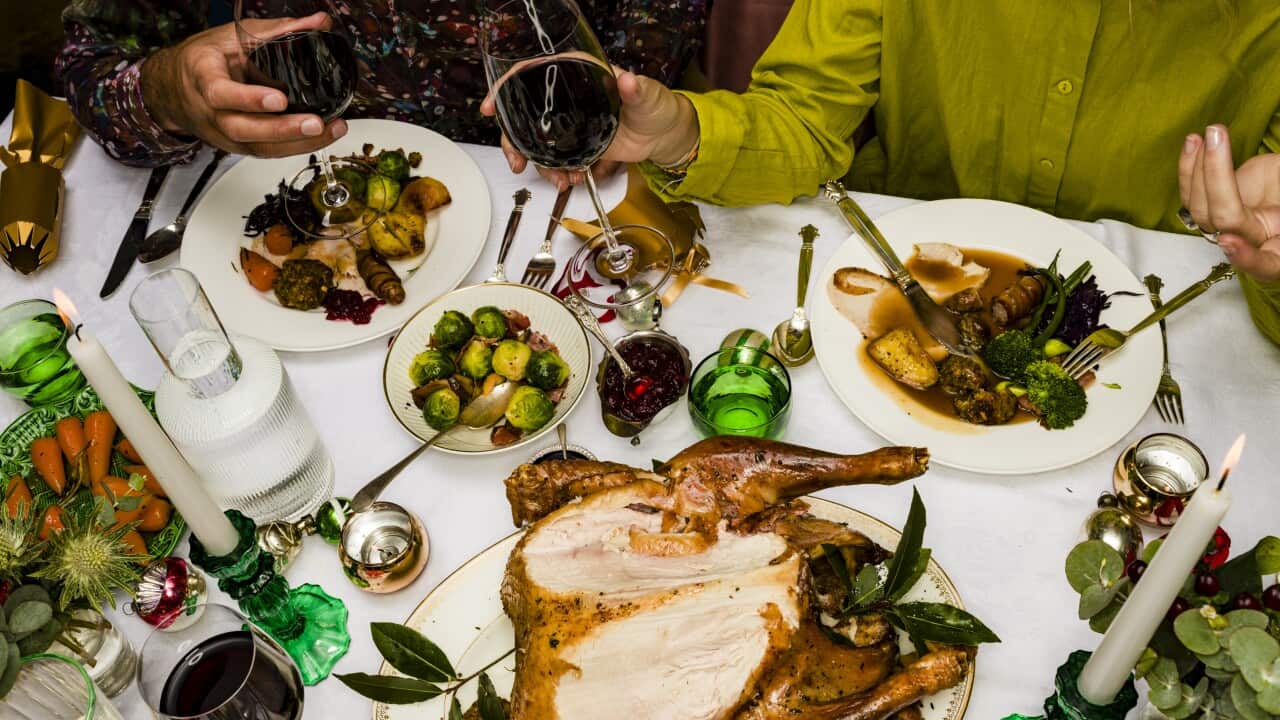
There can be a lot on our plates at this time of year — and our meals can come with a side of sickness.
The Food Safety Information Council (FSIC) has released its tips for enjoying the festive season safely, aiming to limit the number of food poisoning cases in Australia each year — estimated to be around 4.67 million.
Foodborne illness costs the Australian economy around $3 billion each year, according to Food Standards Australia and New Zealand.
Roughly a quarter of gastroenteritis cases are linked to contaminated food, and food safety experts warn that foodborne illnesses such as salmonella poisoning can be quite serious.
"It's not just a funny tummy, it really is nasty," Lydia Buchtmann, CEO of the FSIC, told SBS News.
News that makes sense
Your trusted source for staying up-to-date with the world around you. Get free daily news updates and analysis, straight to your inbox.
"It can make you really ill. It can be life-threatening if you have a poor immune system or if you're pregnant or if you're frail and elderly."
Chicken and turkey don't need a bath
If poultry is on your festive menu, the council is warning that it "doesn't need a bath".
A FSIC-commissioned survey earlier this year polled 1,221 Australian aged 18 and over and found about half of respondents who cook raw whole chicken usually wash it before cooking.
That's a big no-no, according to Buchtmann.
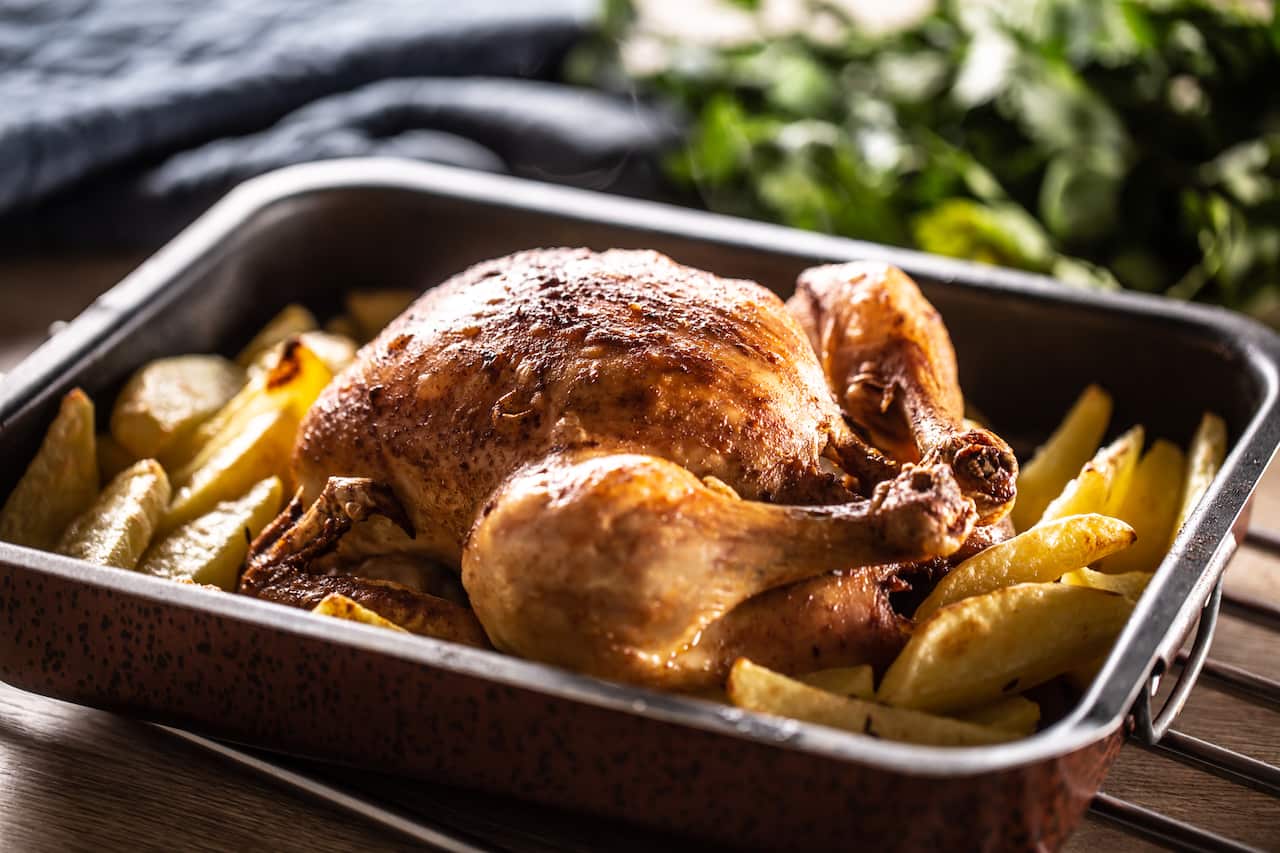
"This is really risky, because firstly, any poultry is washed in processing so you don't need to do it," she told SBS News.
"If you wash it, you're going to splash it right around the kitchen and you're going to get bacteria everywhere. Particularly salmonella, which gives you a really nasty form of food poisoning."
The FSIC recommends cooking poultry to a minimum of 75C and check with a meat thermometer in the thickest part.
'Ham is for Christmas, not for life'
For those who enjoy a Christmas ham, it's important to remember that they do expire.
"I'd get something called a ham-bag which is sort of just a cloth bag you can put it in. Or a clean cloth. Soak that cloth in a mixture of vinegar and water, so about a litre of water with two tablespoons of vinegar in it," Buchtmann said.
"And keep that cloth moist so it doesn't dry out and keep it in the fridge and change it every three days or so."
Keep the covered ham refrigerated, and think about how much you're going to use in the next few days. Consider slicing up the rest and freezing it.
Reduced salt hams, which are becoming more popular, will not last as long, the FSIC noted.
Think about the rollout
On a hot summer's day, unrefrigerated foods can quickly become a breeding ground for bacteria, especially items like cold meats, soft cheese, seafood, dips and salads.
The FSIC recommends putting out small amounts initially and then replacing them — not topping them up — with fresh food from the fridge.
"The idea is to put them out in small servings at a time," said Buchtmann.
"It's a real risk if you, say, put out a dip or you put a brie there or something and then you get more stuff out of the fridge and you put it on top."
It's also important to keep food covered, as flies can carry contaminants.
Other tips
The FSIC recommends not buying more food than you need because it reduces the risk of food spoiling. When shopping, grab your perishables last so they're not out of the fridge for too long.
Consider keeping drinks in an esky or on ice in a laundry sink. This can free up valuable fridge real estate and also reduce how often you need to open the fridge, helping to ensure you keep the temperature at 5C or below.
If perishable foods have been left out for less than two hours, they should be okay to pop back in the fridge for leftovers, but make sure you eat them within two to three days.
And if you find yourself swimming in leftovers? Freeze them. It might mean less waste and less opportunities for food poisoning.
Buchtmann said there's another big mistake people are making in the name of being clean: gloves.
"Most people leave them on way too long, so we actually think it is better if you just wash your hands quite often," she said.
"And you need to wash your hands before you handle food and if you've been handling risky foods like raw meat and raw poultry."
For the latest from SBS News, download our app and subscribe to our newsletter.







