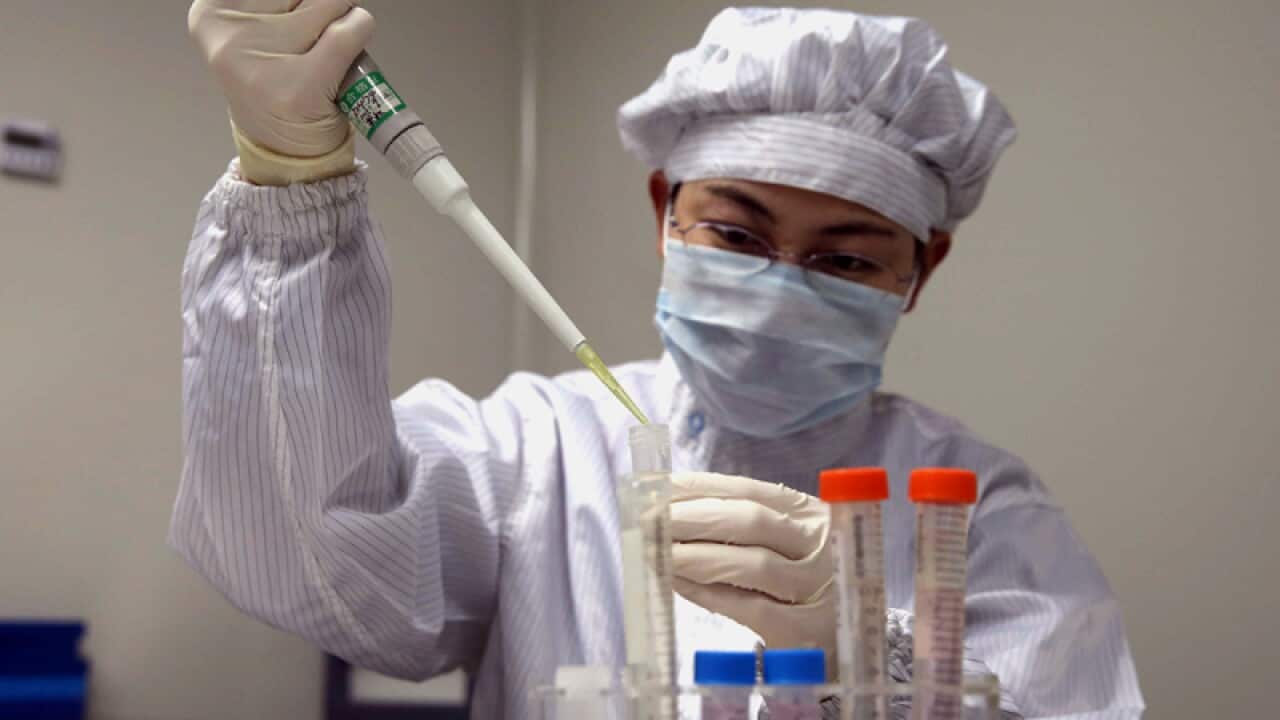
Gene scientists say that in lab-dish cells, they have found a way to switch off the rogue chromosome that causes Down's syndrome.
The breakthrough opens up the tantalising goal of therapy for Down's, they said, cautioning that years of work lie ahead before this aim is reached - if, in fact, it is attainable.
News that makes sense
Your trusted source for staying up-to-date with the world around you. Get free daily news updates and analysis, straight to your inbox.
It also carries with it a heightened risk of heart defects, leukaemia, immune-system malfunction and premature Alzheimer's disease.
The disease, formally called trisomy 21, is caused by an additional chromosome 21, which has a cascade of unexplained impacts on brain development and body function.
Acting on a hunch, scientists at the University of Massachusetts Medical School reported that they had inserted a gene into this unwanted third chromosome and, in effect, used it like an off switch.
It is the first time that correction has been achieved for an entire chromosome, a coil of DNA that is studded with hundreds of genes, the protein-making codes to build and sustain life.
"Our hope is that for individuals living with Down's syndrome this proof-of-principle opens up multiple exciting new avenues for studying the disorder now, and brings into the realm of consideration research on the concept of 'chromosome therapy' in the future," said Jeanne Lawrence, a professor of cell and developmental biology.
People without Down's are born with 23 pairs of chromosomes, including two sex chromosomes, which pair up as two X chromosomes for females and an X and Y chromosome for males.
The team noted that, in early female embryos, a special gene called XIST comes into play, silencing one of the two X chromosomes so that they do not over-function.
Their bet, published in the journal Nature, was whether XIST could be slotted into the third, unwanted chromosome 21 in cells from a person with Down's.
The research was carried out from so-called induced pluripotent stemcells, or cells that have been reprogrammed to their versatile infant state.
Delighted with the chromosome silencing they saw in a lab dish, Lawrence's team have now started to test the technique on mice genetically modified to have trisomy 21.
The results should be known "hopefully within a year", Lawrence said.
Tests on lab animals are an early part of the long process of assessing a new drug or process to see if it is safe and effective for humans.
Lawrence readily acknowledged that what happens with mice may not be the same in humans, but said a conceptual logjam about chromosome therapy had at last been broken.
"I think that the importance of this work is that it now makes it conceivable - not that we know that it will work or that it won't be a long way off, because there are a lot of questions and a lot of steps to be met," she said.
Gene therapy aims at fixing inherited diseases by substituting flawed genes with functioning ones.







