Christchurch residents said the walls of their homes "wobbled like jelly" when a 7.0 magnitude earthquake rocked New Zealand's second largest city early Saturday.
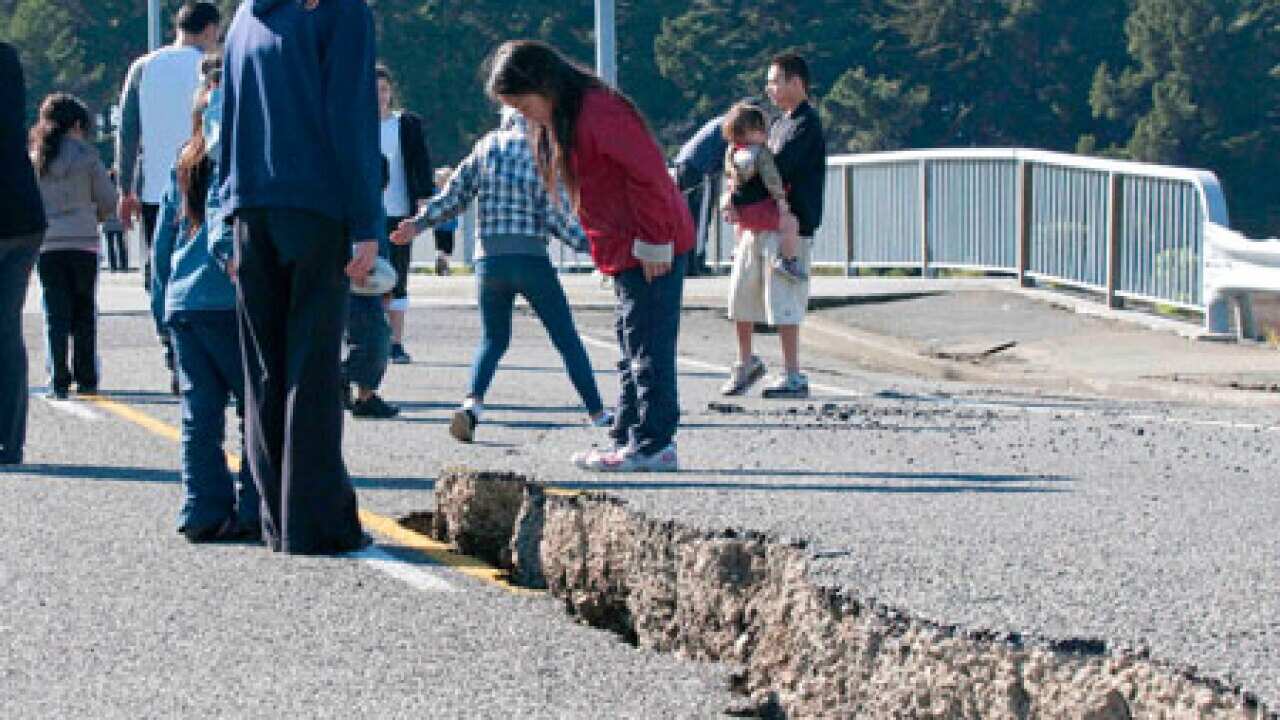
The force of the quake, one of the most powerful recorded in the country, tore jagged fissures in the ground and destroyed the facades of buildings, littering the city's streets with bricks and shards of glass.
Markham McMullen, a school principal at Darfield, near the quake's epicentre, said it felt like a train had hit his house, creating a jolt that threw him and his wife out of bed.
News that makes sense
Your trusted source for staying up-to-date with the world around you. Get free daily news updates and analysis, straight to your inbox.
"It just kept coming, it went and on and on," he said.
"It was absolutely terrifying. We grabbed our daughter, Sophie, from her room and crouched under a doorway. The TV was flying around the room... it was very scary."
Old buildings were the worst affected, with entire facades of brick structures collapsing onto the street, crushing cars under tonnes of debris and leaving kitchens and living rooms exposed, many eerily untouched by the surrounding chaos.
At Castle Rock, a rugged outcrop just outside the city, the earthquake sent boulders bigger than cars tumbling down the hillside.
Only two people were seriously injured, but Civil Defence officials said the toll would have been much worse had the quake hit in daylight, when there would have been thousands of people on the streets.
"We've been extremely lucky as a nation that there's been no fatalities ... we're blessed actually," Civil Defence Minister John Carter said.
Hotelier Richard Hawes said he thought he was going to die as his 130-year-old building shook.
"(It) wobbled like a jelly," he said.
Aftershocks rattle city
Aftershocks continued to rattle the city of around 340,000 throughout Saturday, as dazed residents assessed the damage.
Police pleas for people to stay away from the city centre were ignored, with thousands of sightseers flocking to the worst-hit areas, many recording the moment on their mobile phones.
Children played in chasms in the road created when the surface buckled and warped as the ground shifted beneath it.
In some seaside suburbs, where roads had earlier been jammed as locals fearing a tsunami attempted to flee, ruptured pipes spewed out raw sewage.
Some residents wore facemasks to protect themselves from the smell, while others gathered river water in buckets for their flushing toilets.
"Honestly, the scale of it is quite astonishing," Frances Adank, who lives in the suburb of St Albans, told Radio New Zealand.
"The city council I think is going to be working for days to get the water mains sorted out... There's just water pouring out of every front section."
Narrow escape
In the same suburb, Marsha Witehira said she had a narrow escape when a friend pulled her from her bed moments before the wall of her house collapsed on top of it.
"He saved my life, no doubt about it... if I had been there, I would have smashed my head," she told the Christchurch Press newspaper.







