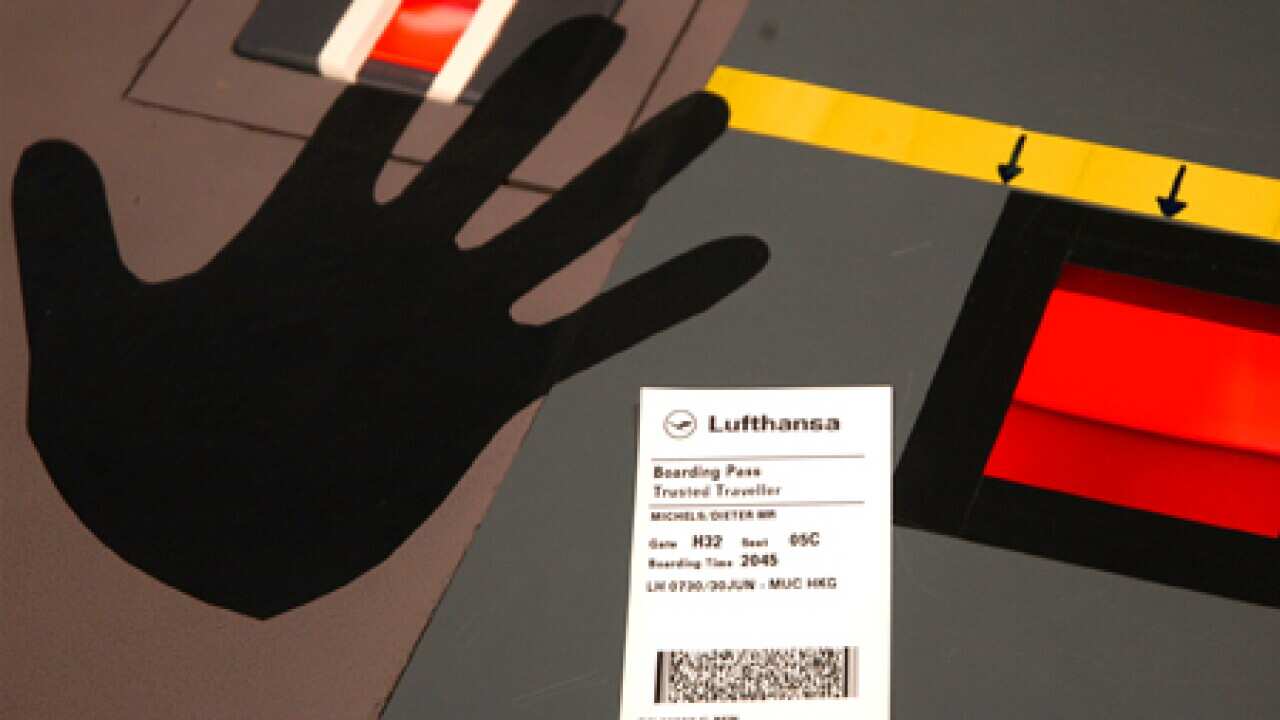
Civil libertarians have raised concerns about the rigorous biometric checks recommended in the government's newly-released counter-terrorism white paper.
A key initiative of the paper is the introduction of more comprehensive checks on those seeking visas to travel to Australia from 10 countries.
Applicants will be photographed and finger-printed in their home country before a visa is issued.
News that makes sense
Your trusted source for staying up-to-date with the world around you. Get free daily news updates and analysis, straight to your inbox.
The fingerprinting will sit alongside face scanning technology as part of the introduction of biometric technology at borders around the country.
'Invasion of privacy'
The technology will be aimed at nationals from 10 as yet unnamed nations, although Yemen and Somalia were mentioned as threats to national security.
"I am very concerned that these things pose an ever increasing invasion of privacy," NSW Civil Liberties Council president Cameron Murphy says.
Mr Murphy renewed his calls for a bill of rights, saying it would protect people from governments over-stepping their duties.
"Information like this might be collected for what look like entirely reasonable reasons, but it can be adapted."
The long-awaited document had been leaked extensively and its release comes as the government fends of opposition calls for the resignation of embattled Environment Minister Peter Garrett over his handling of the now axed household insulation program.
The white paper was commissioned shortly after the Mumbai attacks in November 2008.
Nearly $70m set aside
The federal government will spend $69 million over the next four years to improve national security.
Prime Minister Kevin Rudd says it was easy to become numb to the threat posed by terrorism even when the threat remained very real.
"That threat is not diminishing," he told reporters in Canberra.
"In fact, the government's security intelligence agencies assess that terrorism has become a persistent and permanent feature of Australia's security environment."
Nationals MP Darren Chester questioned the timing of the paper's release.
"No surprise the government's putting the report out today when they've got a minister under pressure," he told reporters.
Insulation scheme 'bigger threat'
But it was South Australian Liberal Simon Birmingham's comments that attracted the most attention with the senator comparing the threat posed by terrorism with that from the failed insulation program led by Mr Garrett.
"The greatest threat to the safety of many Australian families over the last 12 months has been the home insulation program and Peter Garrett's mismanagement of it," he told reporters.
Mr Rudd dismissed the comments, saying the threat from terrorism was "permanent" and "persistent".
He said a terrorist attack could occur at any time.
"Prior to the rise of jihadist terrorism, Australia was not a specific target, now Australia is," he said, adding that more than 100 Australians had been killed in overseas attacks since 2001.
Mr Rudd said there had been some success with counter terrorism efforts in South-East Asia, Afghanistan and Pakistan.
"But this has been offset by newer areas of concern such as Somalia and Yemen," he said.







