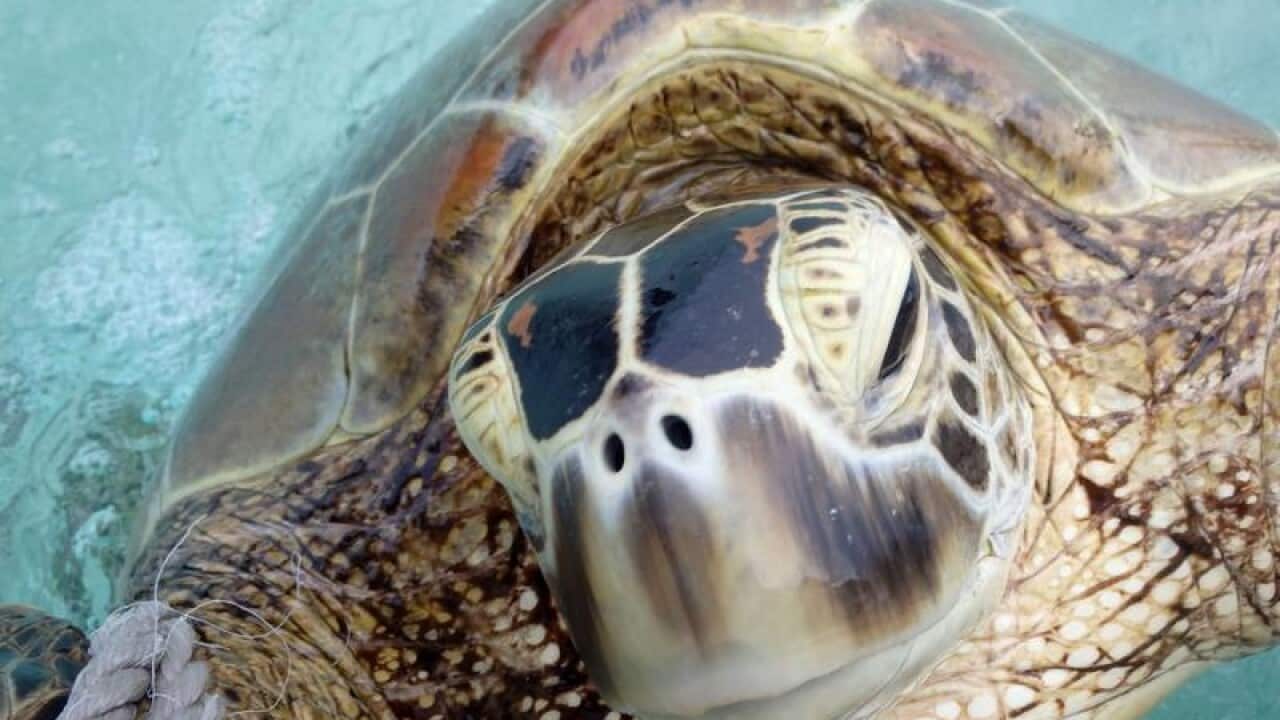
Up to 93 per cent of green turtle hatchlings could be female by 2100 - as climate change causes "feminisation" of the species, new research suggests.
The sex of turtle hatchlings is determined by temperature, and at present about 52 per cent of hatching green turtles - one of seven species of sea turtle - are female.
But a study by the University of Exeter and the Marine and Environmental Sciences Centre in Portugal shows that in warmer temperatures predicted by Intergovernmental Panel on Climate Change scenarios, 76 to 93 per cent of hatchlings would be female.
The figures are specific to the study site in Guinea-Bissau, West Africa but researchers say they expect a similar picture globally.
They say the changing gender ratio would initially lead to more females nesting, increasing the population, before a decline "as incubation temperatures approach lethal levels".
News that makes sense
Your trusted source for staying up-to-date with the world around you. Get free daily news updates and analysis, straight to your inbox.
They also predict rising sea levels will submerge 33 to 43 per cent of current nesting areas used by green turtles on the beaches where the study was carried out.
"Green turtles are facing trouble in the future due to loss of habitats and increasing temperatures," said Dr Rita Patricio, from the University of Exeter.
"Our results suggest the nesting population of green turtles on the Bijagos Archipelago, Guinea-Bissau, will cope with the effects of climate change until 2100.
"Cooler temperatures, both at the end of the nesting season and in shaded areas, will guarantee some hatchlings are male.
"Although rising temperatures will lead to more female hatchlings - and 32 to 64 per cent more nesting females by 2120 - mortality in eggs will also be higher in these warmer conditions.
"As temperatures continue to rise, it may become impossible for unhatched turtles to survive."
The research team says nesting sites submerged by rising seas may not simply "move" inland.
"There may be natural barriers or human constructions that stop beaches moving inland."







