
Billionaire Clive Palmer, who spent millions of dollars on a failed election tilt, will challenge political donation caps in the High Court.
Electoral reforms that will take effect from mid-2026 will cap the amount parties and candidates can spend at elections and the amount individuals can donate to political parties.
Palmer said the laws impinged on political freedoms.
"We all have to have an appreciation and tolerance about everybody's right to express their opinion," he told reporters in Canberra on Wednesday.
Special Minister of State Don Farrell said Labor would defend the laws in the High Court, adding it would fight to curb the influence of big money in politics.
News that makes sense
Your trusted source for staying up-to-date with the world around you. Get free daily news updates and analysis, straight to your inbox.
"We look forward to defending any challenge to these reforms," Farrell said.
"Billionaires shouldn't be able to use our democracy as their playground."
On Monday, the Australian Electoral Commission (AEC) released its annual financial disclosure return information for 2024-2025, revealing Palmer's mining company Mineralogy funnelled $52.9 million into his Trumpet of Patriots party.
The Coalition spent around $212 million in that financial year, which included the federal election in May, while Labor spent $160 million.
The AEC data doesn't break out specific election spending for political parties as it does for third parties.
Labor won a resounding majority of 94 seats in the lower house while the Coalition was diminished to 43.
Palmer's right-wing populist Trumpet of Patriots party failed to win a single seat.
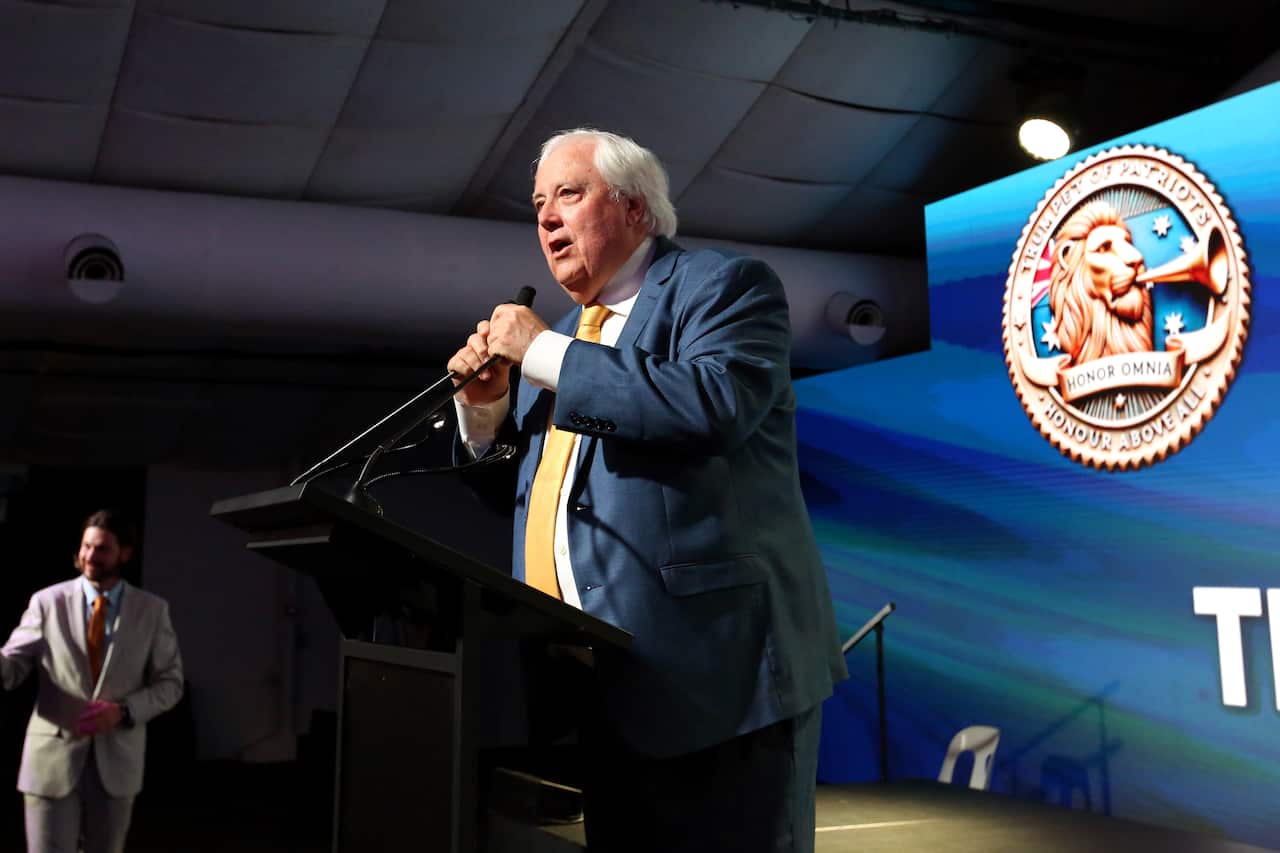
Palmer defended his major spending when asked about a comparison to One Nation, which won three Senate spots in 2025 despite spending $3 million.
"Money doesn't do it, it's ideas," he said.
"I spent $53 million, didn't get a representative. Well, if I spent $53 million, I should have got a lot, shouldn't I?"
Independents have also criticised the donation caps and public funding earmarked for incumbents, saying it makes the field uneven for new challengers and those not backed by large political parties.
What are the spending caps?
The laws cap the amount an individual can donate to a party's branch at $50,000 in a calendar year, and limit election spending to $90 million for political parties nationwide.
There are also individual spending caps for candidates in each electorate and Senate races.
Independents say this stacks the field against them as major parties can use the nationwide war chest on general advertising and campaigning, while they're constrained by their seat limit.
Further, the $50,000 individual donor cap per year can be extrapolated for parties with state and territory branches as well as a national arm, so they can receive up to $450,000 a year, while an independent running in a single seat would be limited.
The Centre for Public Integrity — a non-profit think tank that says its aim is "eliminating the undue influence of money in politics" — has criticised the reforms for not addressing corporate influence and providing full transparency over where money came from.
It estimates that almost $120 million of the $490 million that political parties raised in 2024/25 had no attributed source.
"They create inequality in our political system by advantaging major party and incumbent candidates over others without genuinely addressing the way wealthy interests can disproportionately influence the political process," executive director Catherine Williams said.
For the latest from SBS News, download our app and subscribe to our newsletter.







