
IN BRIEF
- The Opposition's plan comes as a group of 34 woman and children seek to return to Australia from Syria.
- The federal government has raised questions over the constitutionality of the proposal.
A Coalition plan to criminalise assisting individuals returning to Australia from "terrorist hotspots" has prompted concern over how the laws could be used, with warnings it could extend to places such as Gaza.
On Monday, new Liberal leader Angus Taylor unveiled his first policy item, proposing making it a criminal offence for anyone to facilitate the re-entry of individuals linked to terrorist hot spots, a terrorist organisation or who have committed terror-related offences.
The plan is in response to the fate of 34 women and children who have unsuccessfully tried to return to Australia from the al-Roj camp in northern Syria.
The group had been living in the camp in squalid conditions since 2019, when the self-proclaimed Islamic State group collapsed. They have been seeking to return home, but the government insisted it would not help repatriate them.
Donald Rothwell, a professor of international law at the Australian National University, said there are challenges associated with enshrining a "terrorist hotspot" into criminal law.
News that makes sense
Your trusted source for staying up-to-date with the world around you. Get free daily news updates and analysis, straight to your inbox.
"That is something that's not really known to Australian law, and arguably, terrorist hotspots can emerge at various points in time. They can change," he told SBS News.
"So for example, would Gaza be considered to be a terrorist hotspot? And of course, Hamas is a listed terrorist organisation."
Rothwell questioned whether Australian citizens in the occupied Palestinian territories could be caught out by the provision, with private citizens and organisations helping in the region.
He said the Opposition needed to be "very cautious" about the "unintended consequences" of the language used, which at present extends "much further beyond just the precise situation in Syria".
"It doesn't create a barrier at the border, so to speak, but it creates, if it's enacted as law, a strong disincentive for persons and organisations to assist these Australian citizens returning to Australia."
Draft legislation has not yet been presented but the Opposition says it will be introduced during the next parliamentary sitting fortnight, which starts on 2 March.
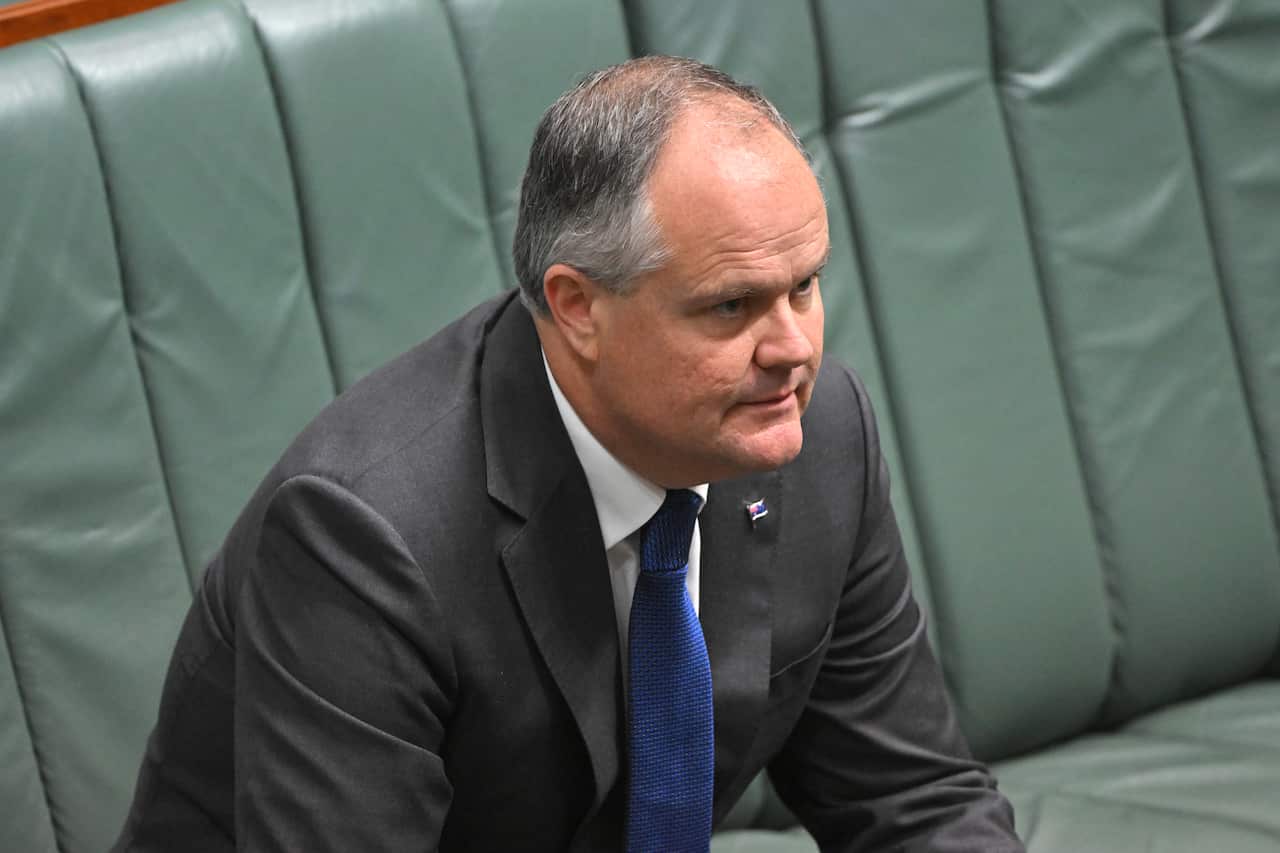
Opposition foreign affairs spokesperson Ted O'Brien argues the government should pull every lever to stop the return of people affiliated with terror groups, particularly when third-party assistance is involved.
"This proposed law closes that loophole, brings back responsibility to lie with government, and doesn't allow the government to effectively outsource the repatriation of terrorist sympathisers back to Australia," he told ABC's RN.
The proposed law would mean people who help these individuals would face up to 10 years in jail.
Facing repeated questions about the children in the cohort in Syria, O'Brien said: "there's not an automatic exemption", arguing security agencies would determine whether they pose a security risk.
"This should apply across the board. The key here is that we ensure that the government steps up," he said.
It is unclear who this would target and whether it would affect NGOs, advocacy groups or family members who have travelled to Syria to help the families' return to Australia.
Deputy Liberal leader Jane Hume clarified there would be exceptions for people facilitating humanitarian aid, but revealed organisations assisting could fall under the proposed rules, depending on the nature of their involvement.
"If Save the Children are returning, are assisting or facilitating the return of those who would pose a threat to Australia, who meet those conditions of having been in a declared area, committed a terrorist act, or been associated with a terrorist organisation, well, then they would be caught up in this," she told Sky News.
Shortly after the remarks, Save the Children CEO Matt Tinkler clarified that the group is not assisting repatriation efforts.
"Save the Children has already made it clear that we are not facilitating the re-entry of Australian citizens from northeastern Syria. We have not, and will not, conduct extraction or repatriation operations," Tinkler said in a statement.
"In the case of innocent children stranded in camps in northeastern Syria our role has been twofold: providing them with lifesaving humanitarian relief and advocating for national governments to repatriate their citizens."
Save the Children launched a 2023 Federal Court challenge to compel the group's repatriation, but the case failed after the court ruled Australia has no legal obligation to intervene in a camp outside its physical control.
PM rejects proposal as 'not serious'
The Coalition does not have the numbers to pass the legislation in the lower house where the federal government has a majority and appears unlikely to support it.
Prime Minister Anthony Albanese described it as "not serious", and said the government had received advice on the constitutional limits of barring the return of passport-carrying Australians.
"They pretend that the Constitution doesn't exist. They know that there are some limits on what can be done, but I repeat, our position is we are not repatriating people and we're not providing assistance," he told reporters on Monday morning.

Attorney-General Michelle Rowland said the government has been monitoring the cohort for years and has "confidence in our intelligence and security agencies".
"We obviously would need to take advice on whether this would be legally valid. We would also need to ensure that any such laws are consistent with our obligations," she told Channel Seven's Sunrise program.
These obligations include granting Australian citizens a passport.
"In the event that it is put forward that they have committed crimes, they will be subjected to the full force of the law on their arrival."
For the latest from SBS News, download our app and subscribe to our newsletter.







