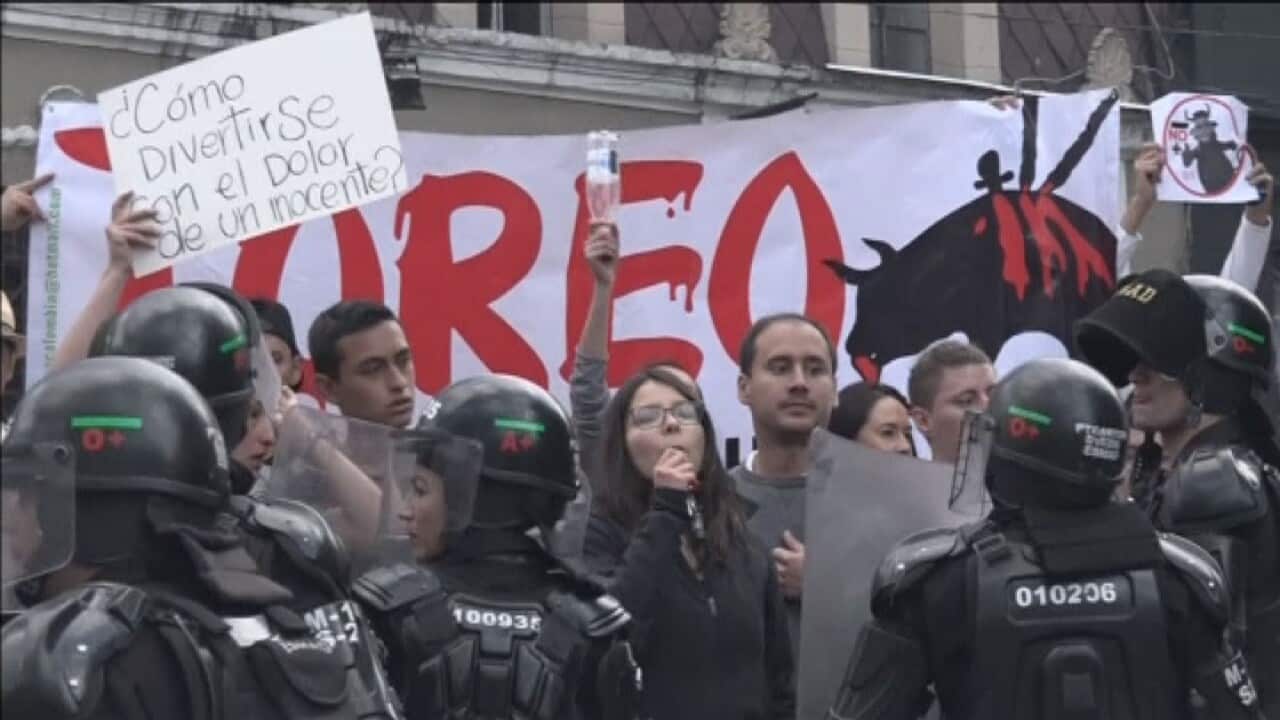
Protesters pushed down barricades, spat and threw rocks at civil police, while riot squads responded with stun grenades and gas.
Several arrests were made as police and paramedics attended to injuries incurred in the scuffles.
Spectators added to the tensions, seemingly taunting protesters from the turrets of Bogota's 1930s-era brick bullring, smiling and waving handkerchiefs in response to cries of "assassins" and "torturers".
News that makes sense
Your trusted source for staying up-to-date with the world around you. Get free daily news updates and analysis, straight to your inbox.
Bogota's previous leftist mayor outlawed bullfighting in 2012. But the constitutional court later overturned the ban, ruling it was part of Colombia's cultural heritage and could not be blocked.
Protester David Esquivel Velazquez said he was not only demonstrating against the tradition.
"We are defending our right to free-protest," he said. "We are having to deal with police provocation. I personally was attacked three times by the police, including kicking and beating."
The incumbent mayor, Enrique Penalosa, said while he supports animal rights activists who oppose the tradition, he has no choice but to enforce the high court's ruling.
Spectator Felipe Castillo said the process had been highly political, but supported the return of the tradition in the name of freedom of expression.
"It is clearly a political issue," he said. "While the previous mayor had a clear stance against bull fighting, and to some degree incited violence, the current mayor said he doesn't agree (with bull fighting), those who want to watch it do so at their own liberty.
"I think there is a clear change in the way the issue is being dealt with."
Penalosa has said he supports legislation going through congress in order to prevent state resources from financing bullfights, and that each district should decide whether they can take place.
In Spain, where the tradition began, the Constitutional Court reversed in October last year an earlier ban on bullfighting in Catalonia, passed by the regional parliament.







