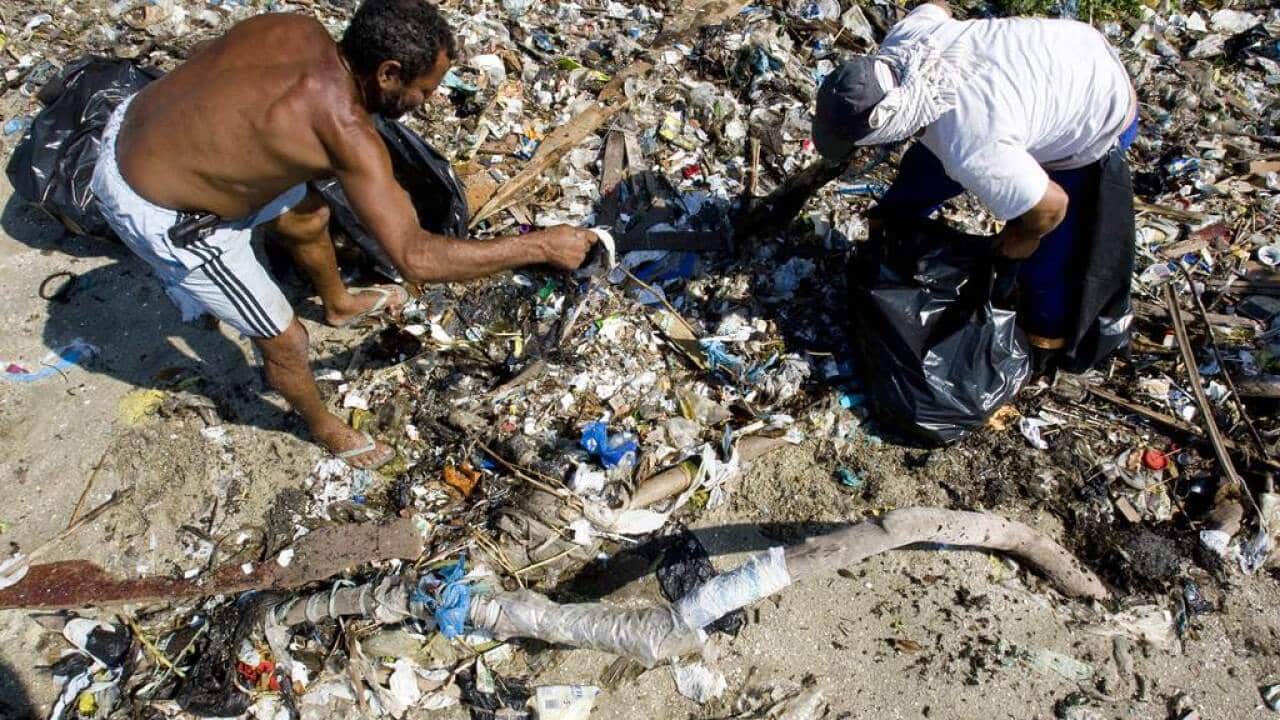
Though plastic was invented in the 1800s, it was really only around 1950 that the human-plastic love affair took off. And boy did it—the nearly 2 million tonnes (2.2 million tons) of plastic produced in 1950 had surged twentyfold in just two decades (by around the time a young Dustin Hoffman was advised to consider a future in plastics in The Graduate) (video).
Since the 1970s, at least 0.1% of this plastic has ended up in the ocean. Conservative estimates put the amount of plastic bobbing around the ocean at 1 million tons (though it’s probably a lot more). Here’s the weird thing: It’s not there. Or at least, most of it isn’t. Scientists have found between 7,000 and 35,000 tons of plastic floating around the surface of the open ocean, according to a just-published study. In other words, 97-99% of that plastic trash has gone missing.
So where’d it go? Though it’s possible that sunlight is eroding it into nothingness, or that tiny pieces are washing back ashore, researchers are skeptical.
What’s probably happening, scientists theorize, is that tiny fish are eating it. The most likely plastic-snackers are lanternfish and other small “mesopelagic” species, meaning those that live in the middle swath of the ocean, swimming to the surface at night to feed. These are far and away the most populous fishes in the sea.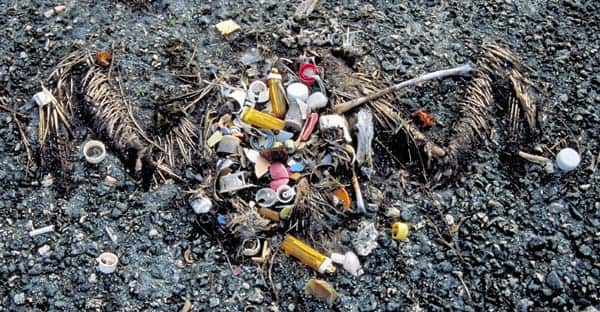 One clue that these little fish are scarfing down tons of plastic comes from the fact that the size of the plastic pellets that have gone missing are mostly those ranging from 0.5 to 5 millimeters in size—about the same dimensions of the creatures that mesopelagic fishes like to eat.
Sure enough, studies of their stomach contents have found not only that around a third had swallowed plastic chunks, but that the size of the trash they’d chowed down on was that exact size.
This also makes sense because of where the plastic is ending up. Here’s a map:


We don’t have a good sense of what swallowing plastic does to these fishes, or even whether they’re able to excrete or throw up their plastic meals. That’s worrisome, since the toxic chemicals in plastic might permeate their tissue—bad for mesopelagic fishes, but also potentially bad for humans. Pellets in the 0.5-5-millimeter range are also commonly found in the bellies of the predators who eat these smaller fishes, according to the study. Those include tuna, mackerel and other sushi-menu faves.
This article was originally published on Quartz. Click here to view the original. © All rights reserved. Distributed by Tribune Content Agency.

Share


