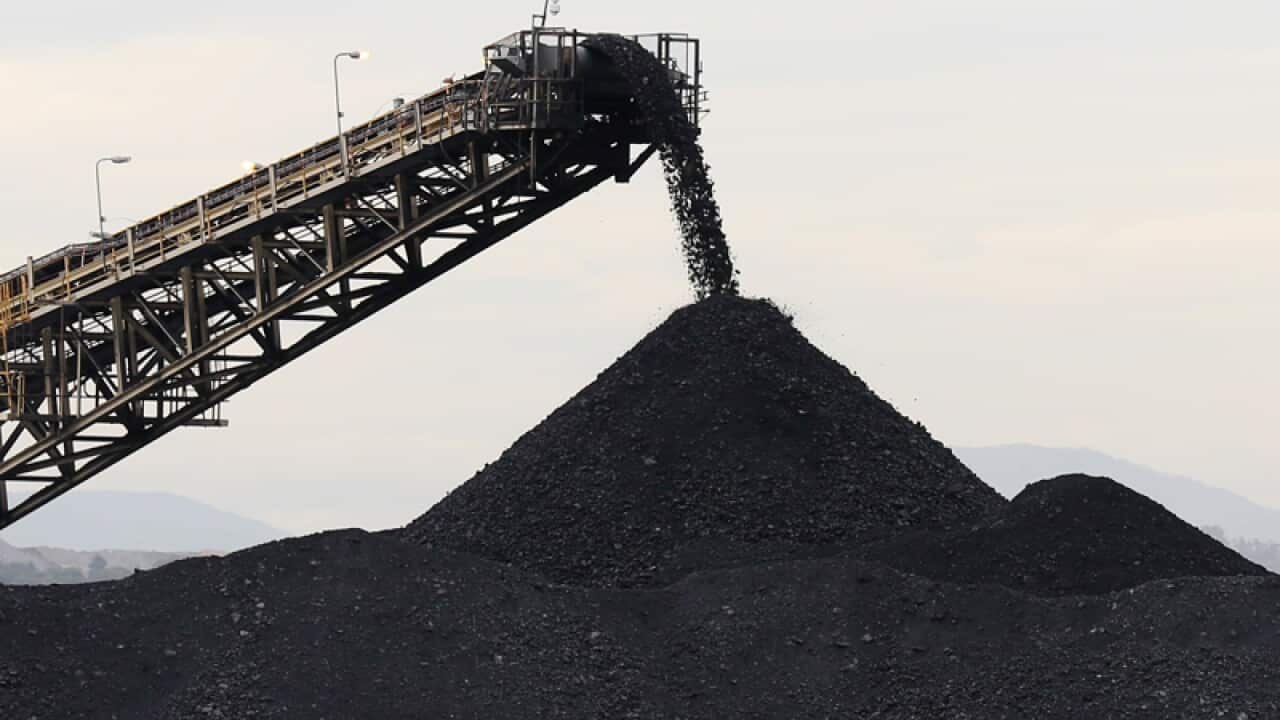
The Federal government can’t have it both ways. Tony Abbott has frequently defended the future of coal – most famously announcing that ‘coal is good for humanity’ and an essential part of Australia’s energy mix.
Yet last week at an international uranium industry conference in Adelaide Industry Minister Ian Macfarlane was singing up the praises of nuclear to combat climate change. "Base load, zero emission, the only way it can be produced is by hydro and nuclear," he said.
Does anyone else spot the inconsistency here?
It seems Coalition senior Ministers are happy to acknowledge the glaring reality that even the world’s conservative leaders are moving on climate debate when it suits them for political expediency – but will also defend the future of coal to the hilt in other political contexts.
So we have a Federal government that will talk of low emissions as an argument to promote the embattled uranium sector, but defend coal when it comes to keeping vested mining interests at the top end of town on side.
The inconsistencies and obstructionism of the Abbott government’s climate policy is becoming untenable, and holding Australia beck from taking meaningful action.
The inconsistencies and obstructionism of the Abbott government’s climate policy is becoming untenable, and holding Australia beck from taking meaningful action. The bad news for the government is that reality is starting to bite. The Abbott government is way out of step with the community on climate change.
The findings of the latest Lowy poll released this week found that Australians attitudes to climate change are shifting fast – with a majority now willing to bear ‘significant costs’ to tackle the problem and almost two thirds of Australians wanting the government to “commit to serious reductions” of greenhouse gas emissions in Paris later this year.
To do so would not only align with the wishes of the community, it would also put of back in step with even the most conservative governments and institutions elsewhere in the world.
Following the recent G7 meeting in Germany, Barrack Obama and Angela Merkel released a statement throwing their weight behind a fossil fuel free future. Even Pope Francis has released an unprecedented encyclical this week in which he unequivocally warns of the destruction of Earth’s ecosystems unless people change their lifestyles and energy consumption.
The closures of old dirty power stations around the country are a sign of the times as international energy retailers and local communities wake up to the challenges and opportunities presented by the glaring necessity for a low fossil fuelled future.
All over Australia, we are witnessing old dirty power stations closing down as the industry catches up with the realities of a carbon minimising world. Last month we saw Anglesea Power Station on Victoria’s Surf Coast announce its imminent closure. And then just last week, Alinta Energy announced the closure of its two Port Augusta power stations and the coal mine that supports them by 2018.
These closures are simply a sign of the times as international energy retailers and local communities wake up to the challenges and opportunities presented by the glaring necessity for a low fossil fuelled future. In South Australia around 40 per cent of the States’ energy is now powered by renewable energy. The government must move fast to provide employment pathways into renewables for these workers losing their jobs in the coal mining sector.
When it comes to the Federal government promoting both coal and nuclear – they are wrong on both fronts. Neither coal nor nuclear provide the answer to future energy security and economic prosperity.
As Associate Professor Mark Diessendorf from the Institute of Environmental Studies at UNESW has pointed out this week, South Australia could be powered by 100 per cent renewables within 15 years using a mix of renewables and employing smart grid technologies.
Australia could follow this model – but we need urgent leadership now at the Federal level.
Share


