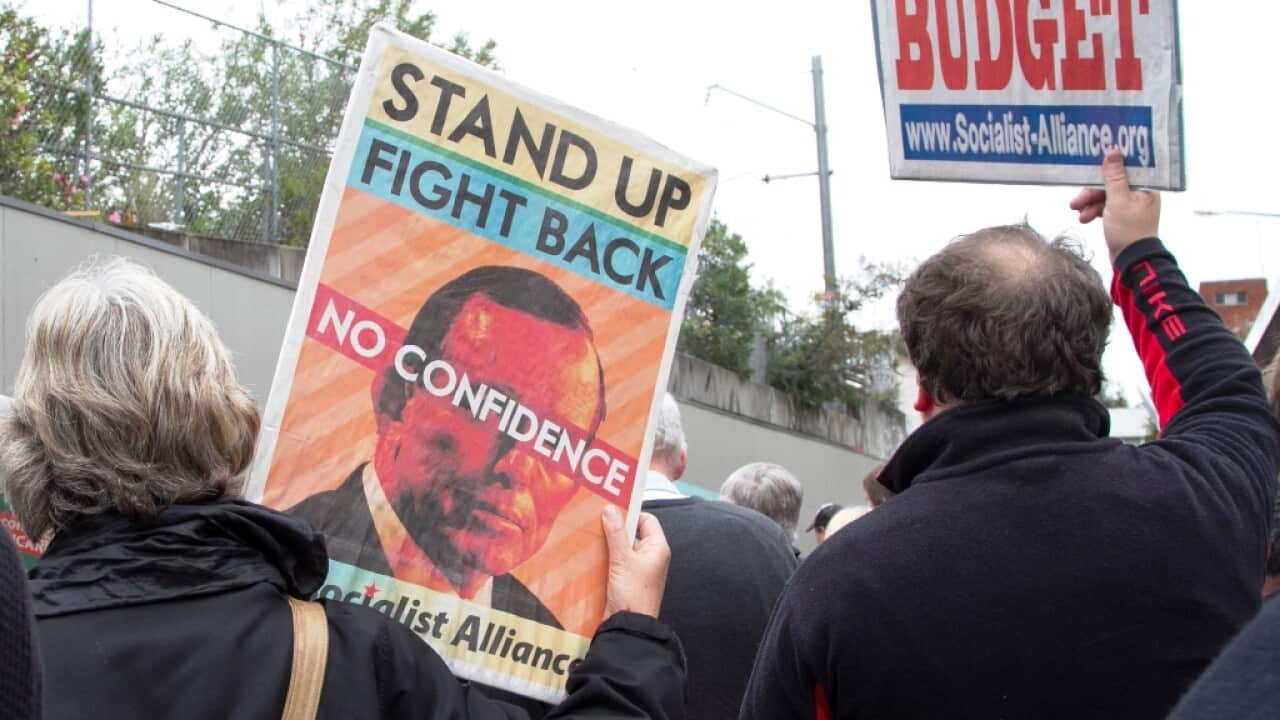
As the fall-out from the Coalition’s budget continues much of the focus remains on "broken promises".
This frame was set early in the game. In his budget reply for example, Bill Shorten described the budget as one "of broken promises built on lies". Labor MP Jason Clare went further, calling budget night the "the night of the long noses". Former Deputy Chief of Staff to Julia Gillard, Tom Bentley, has made the issue a key critique of the government, arguing that "Abbott deserves to be punished relentlessly for his broken promises." It’s not just Labor members either - progressive organisation GetUp for example have actively campaigned on Abbott’s broken promises as the main argument against his budget.
This argument forms a larger base of critique against Abbott’s administration. Ranging from the changes to their position on Gonski, the government’s performance on job creation, and even to Abbott’s pledge to spend his first week in office in Arnhem Land, arguments over "broken promises" have been effectively used as a way to paint the Prime Minister as deceptive and a liar.
Focusing on "broken promises" seems to have clouded our judgement - participating in short term obstructionism and political game playing rather than looking at how to create a progressive future.
With his focus on the "great carbon tax lie" in opposition, in many ways Abbott deserves this attention. Yet, at the same time, the government’s "broken promises" are sideshow that detractors should be wary of using too often.
News that makes sense
Your trusted source for staying up-to-date with the world around you. Get free daily news updates and analysis, straight to your inbox.
Focusing almost solely on broken promises forgets that we need to make the substantive case against the policies Abbott is implementing. Whilst campaigns on the budget for example have effectively created a picture of a leader who said one thing before the election and another after, they often fail to articulate why these changes are a bad thing. Our arguments fail to make a case for the value - positive of negative - of the policies and programs that the government is cutting or implementing, in turn ignoring any sort of policy, political or ideological argument for them to be kept, improved, or changed in some other way. We’ve focused on political game playing instead of providing any actual analysis of what’s happening in the real world.
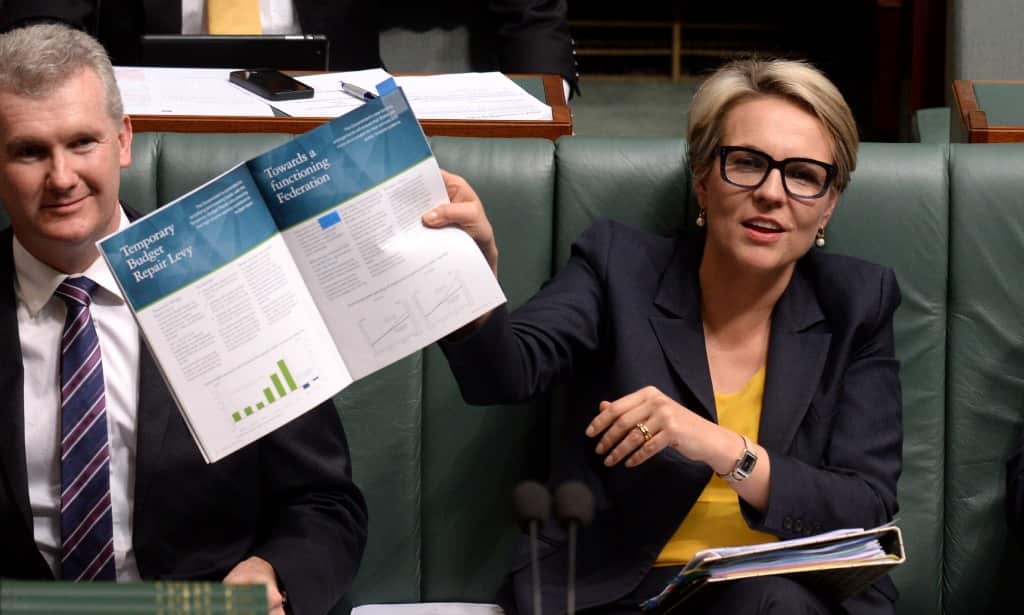
It’s no wonder then so many are getting so ideologically confused. Critiques of the increase to the fuel excise and the deficit tax for example, have often missed the point that if implemented properly they represent potentially environmentally friendly and progressive forms of taxation respectively. In the past, many have campaigned against Abbott’s refusal to provide industry assistance for large companies, arguing this goes against his promise of creating one million jobs within five years. But in doing so we forgot about the ideological issues many of us should have with a government shelling out millions of tax payer dollars for large corporations.
Focusing on "broken promises" seems to have clouded our judgement - participating in short term obstructionism and political game playing rather than looking at how to create a progressive future.
Whilst this may seem worth it if we are able to dislodge Abbott from the Prime Ministership, we must be careful. This is the sort of short-term obstructionism that Abbott used in his time in opposition, and the result should send a warning. Instead of building a strong base for his government, Abbott put people off him before he was even elected, leading him to become one of the most unpopular new Prime Minister’s in recent Australian history. If your whole reason for being in government is that the other person broke some promises then you are starting off on a very weak base. Without doing the work of articulating real alternatives, it is very likely the left is heading in the same direction. That makes it not only difficult to repeal Abbott’s policies, but also to progress any form of progressive alternative.
It’s important to keep governments accountable for what they’ve said and done in office. But it is far more important to build an ideological and policy base for an alternative form of government. In all the joy of attacking Abbott for his broken promises many on the left have forgotten this. It may lead to some short-term gain, but the long-term pain could be real.
Simon Copland is a freelance writer and climate campaigner. He is a regular columnist for the Sydney Star Observer and blogs at The Moonbat.







