As the 12th international Convention of Biological Diversity (CBD) meeting kicks off in South Korea this week, Australia’s Federal Environment Minister will be missing in action. Despite having been a signatory to the convention since 1992, Australia is currently adopting a set of policy measures that is likely to send our unique wildlife towards greater threat and fail meeting biodiversity targets under the convention.
Let’s look at just three examples of iconic Australia species under threat at present.
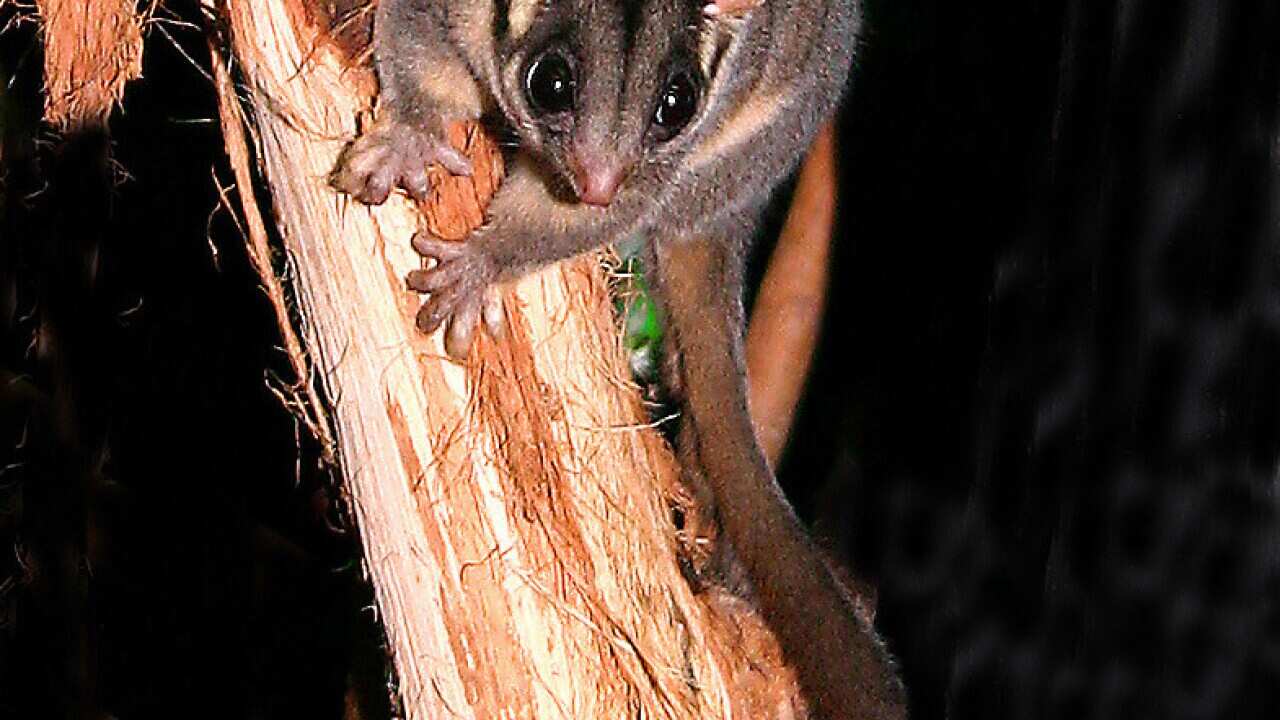
The Leadbeater’s possum makes its home in the tall flowering mountain ash forests of Victoria’s Central Highlands, northeast of Melbourne. However, a large amount of the tiny animals (generally smaller than a human hand) habitat was burned out during the 2009 wildfires, and many of the remaining large and ancient trees are being logged – meaning only an estimated 1500 Leadbeater’s remain in the wild.
The flightless Southern Cassowaries of the dense tropical rainforests of northern Queensland are not adjusting well to the loss, fragmentation and modifications of their homes from land clearing. Urban development continues to threaten the Cassowary populations found outside formally protected areas. Only 1000-1500 of this colourful keystone species are now left in the wild.
Meanwhile, the distinctive black, white and gold feathered Regent Honeyeaters, originally found in larger flocks across south-eastern Australia are now one of the rarest species on the Australian mainland, with their entire population reduced to approximately three hundred and fifty.
The Leadbeaters’ possum, the Southern Cassowaries, and the Regent Honeyeater are classified as threatened species under the Environment Protection and Biodiversity Conservation (EPBC) Act, Australia’s national environmental legislation which puts into practice key obligations Australia has signed onto in international forums. Under the CBD, Australia is committed to “prevent the extinction of known threatened species” and improve and sustain their conservation status by 2020.
Habitat loss and fragmentation is one of key reasons for species extinction in the wild. However, instead of strengthening Australia’s national environmental laws to better protect threatened species, the Australian government is moving to weaken them by handing down oversight of national and international environmental matters to states.
In a petition to the CBD secretariat - scientists, lawyers and green groups submitted that by handing down federal oversight, the Australian government would be failing its targets for biodiversity protection. A recent assessment of state threatened species and planning laws found that none of the States maintain the same environmental standards as the Federal government, and most simply don’t refer to international conventions.
There are enough lessons to learn from the past that state governments often do not act keeping national or international environmental interests in mind. The commonwealth government, being a step removed, is in a position to make a make a more effective decision. Ending water-overuse in the Murray-Darling Basin is a prime one. Water is a trans-boundary issue which needs national management to ensure a scientific balance between farming and other uses and the environment. Realising that the old arrangement of water-sharing amongst states was causing the collapse of biodiversity, threatening Australia’s international commitments for protecting wetlands, and threatening to the future sustainability of farming, a national management plan was made and passed by federal parliament.
In a move that ignores Australia’s biodiversity decline and disregards international commitments, the Australian government is preparing to hand final decision making power for developments in environmentally sensitive areas which are home to Australia’s threatened species to states whose legislations don’t meet the same national or international standards. These decisions are likely to impact places that are special to all Australians – such as the Great Barrier Reef, the Kakadu wetlands and Tasmania’s old growth forests, while making Australia’s native species loss problem even more critical.
State laws simply don’t meet the required standards and further amendments are being made to weaken existing laws. In Queensland, which is expected to be one of the first cabs off the rank with federal handover of approval powers, a bill was passed recently to almost completely remove community rights to object to development proposals including mines for coal, bauxite and uranium which can impact wildlife, water resources and human health.
The committee of the World Heritage Convention (through which Australia is bound to protect Tasmania’s ancient forests) in their report last April discredited the Australian government’s decision to hand down federal oversight as premature.
The EPBC Act is not perfect and has not been able to prevent the scale of biodiversity loss so far. But what is clear is that further destruction of the homes and the future viability of Australia’s unique animals will be the likely end result of the proposed handover of powers to the states. At a time when everything possible needs to be done to protect Australia’s remaining biodiversity and places Australians love, this is a step in the wrong direction.
Australia’s national environmental law should be strengthened, not weakened. The first step in that direction is to keep federal oversight for Australia’s international and national environmental matters.
Ruchira Thalukdar is healthy ecosystems campaigner for the Australian Conservation Foundation.
Share


