
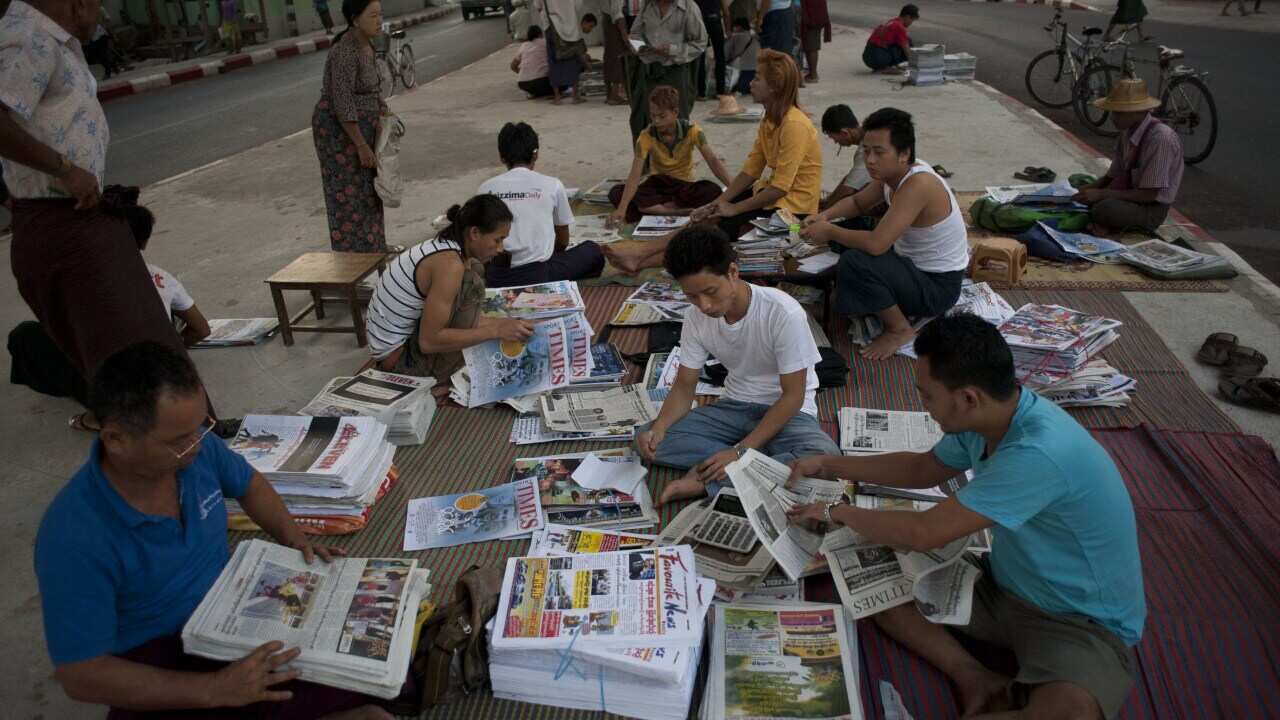
Special Branch police reverted to their old intimidation tactics in Rangoon last week by calling various journalists and editors into their Pansodan Street office to answer questions about the budget balance sheets of various daily and weekly newspapers.
On Thursday, SB officers visited the newsroom of the prominent magazine The Irrawaddy, formerly published in exile, to ask probing questions about their finances. The ostensible reason given were concerns over potential money laundering, but more obviously it was a subtle form of pressure to curb the confidence of the Burmese media, whose freedom to report on issues across the board has been showcased as a major indicator improvement in Burma’s reform process. Yet now even on this key indicator, the government has been backsliding.
Trouble for Burmese journalists
In recent months, authorities arrested several Burmese journalists on various charges, and convicted and sentenced Democratic Voice of Burma reporter Zaw Pe to a year in prison on trumped-up charges of “trespassing” and disturbing a civil servant. While Burma has scrapped its pre-publication censorship system, once one of the most draconian in the world, the government is now working to promulgate restrictive new media laws that will potentially threaten journalists through retroactive lawsuits against their publishers.
The recent intimidation in Rangoon has been augmented by increasing pressure on Burmese and international journalist visas, with many being reduced from several months duration to just 28 days, despite many formerly exiled Burmese editors and correspondents being welcomed back in 2011 and permitted to open bureaus.
The source for these new restrictions is hard to pinpoint, with many looking at the acerbic presidential spokesman and deputy minister of information, U Ye Htut, while others blame the ministries of immigration or foreign affairs for the new limitations. More likely, it’s the tried and tested Burmese shell-game of bureaucratic opacity, predicated on generating uncertainty and unease in the media community.
Journalists carry on despite intimidation
To their credit, Burmese journalists have pushed off this incremental intimidation, and voiced increased determination to report on issues of abuse of power, corruption, and the dark side of Burma’s dimming reform efforts. Having withstood decades of crushing state censorship, these reporters are not easily cowed.
The Burmese government needs to cease sinister threats, release imprisoned journalists, and permit the media to do their crucial work to report without state interference on fast-moving developments in the nation’s politics, society, and economy. The international community should realize that media freedoms need to be protected and speak up accordingly – because freedom of the press is like a weather vane measuring the winds of official commitment to reform. Right now, all indicators are showing the wind is blowing the wrong way regarding freedom of the press in Burma.
David Scott Mathieson is the senior researcher on Burma in the Asia Division of Human Rights Watch.





