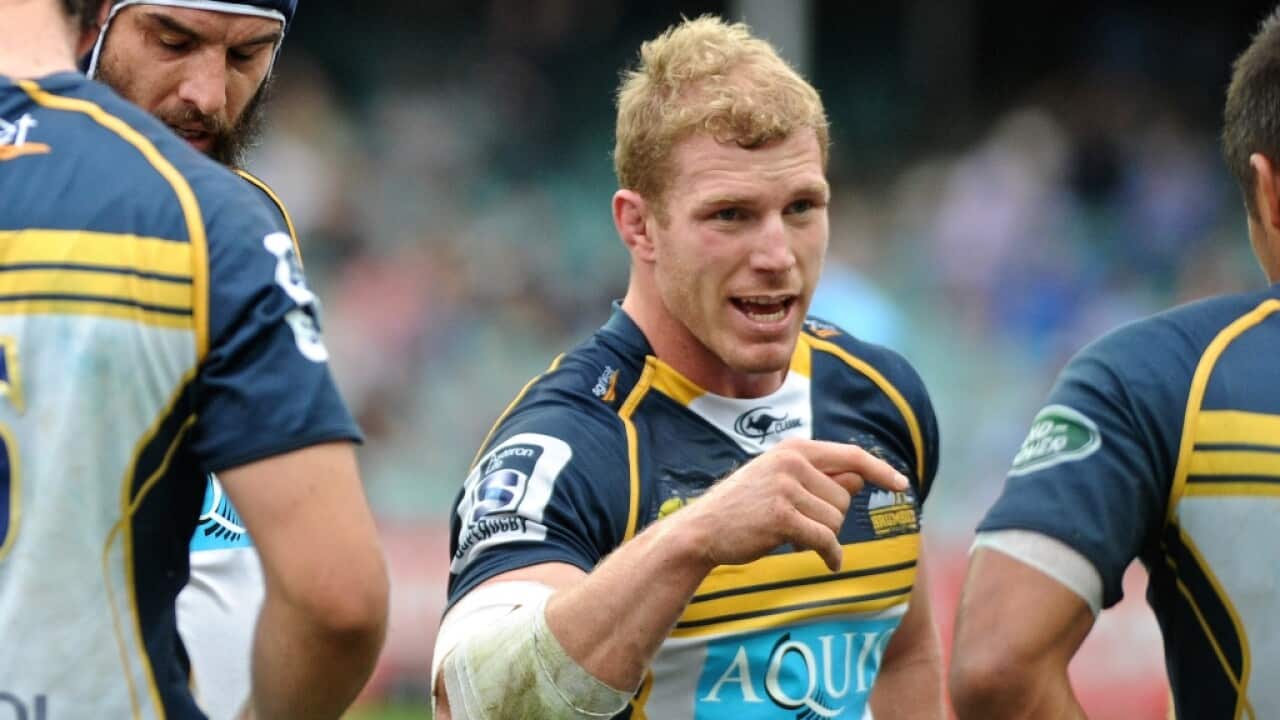
During a recent Super Rugby game, Brumbies player David Pocock approached the referee to complain that homophobic slurs had been used by Waratah’s player Jacques Potgeiter.
Pocock later said that he did not want the incident to become a witch-hunt, but that the Brumbies would not tolerate homophobic language, and would call it out in order to educate players and continue making the game more inclusive.
Many people have expressed opinions about the incident, but disappointingly most were focused on debating Pocock’s actions rather than Potgeiter’s. To his credit, Potgeiter took responsibility and turned up to apologise to the gay rugby community in person, and has been rightfully commended for doing so.
As for Pocock, many people have also commended his actions, but there were still far too many who criticised him for taking a stand.
Sports reporter Rebecca Wilson was a prominent voice amongst these detractors, writing an article for the Daily Telegraph criticising David Pocock’s actions. In it, she claimed that Potgeiter is merely a sledger - one who insults women and wives and girlfriends as well, and so it should just all be ignored and left on the field. She also said that for those people who stand on football sidelines often, especially when schoolboys play:
“…the use of the words “poofter” and “faggot” is so widespread that even the softest spectator learns to ignore it.
These are not directed at any particular player the opposition might believe is homosexual. They are aimed at anyone who: 1) is playing well or; 2) who looks easily rattled or; 3) who takes it up to their opponents.”
She goes on to claim that therefore Potgeiter is not a homophobe, and it would be a different story if he had been, “…standing on Oxford Street during Mardi Gras”.
Wilson’s argument is that because these kinds of slurs are so widespread, they no longer have any impact, and that because they are not actually aimed at a gay person, they aren’t damaging or homophobic.
Let’s get the obvious out of the way. There is no way of knowing the sexuality of all rugby players in Australia, especially at the level that ‘schoolboys play’, but some of them are most likely gay.
Irrespective of that, language doesn’t work the way Wilson is implying. Homophobic language is homophobic regardless of who you say it to.
If you are using derogatory words for homosexual people as an insult to others, you're absolutely being homophobic. It doesn't matter who you are saying it to.
As a heterosexual person, maybe it seems easy to ignore the widespread use of ‘poofter’ or ‘faggot’ every weekend on the sideline. As a non-heterosexual person, I am telling you it is not easy to hear.
As a lesbian in her 30s who is out, well-adjusted and happy, I am telling you my stomach still drops every single time I hear the use of that kind of language. Hearing someone use your sexuality to insult another person does not get easier the more it happens, and I bet the young gay men having to hear it over and over again on the football field agree.
Mental health group Beyond Blue has released new research that uncovered alarmingly high rates of homophobia amongst young men. They found that 40 per cent of teen boys feel anxious or uncomfortable around same-sex attracted people, almost two-thirds had witnessed people being bullied for their sexuality, and one-quarter felt it was OK to use "gay" as a derogatory term.
Beyond Blue chief executive Georgie Harman says these findings are particularly concerning given that, “… young LGBTI people are already three to six times more likely to be distressed than their straight peers …” and that, “we know that high levels of distress have a strong link to depression, anxiety and suicide."
This ties in with a 2013 study Beyond Blue conducted regarding the impact of homophobic bullying during sport participation on the depression and anxiety levels of young same-sex attracted Australians. One of the key findings was that verbal homophobic abuse in these athletic settings was strongly associated with poor mental health and wellbeing of young queer people.
It added, “…homophobia and transphobia communicates to them that ‘they are not welcome here, which can prevent them from enjoying the many physical, mental and social health benefits of participation and to maintain lifelong participation.”
In her article, Rebecca Wilson claimed that many are questioning whether Pocock’s potential standing in the Wallabies will be affected now his teammates know that things they say on the field might be reported to the referee. That some have labelled him a dobber, and that the sacred view of ‘what is said on the field, stays on the field’ has been lost.
Perhaps homophobic language and attitudes are something that heterosexual people find easy enough to leave behind on the sporting field. I imagine this is easier if you don’t consider the impact this might have on homosexual players or spectators – particularly young men who might be hiding their sexuality.
They are the ones who won’t leave it on the field; the ones who will continue to carry it around with them, hanging like deadweight around their shoulders.
And they are who David Pocock probably has in his mind when he takes a stand against homophobic language in a high profile game. If our top footballers declare that kind of language unacceptable, their attitude might just trickle down to the fields around the country.
Just because something happens all of the time, does not make it something that we as a society should overlook. If anything, it makes the need to address the issue even more urgent.
Rebecca Wilson is not the only person who has been making these kinds of comments. Unfortunately, it was a common reaction.
If you are more upset that grown men playing a sport might have to stop calling each other homophobic names and find new ways to insult each other than you are about the damaging impact that their behaviour might have on young people in the real world, I have a suggestion.
Perhaps you need to skip watching the next football match and spend that time thinking about your priorities instead.
Share


