
As I have travelled around Recep Tayyip Erdoğan's Turkey these past few weeks, covering the lead-up to and aftermath of last weekend's presidential election, I have been continually reminded of the last country in which I undertook such a project. In 2012, I travelled from Vladivostok to Moscow in the lead-up to Vladimir Putin's pre-ordained return to the Russian presidency. Turkey and Russia, a friend and former Istanbul resident recently told me, are like twins separated at birth. For all their self-evident differences — the relative availability of alcohol springs to this correspondent's mind — the countries are startlingly similar.
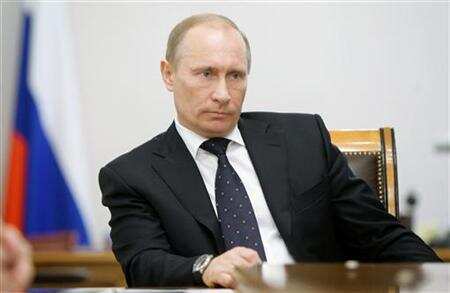
Both were born in the crucible of World War One and both are arguably still struggling with the repercussions of that event. Russia spent the decades that followed the war under the thumb of a repressive single-party regime while Turkey inched towards multi-party democracy under the constant threat of military takeover and junta rule. Both experienced coups or coup attempts as recently as the 1990s, both have been scarred by long-running armed conflicts with insurgents from ethnic minority communities — the Chechens in Russia and the Kurds in Turkey — and both have struggled with the phenomenon of the "deep state", brought to heel in both cases, if not entirely done away with, with the emergence of domineering authoritarian strongmen whose most important political skill, aside from winning votes, has been the ability to juggle competing interests within the upper echelons of the elite. Most importantly, both are relatively young democracies with all the tell-tale pathologies of their type.
Such pathologies are nowhere more apparent than on the road to the ballot box. Indeed, if the countries are twins separated at birth, then their elections are siblings born several years apart, with the younger following admiringly in the older child's footsteps.
News that makes sense
Your trusted source for staying up-to-date with the world around you. Get free daily news updates and analysis, straight to your inbox.
Erdoğan has borrowed extensively from Putin's playbook over the course of the past month: the railing against enemies internal and external (the United States and its supposed agents in the non-systemic opposition in Putin's case, Israel, Turkey's Alevi community and Gezi Park "terrorists" in Erdoğan's), the purging of perceived opponents from state institutions and the business, media and political elite (last month saw Turkey's police establishment gutted on the president-elect's orders), the monopolisation of the media at the expense of opponents (a majority of voters in both countries get their news from either state-owned or state-friendly television networks and OSCE election observers have criticised the tendency of the media in both to privilege one candidate) and the targeting of independent media and free-thinking journalists (Russia remains tenth on the Committee to Protect Journalists' index of unpunished journalist murders and the Kremlin has set about closing any outlet that is even mildly critical of it, while Turkey is the world's leading jailer of reporters. Also, this, which is just, like, you know, wow.) Erdoğan has also adopted Putin's tactic of dividing his electorate and sowing the seeds of mutual loathing, fear and distrust between communities.
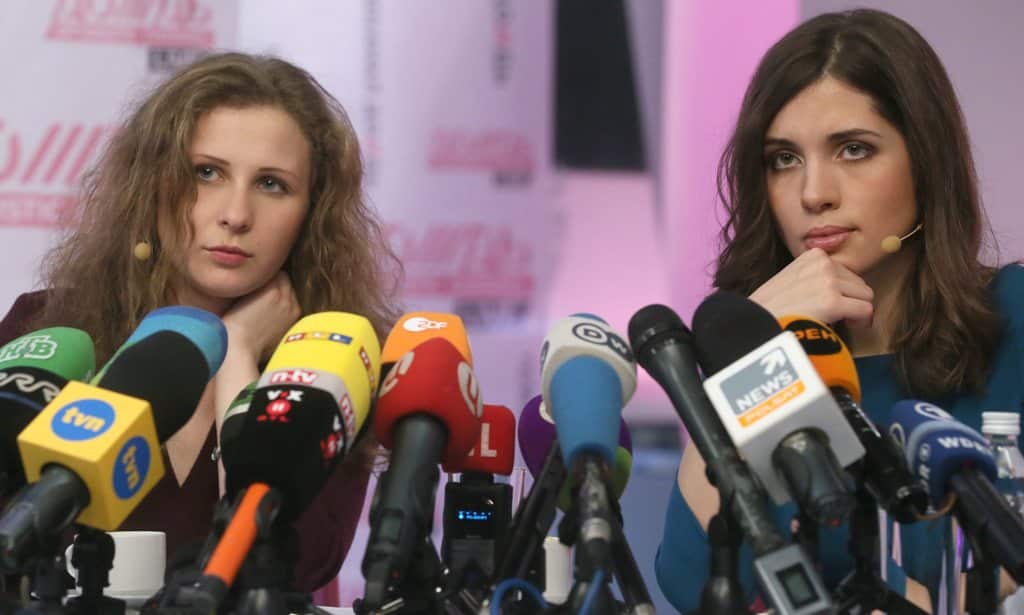
Both leaders employ the language of populist nationalism in this project — and, in Erdoğan's case, the language of sectarianism — and both enlist the services of the pious. (As I have written in these pages before, I am not exactly a fan of Pussy Riot, but let's not forget the role of Patriarch Kirill in the affair. Or the Orthodox sect in Bolshaya Elnya that considers Putin a saint.) In both countries, this is first and foremost a cynical manipulation of class divisions: the turning of the poor and uneducated against the middle-class in the interest of further enriching the rich. Both leaders have overseen and probably partaken in enough corruption during their lengthy tenures that they maintain their stranglehold on power at least in part to protect themselves against the possibility of future persecution. Erdoğan and members of his family and inner-circle almost certainly have a case to answer. Despite the titillating speculative non-fiction of Masha Gessen and others, I am yet to see any hard evidence of Putin's secret $40 billion, though his tendencies towards cronyism, at the very least, have been well-documented, particularly in relation to this year's Sochi Winter Olympics.
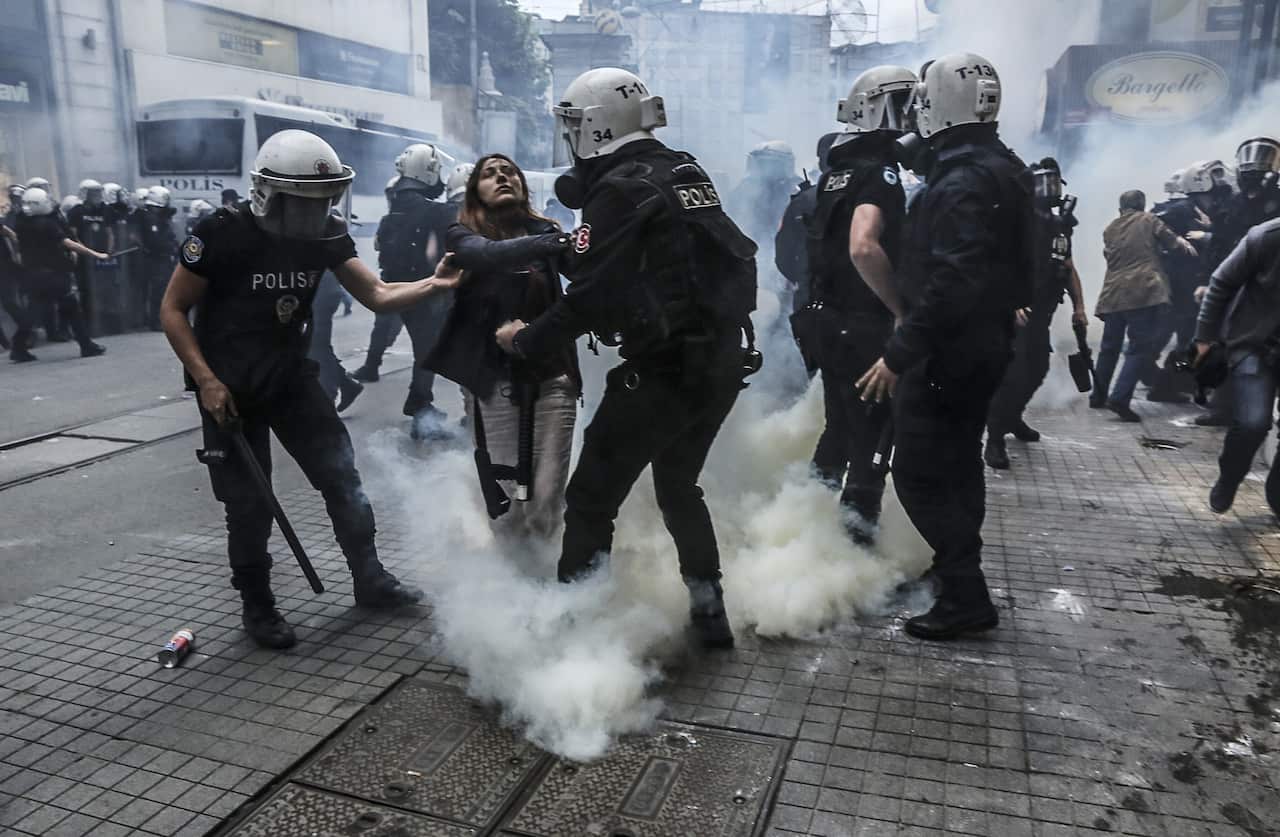
On at least one front Erdoğan has surpassed his model with flying colours: the use and abuse of violence. Putin was always very careful about letting slip the dogs of law in the lead-up to his re-election: between the impromptu violence of December 2011 and the Inauguration Day head-cracking of the following May, Putin allowed the opposition to protest at his pleasure. The crack-downs that did occur during that time were barely worthy of the name. (When I covered an anti-austerity protest in Madrid later that year, I was surprised to find that the behaviour of the Spanish riot police was far more aggressive than that of Russia's OMON.) In striking contrast, Erdoğan's government is responsible for the deaths of an estimated eleven people, killed during the Gezi Park protests of last year. Only on this point does he really diverge from Putin and hew closer to his southern neighbour...
But his plans for Turkey's future are Putinist to the core. His next great challenge — much greater than winning a mere election — is to change the structure of the country's politics and governance so that he might take his newly-won ceremonial role and transform it into something significantly more powerful. He likes to say that he's interested in a US-style system that grants the president executive powers because he believes it would be the best thing for the country. He assures us that it has nothing to do with the fact that his party's by-laws preclude him from running for a fourth consecutive term as prime minister and that he has little interest in relinquishing power. Just as Putin assured us that six-year presidential terms had nothing to do with his personal desires and everything to do with the country's best interests. Getting democratically elected is one thing and it isn't to be sniffed at. But taking that victory and using it to centralise power in yourself is another entirely and never a good one. All this should make us very worried about what sort of president Erdoğan is going to be.







