
On July 14, 2013, Jessica Escarlet, a 23-year-old from New South Wales, was gored in the chest by a Miura bull. Running one of the most dangerous sections of Pamplona's famous encierro—the narrow, often-congested callejón, which leads from the streets into the bull ring—she tried to climb over a fence at the wrong moment and was taken out as though by a tidal wave. She suffered multiple rib fractures and damage to her right lung. You can watch the incident on YouTube.
The goring put Escarlet in auspicious company, albeit not the kind of company that anyone is particularly eager to join. The Miuras, famously known as the bulls of death, have killed more matadors in the ring than any other breed.
Escarlet wouldn't have know this, of course. She wouldn't have been told. She almost certainly wasn't told anything about the encierro itself. She wouldn't have been running in the callejón if she had—she probably wouldn't have been running at all—nor would she have tried to go over, rather than under, the fence. Had she spoken to veterans of the encierro, who are neither difficult to find nor reticent when it comes to proffering advice, they would have given her the basic tips required to run with any modicum of safety.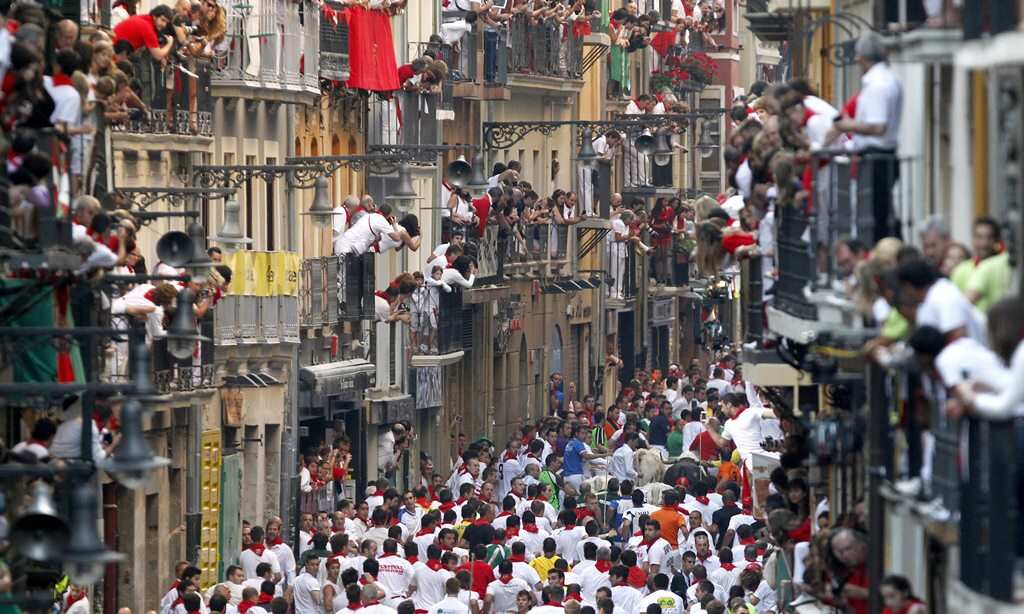 What made Escarlet's decision to run the callejon all the more remarkable is the fact that, only the day before, it had been the site of a massive pile-up that nearly ended in tragedy. Twenty-three people were hospitalised and one left comatose after an influx of the runners known mockingly as los valientes, the valiant ones, for the way they tear through the streets long before they even see a bull, closed one of the doors into the ring, creating a bottleneck and triggering a massive pile-up.
My friend Bill Hillmann, a bull-runner and author from Chicago, helped carry the comatose boy, John Jeronimo Mendoza, to the infirmary. He specifically blamed los valientes for what happened. "These uninformed first-time runners often cause folly on the course," he wrote. "Many of them are American tourists who’ve done no research or people who are half-drunk with no sleep, no knowledge, going on rumour and stupidity."
"I can’t help but wonder if enforcing some sort of mandatory certification for first-time runners could have at once reduced the number of people on the street that morning, and avoided the chaotic pile up all together. [...] The bull-run I love dodged a major catastrophe, but if nothing changes, I fear for the future of [the] run." There has been much debate about making such changes to the encierro over the course of the past year. There has been little consensus. Any suggestion seen to erode the essentially democratic nature of the encierro—such as the introduction of certifications or licenses, like those required by runners in Saint Sever in France, or other artificial limitations on the number of runners—has been dismissed out of hand as antithetical to the spirit of the event. Arguments in favour of better educating first-time runners with signage or by requiring them to have seen at least one encierro before taking part have been criticised as impossible to enforce. (Anti-bullfight activists would doubtless argue that the best way to avoid gorings, pile-ups and the like would be to ban the encierro outright. This is obvious, but unlikely to happen any time soon, not least because towns throughout the country continue to rely on annual taurine festivals to underwrite their otherwise struggling economies.)
Recently, Pamplona announced its own solution: massive fines. Under the terms of a new municipal ordinance, set to come into effect before the beginning of this year's fiesta, everything from running drunk to riding a bicycle is now punishable by fines of up to €3000, enough to end even the best-bankrolled of gap years. Hillmann highlighted the American tourists among los valientes, but Australians arguably make up an even greater proportion of their number and those planning to don the traditional white and red this year would do well to take the new ordinance into account.
The problem with Pamplona's plan, however, is that it seeks to punish los valientes for their ignorance without similarly seeking to punish those who enable it. The companies that make a mint bringing foreign backpackers to fiesta, shuttling them in from sangria-sodden campsites on the outskirts of the city in time for the encierro each morning, make no effort to educate their clients, either about the dangers of the event or about how to partake in it with some degree of intelligence. Pamplona's police must also shoulder some responsibility. Most of the behaviour highlighted by the municipal ordinance was already prohibited. The problem was how half-heartedly that prohibition was enforced. Until first-time foreign runners see the police removing drunks from the course and forcing idiots with cameras strapped to their heads to unstrap them, the threat of a sizable fine is going to seem an empty one. Until runners like Escarlet are made to realise the magnitude of what they're undertaking before they undertake it, they're going to continue to learn the hard way.
Matthew Clayfield is a freelance foreign correspondent currently working in Spain. In 2012, he covered the Greek parliamentary elections in Athens and anti-austerity protests in Madrid.
Share


