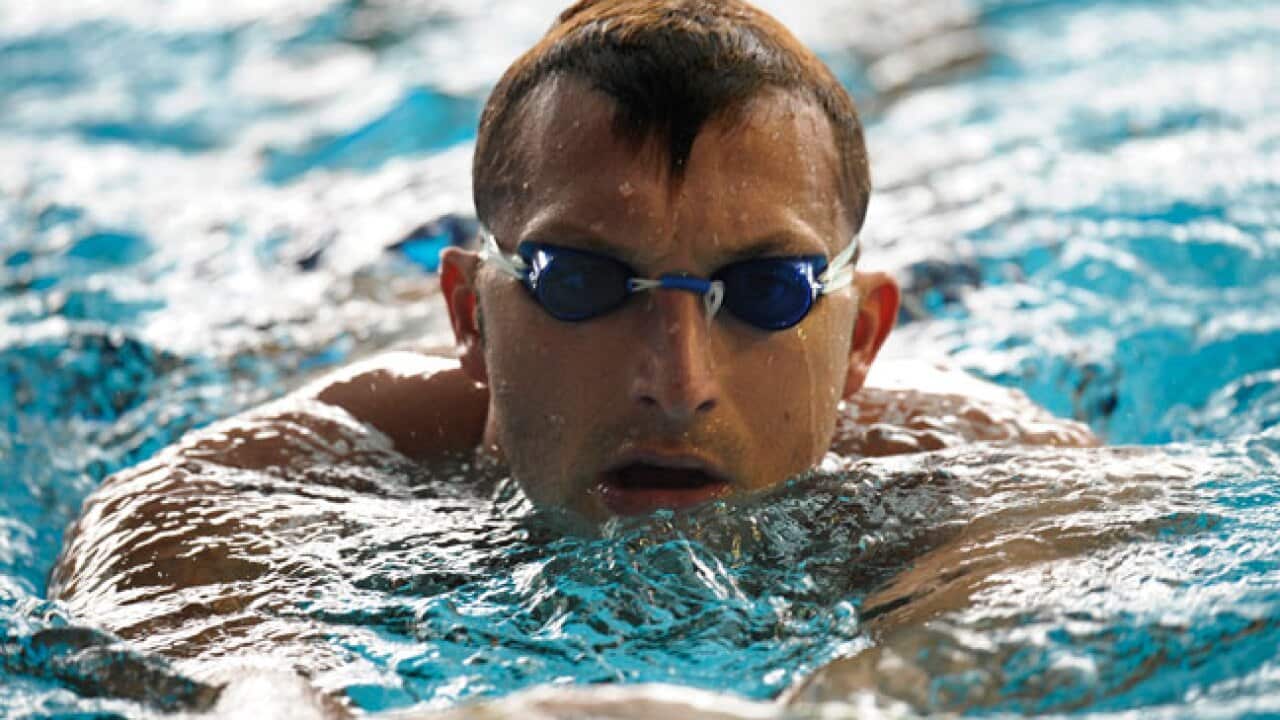
As we continue to hear about high-profile swimming and diving stars battling personal problems outside of the pool, is it fair to ask if there's something in the water?
Television audiences are standing by for Sunday night when Ian Thorpe is set to open up to Michael Parkinson about the depression battle he's fought over the past few months.
Grant Hackett has recently sought treatment in the United States for addiction to prescription drugs, and Geoff Huegill was this year charged with drug possession.
On Friday, a sad story emerged about former diving champion Chantelle Newbery.
The Athens gold medalist was fined and placed on a drug diversion program after police allegedly found bags of methylamphetamine in her wallet and used syringes in a bedside table.
Matthew Mitcham, Scott Miller and Neil Brooks are others to have struggled with addiction problems, prompting commentators to question whether there's some kind of correlation between life in the pool and mental health issues.
Paul Penna from Focus Perform Psychology says it's not that simple.
Penna worked as the team psychologist with the Australian swim team at the Beijing Olympics and says there's nothing about swimming that makes athletes more at risk to personal problems than any other sport.
Not the chlorine, nor the early morning starts and not the loneliness of the training.
Penna says the only plausible link is the high profile swimming has in Australian sports culture and the expectations Olympic athletes deal with from a young age.
"If I had my actions at 15 years of age displayed to the rest of the world, I'd feel a bit uncomfortable too," Penna told AAP.
"We want all our athletes to be brilliant.
"By the nature of the sport and the way it's held within the Australian psyche, people in swimming hold out a greater identity than people from other sports.
"It just so happens we know swimmers names."
Penna has spent his career working with athletes from sports as diverse as swimming, golf and rugby league and says he's come to the realisation that young performers need to have a better sense of perspective instilled in them from a young age.
Over the past few years, Penna has used one particular exercise with patients, of which the results are telling.
He asks them to name five Australians who won an Olympic gold medal at the Beijing Olympics.
Penna reckons he's asked in excess of 4000 athletes that question, and only two have been able to answer correctly.
Why?
"Because those events aren't personal to us. We won 14 gold medals in Beijing. But it's got nothing to do with us," he said.
"Athletes develop this concept that whatever I do is significant and matters. No it doesn't. It's where a part of the psyche of a young athlete gets twisted.
"They're taught everything matters. You've got to perform now or else.
"We've got to change that in our athletes so we make them more robust."
Share


