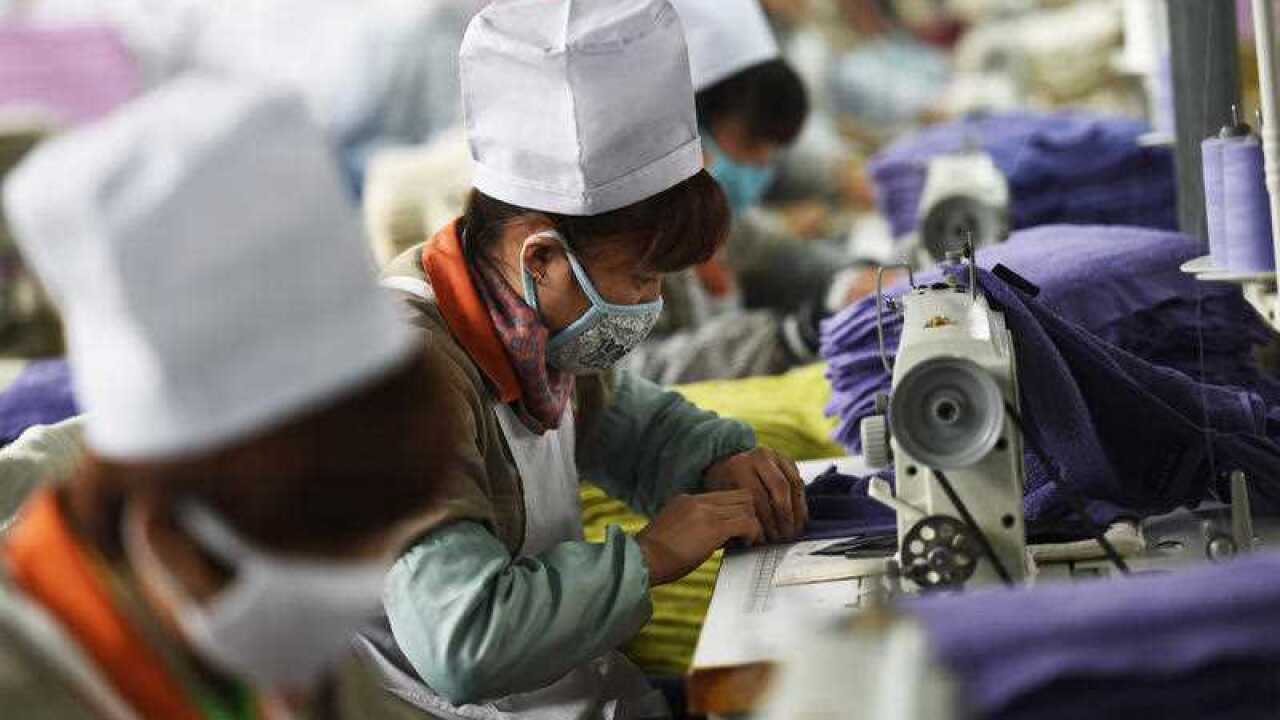
They were a couple who’d migrated six years earlier from the impoverished south-western corner of Shandong province (in eastern China) to one of the province’s newly industrialised cities, Zouping, to work in a textile factory.
“In six more months we will have saved enough for a 50 per cent deposit on an 80-square metre apartment,” the husband told me. “The rest we will cover with a mortgage.”
“It took us six years to save this much,” added his wife, “but it is worth it because the schools are good here.” There are many migrant factory workers in Zouping, and an increasing proportion are starting to voice such hopeful plans.
More often it has been a different story. Along with rising wealth and access to goods and services, China’s unrelenting industrialisation and urbanisation has brought suffering and inequality for the migrants from the hinterland whose labour has made it possible.
Migrant workers endure hard and sometimes dangerous work, for long hours with low pay. Because of China’s household registration policy, which defines citizenship and welfare rights primarily in terms of the place where one’s mother was born, they do not receive the same access to educational and welfare institutions as local citizens do, and are more likely to have their basic rights ignored.
"Along with rising wealth and access to goods and services, China’s unrelenting industrialisation and urbanisation has brought suffering and inequality for the migrants from the hinterland whose labour has made it possible."
The pressures which led to suicides at FoxConn (a huge contractor for Apple and other electronics brands), industrial accidents with little if any compensation and unpaid wages are just three of the more striking forms of injustice.
While the suffering of migrant workers in China is very real, not all of them suffer equally. Some of the most desperate hardship occurs in China’s largest and wealthiest urban areas, like the Pearl River Delta, Beijing and Shanghai.
Three inter-related factors make life hard there. First, real estate prices are astronomical. With the exception of a few wealthy entrepreneurs, migrant workers could never do well enough to buy an apartment in such places. Not only are the apartments financially out of reach, but rents are high enough to put a significant dent into household savings.
Second, the overall cost of living is relatively high, as real estate prices affect the price of many goods and services.
Third, household registration policies are more restrictive. Urban areas with high costs of living are home to many relatively impoverished local citizens and these people resent the idea of sharing social resources with new migrants. Local governments are more sensitive to the feelings of local citizens than new migrants. Moreover, in large urban areas the cost of providing education and other services is relatively high. For all these reasons, the largest urban areas set the most restrictive conditions for new migrants to move their household registrations to the city.
From 1988 to 2013, I observed the urbanisation of the relatively small county seat of Zouping. As it industrialized, its population grew from roughly 30,000 people to more than 350,000. As it expanded it incorporated the surrounding villages, drew in farmers from the surrounding countryside and, like China’s largest urban areas, attracted migrant workers from distant locales.
This town was hardly a utopia for migrant workers. Some complained of harsh work conditions. Others suffered from being far from family members or complained of a lack of friends and connections to locally born citizens.
Nevertheless, many found the place attractive. Roughly half of the migrant worker households I interviewed had either bought or had plans for buying an apartment. At prevailing local wages, in a two-income household living frugally, it was possible to save enough in six or seven years to place a 50 per cent down payment on an apartment and complete the purchase with the help of a mortgage.
"Roughly half of the migrant worker households I interviewed had either bought or had plans for buying an apartment."
Moreover, because household registration policies were not so restrictive, most migrant worker parents could send their children to the good local schools.
So in a sense, the life dilemmas of migrant workers in China are subject to the same pressures as those in the United States, Australia and Europe. To make it in New York or Los Angeles, London or Paris, or even Sydney, is hard. Rent is expensive. To afford housing, many live far from the city centre and endure long commutes on top of long working hours.
China is perhaps unique in that its economic expansion has meant that even smaller cities often offer relatively ample employment opportunities. In Shandong province alone there are a dozen new cities about the same size as Zouping.
Nonetheless, many young people feel the cosmopolitan pull of the biggest cities while others continue to go there just because that is where everyone else they know is headed.
The Chinese government is trying to encourage people to settle in smaller cities instead of larger ones. How many will heed this call is hard to say.
It’s a familiar choice: the bright lights of a big city versus the affordability of a small one.
Andrew Kipnis is a professor of anthropology in the ANU’s College of Asia & the Pacific. His latest book, From Village to City: Social Transformation in a Chinese County Seat, will come out in early 2016 with the University of California Press.
Share


