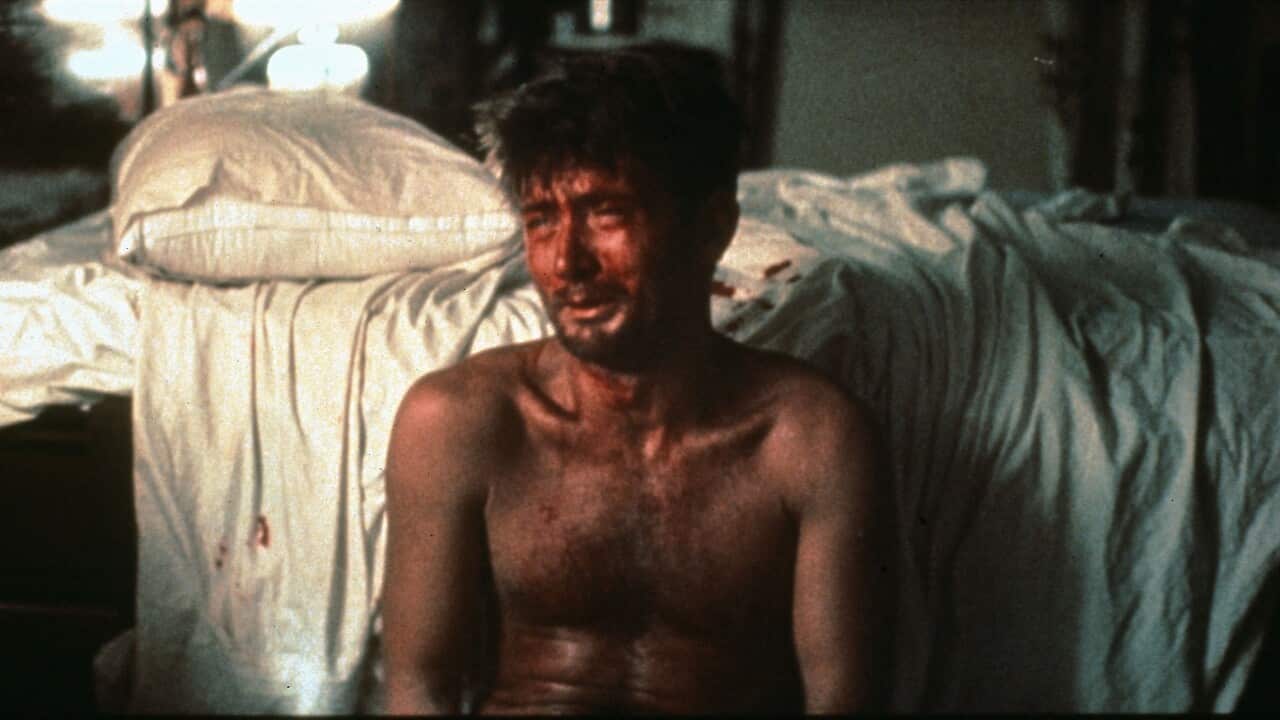
Saigon. Shit. I’m still only in Saigon. — Captain Willard, Apocalypse Now
How did three weeks turn into eight months? It’s not as though Saigon—I’ve been calling it Ho Chi Minh City in these pages until now, but let’s give it the name and respect it deserves—is so captivating as to necessitate a near-permanent stay. Those bucket-list backpackers in town for two nights are hardly going to get to know the place properly, but one can hardly blame them for seeing the city’s handful of must-sees and striking out for more relaxing or exciting climes. It doesn’t especially warrant a long stay journalistically speaking, either, at least not anymore. But even after the one honest-to-god story the place threw my way during my tenure—the fortieth anniversary of the city’s fall, with its parades and fireworks and war correspondents’ reunions—I still stuck around. It would have made more sense to head north and find new angles on the country.
But to paraphrase Don Corleone, every time I thought I was out—such as when I visited Vietnam’s Central Highlands last month—Saigon pulled me back in. My knee-jerk reaction was to blame my finances, the ball-and-chain of any freelancer: I couldn’t leave until I had enough to pay my hotel what it was owed. But my fiancée did, so that excuse was bunk. Her English-teaching course was another go-to, but that ended nearly a month before we finally hit the road. My fiancée would blame—and not without reason—my unhealthy attachment to my local and the expatriates who frequented it. This rag-tag bunch of Americans, Brits and Europeans had become a kind of dysfunctional, alcoholic family, especially before my fiancée rocked up two months into my stay, and I’m not good at goodbyes at the best of times. In fact, my ever-lengthening stay was probably the result of all these things, and of the general truism that they all fed into: stay in a place long enough and that place will begin to feel like home, even if you don’t especially want it to.
That latter point is an important one. None of this had anything to with actually liking the place. Saigon is hot, loud, infuriating to get around and generally pretty obnoxious. It’s populated, or at least was in my neck of the woods, by self-entitled tourists, misanthropic expats—they hate the place, but not as much as they hate home—and almost impressively venal locals. My nerves were exposed and raw by the end. But it was still, in its own weird way, where I belonged. (“When you weigh up a place's shortcomings and are still taken with it,” a friend asked when I showed him this paragraph, “what does that say about you?” Unfortunately, I answered, if it says what I think it does, it's entirely of a piece with my own deleterious self-image.)
All this goes some of the way to explaining why leaving the place felt very much like leaving Melbourne seven years ago or Sydney three years later. In those cases, there were the usual military-style operations: the packing crates, the oversized trailers, the frantic calls to gas and electricity companies. This was a comparatively small affair, commensurate to living out of a duffle bag. But it took on the same shape, the same importance, in the mind. Delivering several volumes to the bar’s unofficial book exchange (established by a friend, in town to drink and smoke himself to death, after he'd read and discarded Hunter S. Thompson’s Generation of Swine), getting one last two-dollar shave in under the wire, making a last-minute visa run to the Cambodian border, insisting endlessly to the owner of our hotel to provide us with an up-to-date bill. (“Fuck,” my fiancée said when I showed her this paragraph. “That took him a week.”) For months, I had welcomed closing time at the bar by facetiously playing The Doors’ ‘The End’. When I did it for the last time, I actually, uh, cried.
News that makes sense
Your trusted source for staying up-to-date with the world around you. Get free daily news updates and analysis, straight to your inbox.
How do we choose the places in our lives? Do they, perhaps, choose us? I have always rather felt this about books: that they come our way at the precise moment we need them. Ceridwen Dovey writes about this in Only the Animals, her ambitious but only intermittently successful collection of short stories written from the viewpoint of animals. “I’ve decided,” she writes in the guise of a tortoise, that this “has something to do with the perceived alchemical magic of the discoveries that books (or travel) enable: they are utterly private and idiosyncratic, and, to the person undergoing them, feel ordained, auspicious, designed especially for them at that particular moment in their lives”. Roberto Bolaño’s The Savage Detectives had been sitting in one of those aforementioned packing crates—well, an archive box, at any rate—for nearly two years before I finally pulled it out in January this year and found within in it all the arguments I needed to decide upon Vietnam in the positive.
Dovey is right to have her tortoise mention travel, however parenthetically. I had no desire to move to Sydney when it fell into my lap in the form of a newspaper gig seven years ago, but can’t imagine living anywhere else were I to return to Australia now. (If Joan Didion had written ‘Goodbye to All That’ about me, Melbourne would have played New York's role.) Saigon, too, was, in the beginning, a purely economic decision: we’d applied for gigs back home and didn’t get them and needed somewhere to live that we could actually afford. The Savage Detectives allowed me to see it as something more than that: a bold, brave, necessary repudiation of the jobs we hadn’t been given and the security we had been seeking. (It’s nice to lie to yourself on occasion.) A Melbournian teaching English in town knew what was going to happen before I did. “Three weeks?” he said when I told him my plans. “You’ll wind up being here three years.”
His estimation was a little off, but he wasn’t exactly wrong. I have no idea what he recognised in me, but I suspect it was something in the way of a good fit. Or perhaps it was a latent need that the city—or even the bar—might meet. A sense of what it actually means to be an expat, perhaps, rather than someone who’s constantly on the road. (Short answer: I prefer the road.)
In Nothing to Be Frightened Of, Julian Barnes identifies this retrospective impulse to “stamp a final meaning” on certain events (or books or places) as an “atavistic need for narrative,” and warns us to be wary of it. “I suspect we are doing little more than confabulating,” he writes of our attempts to impose some shape or structure on the chaos of existence, “processing strange, incomprehensible, contradictory input into some kind, any kind, of believable story … I am suspicious of it.”
He’s not wrong to be. I am writing this piece in a bar in Hanoi, a city I much prefer to Saigon. As the legendary war photographer Tim Page told me when he was in-country for the fortieth anniversary, Saigon today could be any city in the region. Hanoi, on the other hand, exudes Europeanness, the cosmopolitanism for which its southern counterpart was once famous. We really should have come here sooner. Had any of the variables been different, we might have. I could be writing a piece about leaving the place now.
As things happened, of course, Saigon drew the short straw, and thus earns its place in my ongoing confabulations. There will doubtless be other places, which I’ll love and loathe in equal measure, other places I’ll stay rather longer than I should. There will be other chapters in the retrospectively-imposed narrative. But it is, for now, the end of this one. Từ biệt, Saigon. Me love you long time.
Matthew Clayfield is a freelance foreign correspondent.







