
The images emerging out of cyclone-devastated Tacloban City bring back horrible memories of what I witnessed in tsunami-devastated areas of southern Sri Lanka at the end of 2004. This is a massive disaster that will continue to haunt the people of Leyte province for many years to come. Such a big disaster requires a big global response but every effort should be made to avoid mistakes that were made in delivering relief and aid to the communities devastated by the 2004 tsunami.
Of course, it is not easy to work in an area that has experienced such a big disaster and some mistakes are inevitable. It is critically important to raise as much money as possible for the relief and recovery effort while the disaster is in the news and aid donors need to be patient in letting the experts in the field make the decisions about how to best use the money. However, the tsunami experience suggests that there needs to be a very clear distinction between the relief effort and the longer-term social recovery work.
Increasing practice means that the world can do relief work better than ever and the immediate needs of the traumatised victims should be met as quickly as possible. There is a key role here for highly organised and self-sufficient organisations; including the military. However, as soon as the disaster survivors have adequate food, water, shelter, medicine and social support, it becomes important to avoid haste and take time to ensure that the aid for recovery is fairly and effectively delivered. There needs to be a very thorough assessment of needs and local knowledge is critical in working out how to resettle people, possibly in new locations. There was considerable waste in the hasty delivery of aid following the tsunami disaster and traumatised communities were sometimes torn asunder when the aid was distributed unfairly or in an ill-conceived way.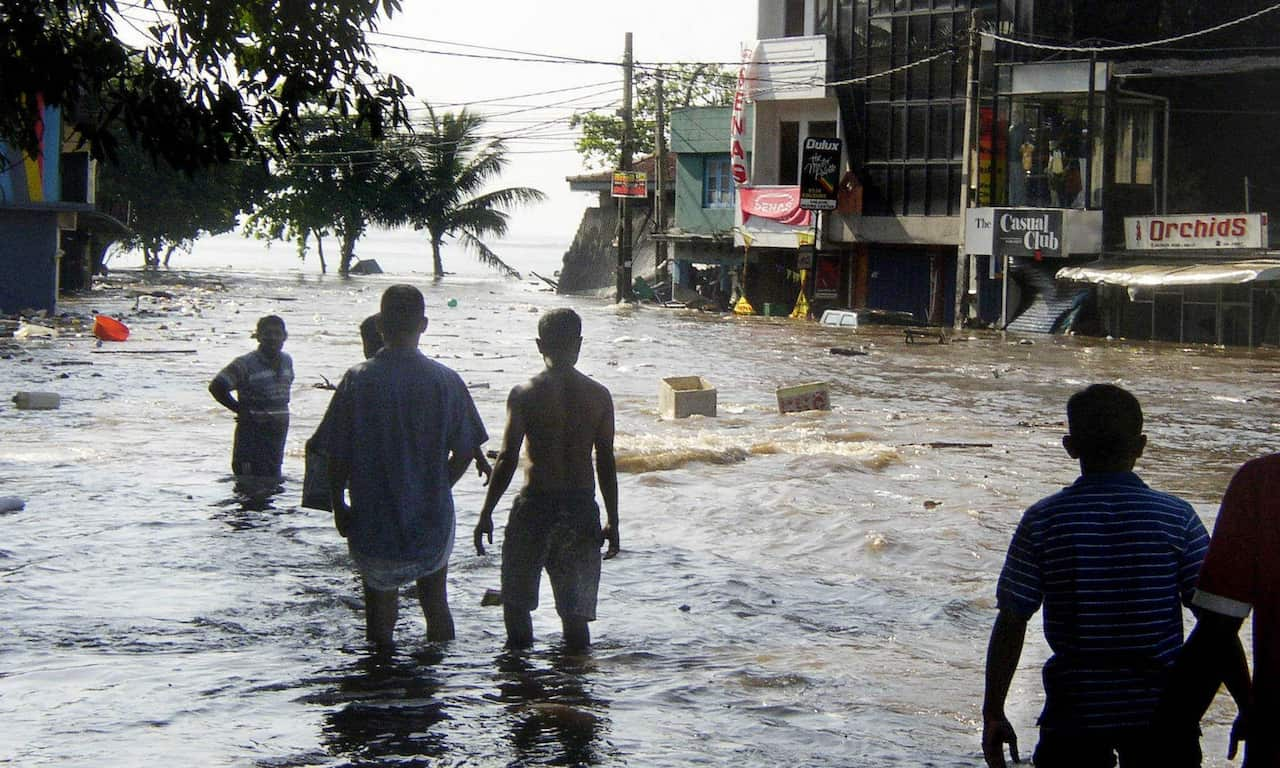
2004: Sri Lankan residents and foriegn tourists walking in waters in the aftermath of the tsunami wave which hit the coastal town of Galle on December 26, 2004. (AAP)
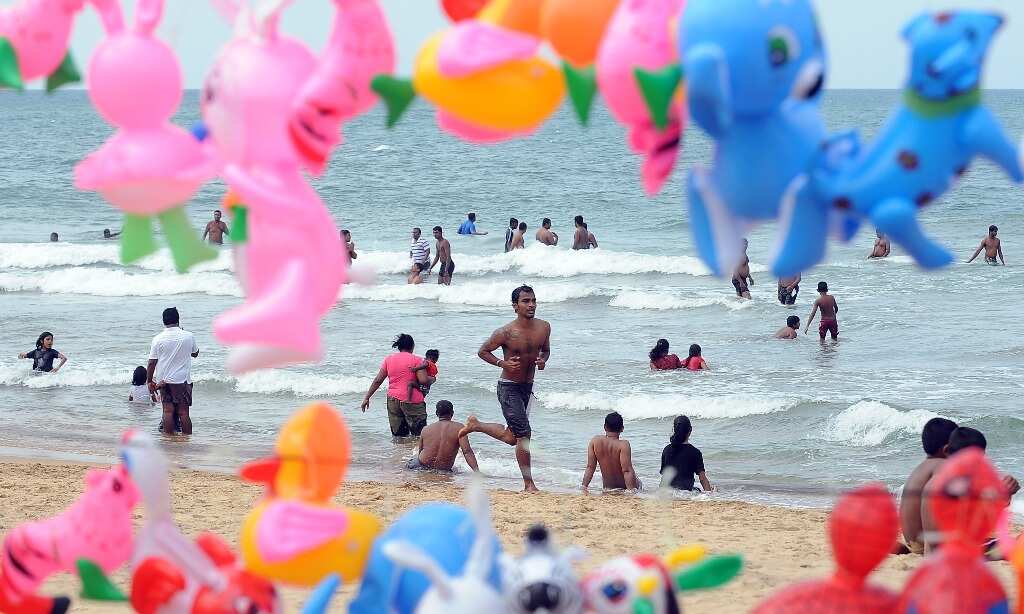
Sri Lankans play on the beach in Colombo on December 26, 2010. Six years earlier, in December 2004 during the Asian tsunami, some 31,000 people on the island died and one million were initially left homeless. (AAP)
Big disasters like the one in the Philippines affect poor and vulnerable communities more than others. Poor people are often obliged to live in flimsy dwellings that are often in exposed locations, perhaps close to the sea. These are often very resilient people but they will be deeply traumatised by their heavy losses and they will be desperate to get whatever support they can.
Hasty and ill-conceived aid can turn people against each other and many people can be left without social networks and without access to paid employment. There is much talk in disaster management literature about the possibility of ‘building back better’ so that disaster victims are relocated into better and safer settlements. This was achieved in a few places in Sri Lanka but more often mistakes made in the delivery of aid meant that people were left without good social supports and without access to secure employment. The mantra of ‘build back better’ often becomes an empty and cruel promise.
Australia is in a part of the world where many poor communities are highly exposed to ‘extreme weather events’ and the ‘supertyphoon’ in the Philippines is a reminder of the predictions that global climate change will make extreme weather events more frequent and more intense in the decades to come. More can be done to warn people of growing risks and to implement early warning systems that can save many lives. However, major disasters are likely to become more prevalent in the Asia-Pacific region and Australia must be ready to play a leading role in delivering adequate and effective relief and aid.
This is not a good time to be cutting our foreign aid budget and the decision to fold AusAID into the Department of Foreign Affairs and Trade is likely to cause a significant loss of continuity and accumulated expertise. I was a leading author on a major report for AusAID on lessons to be learnt from the tsunami disaster in Sri Lanka and southern India. However, I doubt if the key findings of that study have entered the collective memory of those who are primarily responsible for delivering government assistance and for trying to co-ordinate the efforts of the many non-government aid agencies. More needs to be done to ensure that the lessons of past experiences are not forgotten.
Share


