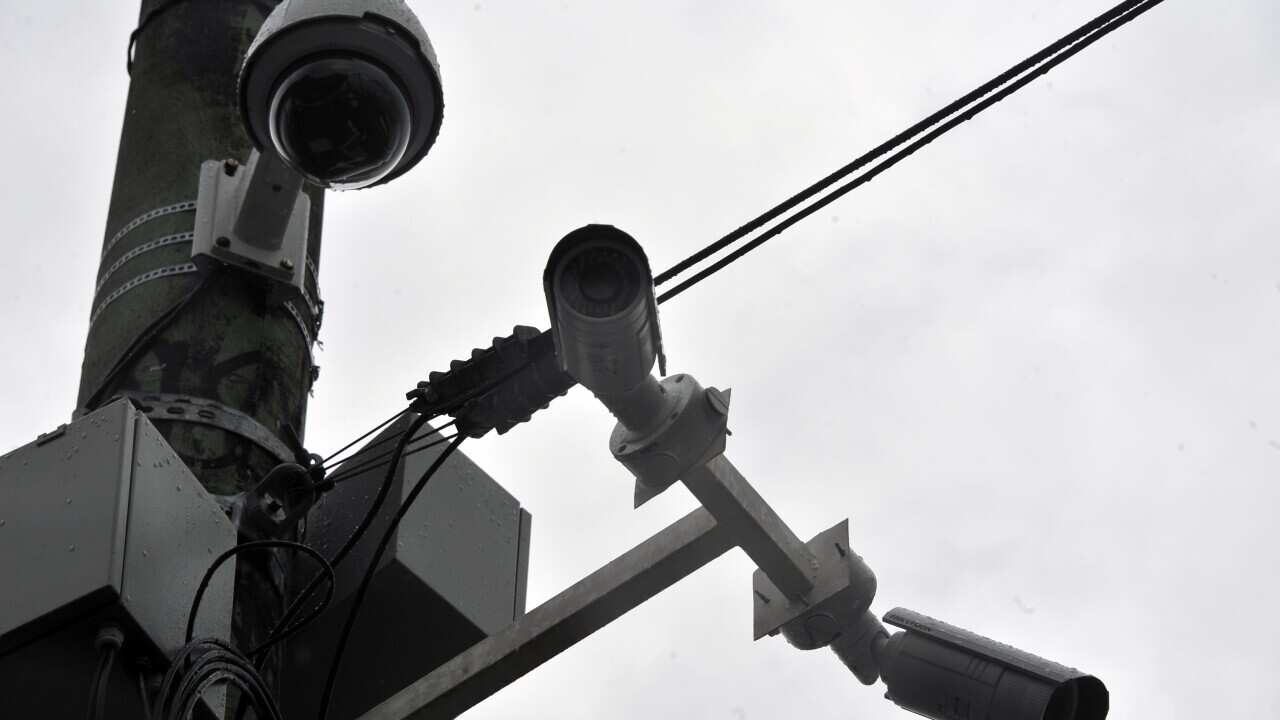
Over the past year or so, surveillance issues have become more visible to the public, especially forms of what Australian computer scientist Roger Clarke calls “dataveillance”, or the systematic collection and analysis of individual’s personal data.
But is there an element of surveillance which an individual may find acceptable – or even desirable?
From domestic surveillance conducted in the US by the National Security Agency’s PRISM project to FAIRVIEW (the international version of PRISM) to ECHELON (the global surveillance system operated by the US, UK and Australia), numerous government programs exist to monitor our digital traces.
Understandably, many civil libertarian organisations are disappointed and angry about these kinds of systems, pointing to their negative consequences. But how ordinary citizens experience and understand surveillance is less clear cut.
I always feel watched …

Generally speaking, most citizens are aware that they are under some form of surveillance.
Surveys from the US and Canada show that many people claim a strong knowledge of the technological systems implicated in surveillance, such as the Global Positioning System (GPS). Awareness of highly visible physical measures of surveillance, such as closed-circuit television (CCTV) cameras is also relatively high.
However, fewer surveyed individuals had a strong understanding of the privacy laws and regulations governing their personal data. This is particularly concerning given that many of the most pervasive sites of dataveillance occur through everyday, mundane digital engagements – most notably social media.
Anyone who has access to your social media profile may know what you are doing, when, with whom, and where – providing countless opportunities for surveillance. Such information may also go viral: we’ve seen it in Facebook parties that go awry, or in the unwanted attention some political candidates' personal hobbies receive.
Not all social media surveillance are so obvious. Companies also get enormous amounts of personal data by watching your browsing activity. This can be distributed and used by unknown third parties, including government or private enterprise.
A good example of this is targeted advertising, which uses an individual’s browsing history to target them with consumer items thought to be of interest.
Many of us can easily imagine a scenario of surveillance where the state invades every aspect of our personal life, as depicted in the film Enemy of the State or in George Orwell’s 1984. But this is hardly necessary given the amount an individual may share voluntarily – and perhaps without a thought – on social media.

… and I think I like it!
Surveillance is often theorised and discussed in relation to issues of privacy. But this does not necessarily reflect the everyday realities of individuals.
Surveillance has often been framed as a processes aimed at exerting some form of social control (often for the sake of risk management). And as we have noted in a previous article, this has been an important part of modern society, providing certain functions and abilities to government and bureaucratic institutions.
But everyday citizens can conduct (and possibly enjoy) surveillance as well. Modern consumer electronic and digital technologies have a wide variety of surveillant abilities. The internet, social media, and other digital technologies encourage us to use them.
With social media, there are now tools for individuals to conduct further regimes of surveillance, sometimes referred to as participatory surveillance, or social surveillance.

This surveillance is not necessarily a tool for control, but a tool for social practises, allowing users to maintain social relationships and networks.
It’s also an opportunity to develop certain kinds of identities, or share personal information in a way that empowers users.
Young people’s disclosures on social media (while often viewed negatively) can be understood in this light. Social media provides a space for them to experiment and “grow” their identity, through being watched by their social networks.
Even though German Chancellor Angela Merkel objects to “friends” conducting surveillance on her, for many users online this is a positive. It’s something they themselves contribute to.
I see you watching me watching you
Surveillance, despite having oppressive, authoritarian, and privacy destroying connotations, isn’t always seen that way by individuals.
But surveillance does have the potential to be an undemocratic tool for the oppression of citizens, a means for exploiting users' personal data, and unjustly harming the human rights of everyday people.
But to assume that a complex socio-technical pattern such as surveillance can be experienced in only one way does not help us understand and engage with surveillance and its consequences, and provide solutions for everyday users.
Surveillance isn’t always bad. This is especially true given that some everyday people want to watch, and some of these everyday people also want to be watched by you …
Ashlin Lee is the recipient of an Australian Postgraduate Award.
Peta Cook does not work for, consult to, own shares in or receive funding from any company or organisation that would benefit from this article, and has no relevant affiliations.
Share


