

In anticipation of the centenary of the First World War, British Secretary for State Education Michael Gove launched a tirade of criticism on education systems that provide ‘fictional prisms [and] myths’ as a method for students to interpret history. If there’s anything constructive to be gained by Gove’s comments, where he singles out Blackadder for scrutiny in its depiction of the War and presence in classrooms, it’s that he highlights just how removed politicians are from the knowledge and practice of teaching.
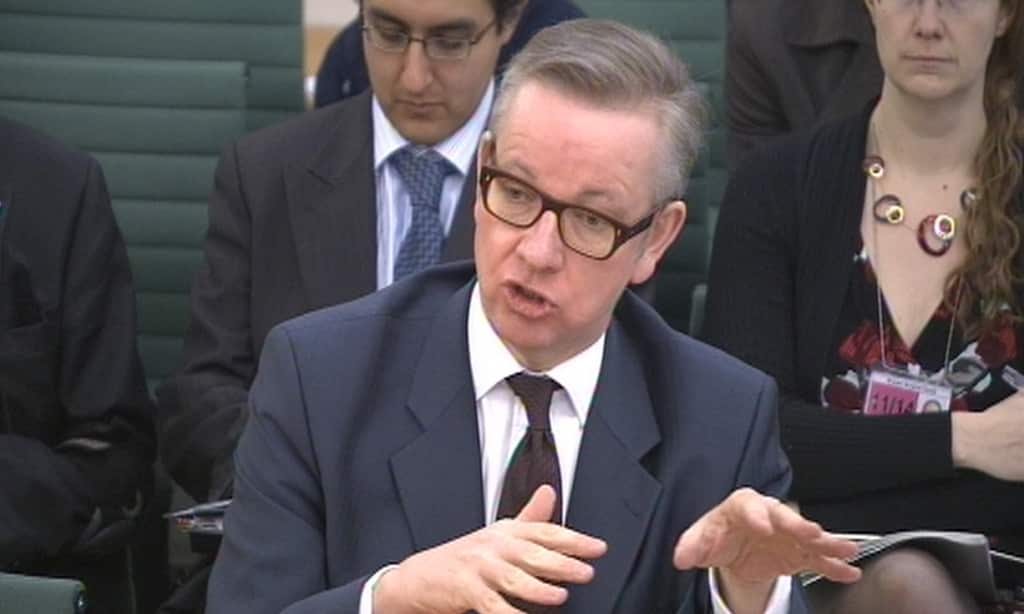
Gove’s main complaint is that the practice of using popular films and TV shows as a method for engaging students with history has created a generation that favours a populist mythology that denigrates British patriotism, courage and honour. He singles out the soldiers portrayed Blackadder as misbegotten and shambolic, who participate in ‘a series of catastrophic mistakes perpetrated by an out-of-touch elite,’ deeming its use by teachers in classrooms as reckless, even damaging.
And yet what does Gove offer? That students learn about history ‘in the right way.’ This is problematic. History is problematic. Who is Gove, or any politician for that matter, to say what history is and what it isn’t?
While he acknowledges that there is no unchallenged consensus on the First World War, or in any part of history, Gove is unwilling to free the teaching and study of history from the ideological pawn it has become in British curriculum.
Furthermore, Gove’s sweeping changes to the way history has been taught in England has not been met favourably. While he claimed his revision to curriculum had been met well by top academics, this view was trounced wholly by historian Simon Schama, who disowned Gove’s history agenda as something produced by ‘people who never sat and taught in a classroom.’ Gove’s history was tokenistic, claimed Schama, and indicative of someone who was too focused on ‘white males and how Britain influenced the world’ rather than anything contrary.
Gove has effectively denounced the teaching of history by teachers, and their methodology for doing so, while offering a narrow, pugilistic revision of the past that supports his own perspective. Hardly the ‘open debate’ that Gove pretends to desire.
Unfortunately, these comments echo sentiments by Australia’s Minister for Education Christopher Pyne. Despite offering no clear alternative, that Pyne has made no secret about his wishing to overhaul the Australian Curriculum is alarming. He has manufactured a clear connection between how history is taught and who the standing government is, leaving our study of the past again in the hands of a politicised agenda.
The study of history is a search for truth. The depictions of history in satirical TV shows such as Blackadder, or for Australia in films like Gallipoli, Rabbit-Proof Fence and The Proposition are important for the narrative contribution, yet in the hands of teachers are never offered as definitive truth. These are entry points, depictions of ideas, representations of an aspect of the past that we cannot otherwise see.
The combination of primary and secondary sources, of stories from the past, and stories about the past are all crucial to any student’s discovery about where they came from. To conflate the use of popular texts in the study of history with the misrepresentation of history, as Gove has done, is facile reasoning. It betrays a lack of understanding about education and about how teaching works.
Pyne’s hijacking of the Australian Curriculum, and in particular his desire to reignite the history wars, shows a plan to manipulate the Australian identity once again, just as Gove has focused on restoring pride and honour to British identities. Pyne’s unwillingness to promote indigenous and multicultural history alongside the ANZACs smacks of a discomfort with the truth.
As any teacher and student of history knows, it is written by the winners. One source rarely depicts the truth, be it an ancient artefact or a TV show. Only a considered understanding of multiple perspectives can allow anyone to get close to the truth of the past, and even then, it’s an educated guess.
The efforts of Pyne and Gove to derail teachers are doing that which they criticise: turning history into a fiction. Teachers needs to be freed from politics so that students can learn about the problematic nature of history, a nature that does not fit any conservative agenda.
Craig Hildebrand-Burke is a writer and teacher from Melbourne.