
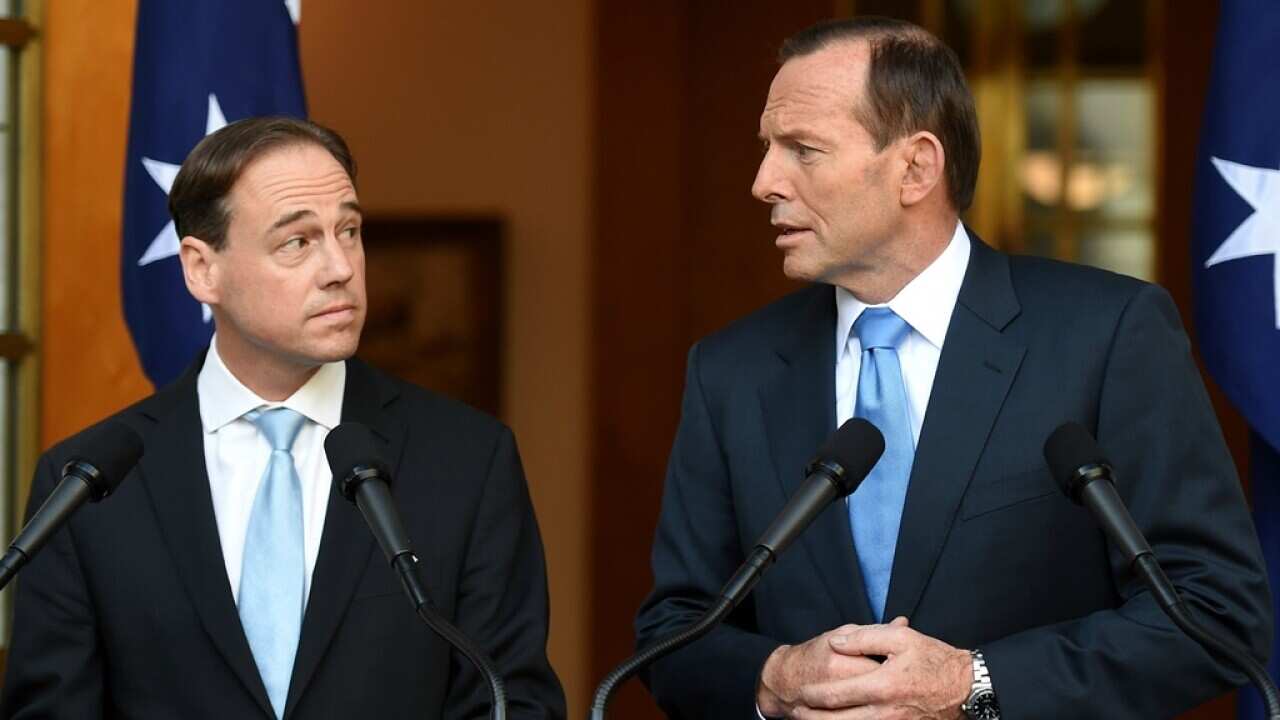
And so it came to pass that yesterday, 7 years to the day after John Howard announced that his government (should it win the 2007 election) would introduce an emissions trading scheme, the Senate voted to remove the price on carbon.
It’s probably worth reminding ourselves of what John Howard announced that day, given apparently he would have made things all the better. He even used this new fangled thing called social media and YouTube to broadcast the moment.
Howard stated that:
“Australian action to reduce greenhouse gas emissions since 1990, led by my government, will prevent about 87 million tonnes of climate changing carbon a year entering the atmosphere by 2010. That’s a massive reduction and a tangible example of the Coalition’s commitment to the climate change challenge.”
Now, that’s all nice and good, but Tony Abbott could have said the same thing yesterday. Let’s see what Howard says from there:
“Today, I am announcing a further $627 million in practical new measures to tackle global warming, bringing total spending on climate change initiative since 1996 to about $3.4 billion.
“This will include $336 million for green vouchers for schools to improve energy and water efficiency.”
“Every school in Australia will be eligible for a voucher of up $50,000 to help install solar hot water systems and rainwater tanks.”
“Not only will this help reduce energy and conserve water, but it will provide students and our school communities with a first-hand lesson in how we can act locally to preserve the environment.”
Again, all nice and (global) warm(ing) and fuzzy, but frankly it has a fairly strong smell of direct action about it. It’s once more nothing that Tony Abbott couldn’t still say and make it sound like he gives a stuff about climate change.
Howard then finally got to the big announcement:
“I will also be announcing a ‘cap and trade’ emissions trading system that will help Australia substantially lower our domestic greenhouse gas emissions at the lowest cost.”
Malcolm Turnbull, then Environment Minister, also put out a media release with a bit more detail.
On this day, with Australia bereft of any climate change policy that does not make those who read it break down laughing in despair, there will be a few chin-strokers in the media who will say, ahh if only Australians had voted for Howard in the 2007 election we would now have a price on carbon. Irony!
To which I say, I doubt it , and even if we did have a carbon price it wouldn’t be worth spit.
Even Howard’s media release shows his big belief was for “direct action” gimmicks rather than an ETS – which, given it was the major policy announcement, was oddly relegated to the end of the release.
Moreover, having a piece of legislation in place is not the aim of policy – rather it’s about having a piece of legislation in place that helps achieve the aims of the policy.
The ALP’s first go at an emissions trading scheme, the CPRS, was no piece of policy brilliance (as Crikey’s Bernard Keane noted at the time). But I believe a Howard govt ETS would have been even worse.
Does anyone think a Liberal Party government would have been less generous to business interests than was the ALP in 2009? You only need to look at the Future of Financial Advice (FOFA) legislation passed this week by the government with the help of the Palmer United Party to see how this current Liberal Party government stands up to business.
The original FOFA laws were brought in to stop, among other things, the lucrative practice of commissions being awarded to financial advisors (or bank employees) for advising customers to sign up to products. The practice led to some advisors caring more about getting a commission than giving their customer the best advice.
The Liberal Party argued the FOFA laws were too onerous on the industry, but that they still wanted to keep the consumer protections in place. Instead they have passed a law which will allow these “conflicted remuneration” practices to occur.
The banks can rejoice, having got exactly what they wanted.
But no worries, they still have FOFA laws in place. They’re just not any good.
Anyone who thinks if only Howard had been elected in 2007, or if only the Greens had voted for the CPRS in 2010, things would be better, probably thinks the FOFA laws in place are good as well.
We don’t need to talk hypotheticals to find blame. We actually did have a price on carbon in place, despite what happened in 2007 and 2009. The failure is those who chose to vote to remove a piece of legislation that was actually working to reduce emissions, at the same time Australia’s economy continued to grow strongly.
But the seventh anniversary of Howard’s announcement wasn’t the only coincidence of this week, and certainly not the one that mattered the most. On Monday the Japan Meteorological Agency announced that the first quarter of 2014 was the hottest on record.
Future generations will marvel at our blindness.
Greg Jericho is an economics and politics blogger and writes for The Guardian and The Drum.





