Ali Mamouri, Australian Catholic University
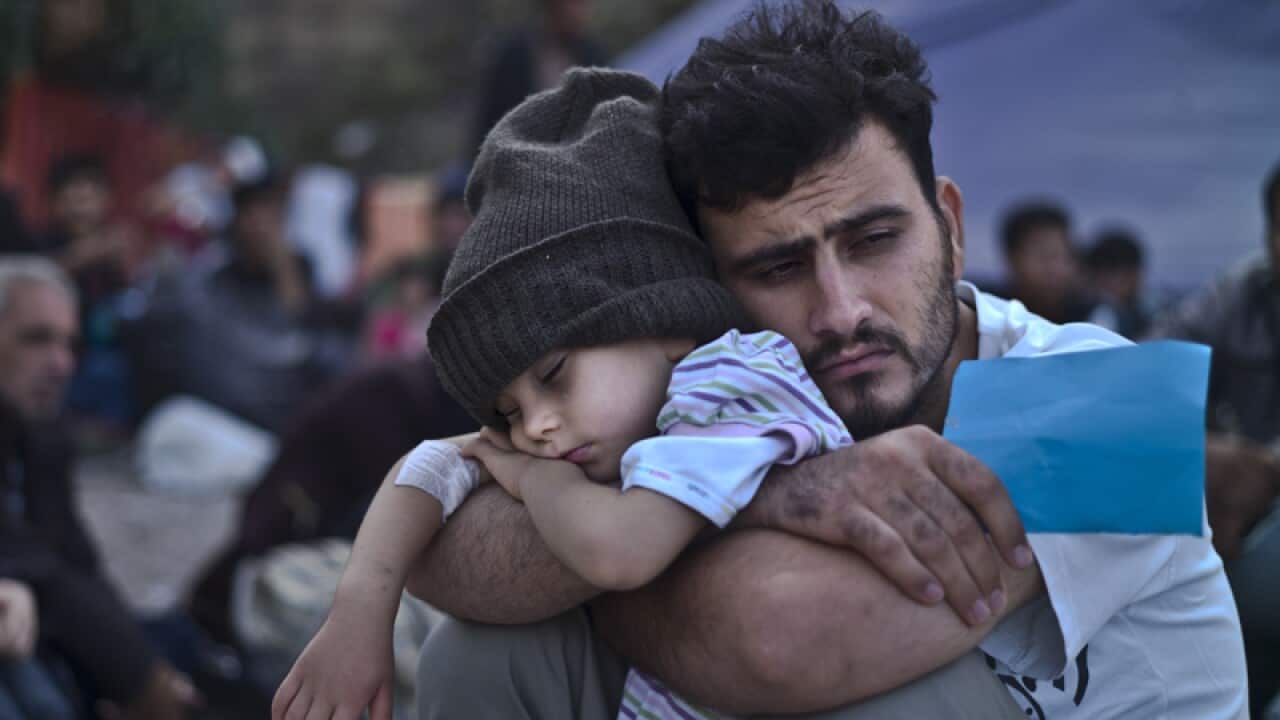
The tragic conflict in Syria and Iraq is dramatically intensifying. More than 12 million Syrians (out of a population of 22 million) have been displaced. Roughly 8 million of these were internally displaced as of July 2015, with another 4 million registered as refugees in neighbouring countries.
In Iraq, the number of internally displaced people reached 4 million in June, in addition to a continuously rising number of asylum seekers in other countries. As the conflict continues to escalate, the number of people in need will reach 10 million in Iraq – including a further 1.7 million displaced by the end of 2015 – according to UN agency estimations.
Very few of these asylum seekers have recently made it to European countries in the hope of resettlement. Germany is braced to receive up to 800,000 – but they still need to illegally cross countries on a costly and dangerous journey to be able to apply for asylum.
Australia recently agreed to resettle an extra 12,000 refugees in addition to its existing humanitarian program of 13,750. It is fast-tracking that process.
News that makes sense
Your trusted source for staying up-to-date with the world around you. Get free daily news updates and analysis, straight to your inbox.
Amid this terrible tragedy, right-wing nationalist sentiments are making their voices heard in some countries that will resettle these refugees. Politicians have variously described the mass migration as an “Islamic invasion”, while the refugees themselves are said to be “happiness-seekers” or “looking for European social benefits”, “not real refugees”.
Two French mayors announced that they will accept only Christian refugees. Slovakia also officially declared that it will accept only Christians.
Others have adopted effectively the same stance by asking why the refugees are not going to fellow Muslim countries. Or, they are saying, we must give priority to minorities – which implies the preferential acceptance of non-Muslims.
Humanity or religion?
The question here is: what is this crisis about? Is it about humanity or religion? Are we morally more responsible only for people of our religion?
The reality is that all Syrians are in danger now.
Islamic State (IS) is targeting Christians. They are given the choice of conversion to Islam, leaving the area, paying jizya (special tax for the People of the Book) – or, if they do not accept any of these options, they are to be killed.
Shi’ite Muslims, including Alawites, do not have the option of paying jizya and IS does not tolerate them as it does Christians. They must leave their area before IS reaches them, or they will be killed. This is because they are considered to be religious heretics and associated with the Syrian and Iraqi governments.
IS sees other minorities – including Yazidis, Druze and Mandaeans – as heretic groups, in the same vein as Shi’ites.
Although being of the same religion as IS, Sunni Muslims are IS’s biggest victims. IS targets them for being betrayers – having worked previously with the police or other forces related to the Syrian or Iraqi governments – or simply for not being a good Muslim according to IS’s criteria.
Why can’t they go to other parts of Syria or Iraq? Many displaced people have already chosen this option, as the statistics of internally displaced people demonstrate. But they are living in very bad conditions, often without education, healthy food, water and other essential requirements. The governments are vulnerable and cannot manage the great numbers of refugees.
Here, having the same religion as the majority does not help refugees resettle.
The price of our indifference on this humanitarian tragedy is, as French philosopher Bernard Henri Levy points out: not only for the migrants, but also for a Europe whose humanistic patrimony is crumbling before our very eyes.
According to American philosopher Martha Nussbaum: We should recognise humanity wherever it occurs, and give its fundamental ingredients, reason and moral capacity, our first allegiance and respect.
Other countries need to accept as many refugees as possible, offer what help they can to people staying in the war zone, and do all they can politically to bring peace to the region. Ultimately, as political scientist Joseph Carens explains, it depends on the extent to which the people of the world – in the Gulf, Europe, Australia or anywhere else – are willing to live up to their moral responsibilities.

Ali Mamouri does not work for, consult, own shares in or receive funding from any company or organization that would benefit from this article, and has disclosed no relevant affiliations beyond the academic appointment above.







