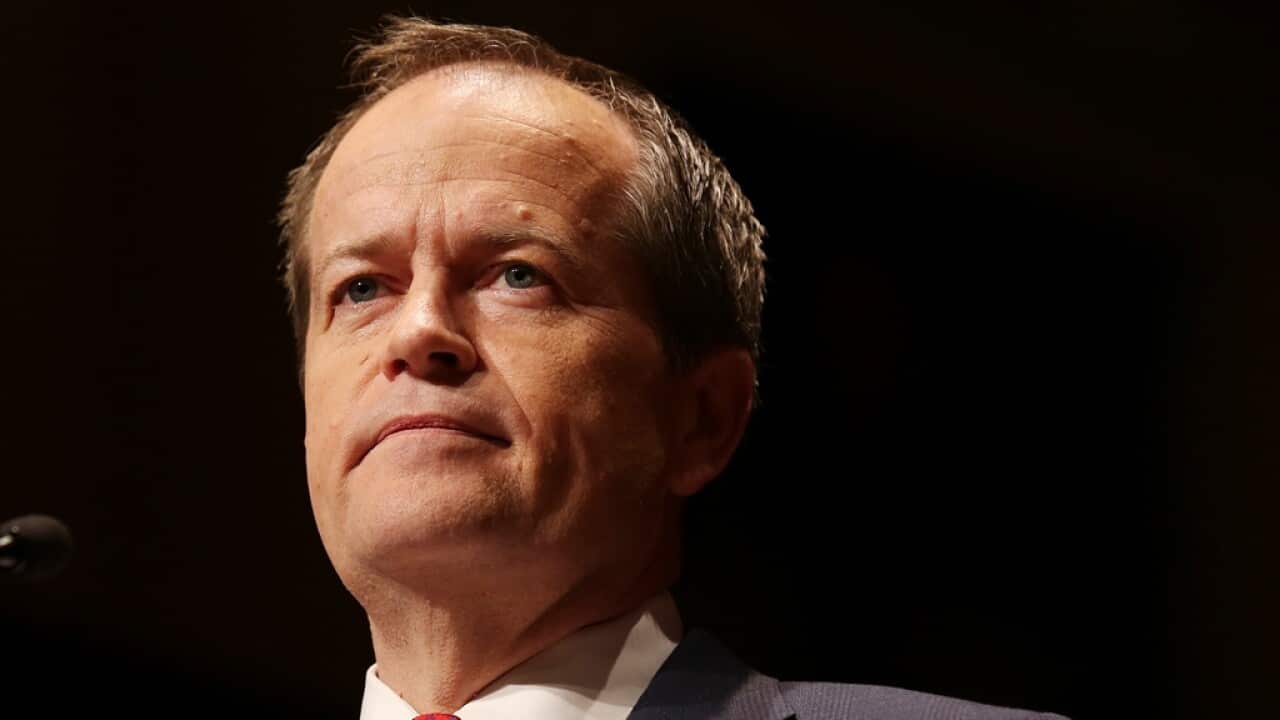
Here’s a thought: had an election to been held last Saturday, Bill Shorten would be Prime Minister today.
Obviously this is not going to happen – even if the polls do have the ALP’s two party preferred vote sitting on around 54%. Clearly we are a long way from an election, and had there been an election on the weekend you can pretty much guarantee people’s votes would be different to the hypothetical polling numbers.
Nevertheless, it is a big lead less than a year into a first term government.
So who is this Bill Shorten, possible next Prime Minister of Australia?
I suspect most voters have bugger all idea. Sure, since the budget he has been preferred as PM, but that is more a reflection of Tony Abbott being a uniquely unpopular leader than anything Shorten has done.
“The problem isn’t that you don’t know what Shorten stands for – that isn’t always important. Anyone who says they know what Abbott stands for clearly has not been paying attention given how often he changes his position.”
On Twitter a rather wonderful parody account called Rudd2000 provides regular updates on the day’s political events. Each tweet purposefully misspells every politicians’ name. Funny as some of these may be, it is the misspelling of Bill Shorten as “Bell Shortened” or “Bull Sherten” that seems to have the most piquancy.
Guardian Australia’s cartoonist, First Dog on the Moon, has also taken to referring to the opposition leader by anything but his name – such as “Bus Flirting” or my favourite, “Babs Stilton”.
Even the excellent TVeeder service which provides live captioning of TV programs, last week transcribed Tony Abbott mentioning Bill Shorten as “Bloornt”.
Against the backdrop of MH17, there is little to be gained and a lot to be lost by being seen to use a tragedy for political purposes, and Shorten has mostly been smart and agreed as much as he could with Tony Abbott.
Of course, the tragedy is being used for political purposes. Articles on how Abbott has been working round the clock, replete with quotes from his office on how quickly he sprung into action and led the response are not given out to journalists for neutral purposes.
But for opposition leaders, there is little they can do in such times except support the Prime Minister.
This week Shorten has been out and about doing the standard political doorstops at school and aged care services. But cutting through is never going to be a big chance while the MH17 issues remain, the Commonwealth Games are on, and Gaza is getting bombed back to the stone age.
Even a speech at the NSW ALP conference is not going to generate too many headlines.
But that’s what an opposition leader has to do – just keep going out day after day, even if the coverage is skint. It is largely thankless. Even while doing an almost daily press event Shorten still gets criticised by supporters for not being visible enough.
Yet while he leads the polls, I suggest most voters would be hard pressed to come up with a description of Shorten in a few words. This is not always a bad thing – voters have a few words to say about Abbott, and most of them aren’t good.
The problem isn’t that you don’t know what Shorten stands for – that isn’t always important. Anyone who says they know what Abbott stands for clearly has not been paying attention given how often he changes his position. Perhaps more importantly people have a sense that they think they know what Abbott stands for even if that view is completely wrong.
But for most Shorten as opposition leader is still a blank page. Yes, he did great work on the NDIS and the future of financial advice reforms in the Gillard government. But even I don’t have much of a sense of Shorten, and I pretty much watch and read everything about politics.
On the one hand he makes the strong call to commit to an emissions trading scheme, on the other he is to be a keynote speaker at the Australian Christian Lobby’s annual conference.
On the one hand he can make some quite impassioned speeches – especially about workers’ rights and those of the disabled - and on the other hand he comes up with phrases such as describing moves towards mandatory data retention as a “surveillance tax” that would be the Abbott government’s “third leg of the liefecta”.
Liefecta? Really?
Yet he leads the polls.
This far out from an election, not knowing who Bill Shorten is is not much of a handicap – not while the Liberal Party is doing the work for him by producing a budget which seems less about solving any emergency and more about picking on the weakest.
But the polls are already playing on the minds of the government. Christopher Pyne in the last sitting week of the winter sitting period made mention of Shorten’s pledge to reintroduce a price on carbon, saying, “I can tell you that if the Australian public find out that if they vote Labor the carbon tax is coming back, woe betide those members in marginal seats who think they are coasting to victory at the next election. They will get a very nasty surprise.”
It’s odd for a first term government less than a year old to already be contemplating members of the opposition thinking they will coast back into power.
The ALP are in a remarkable position, and they have achieved it all without needing to have a leader whose name is worth remembering.
At some stage in the next 2 years, that will have to change.
Share


