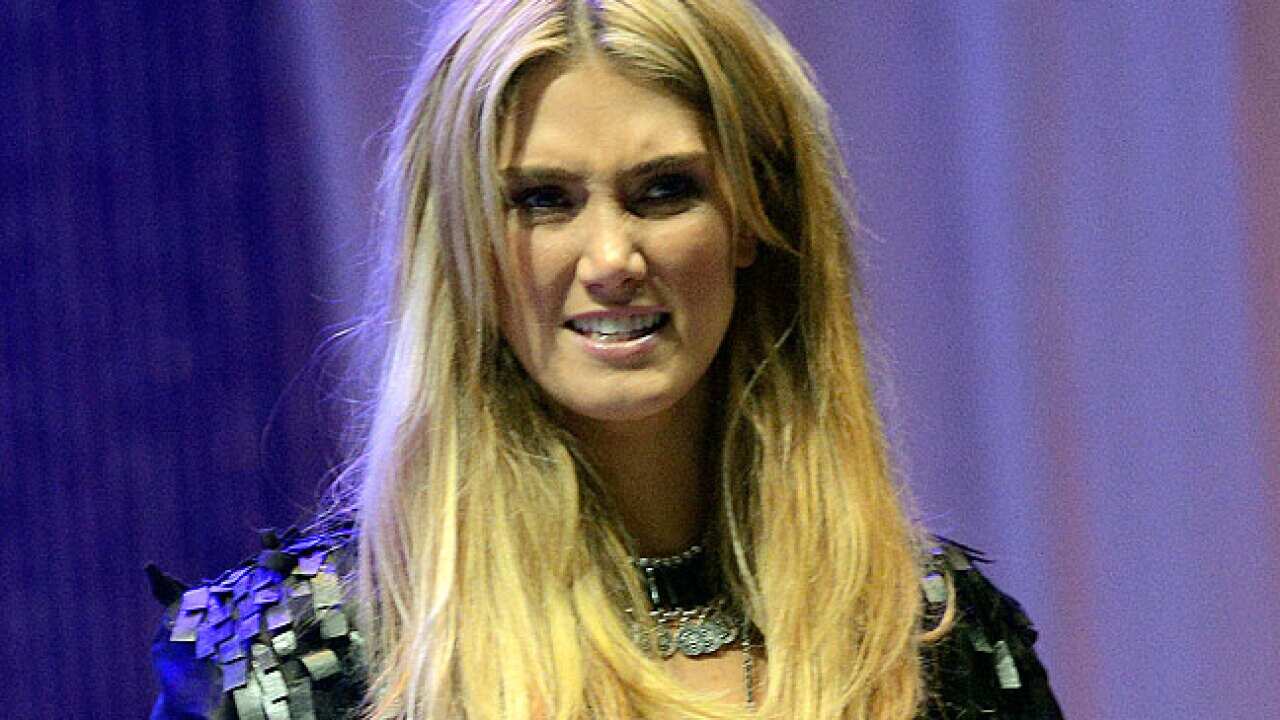
It's 2013 and here we are having a debate about blackface. I had to check the calendar – it is still 2013 right? Yesterday Mia Freedman the founder of the vastly popular mamamia.com wrote an article saying:
"There is a huge difference between painting your face black to mock an entire race and painting yourself black to respectfully dress up as someone who has black skin.[i]" Mia did not go on to fully explain how one respectfully blacks-up. I myself wonder if it is even possible to do so.
Her article was in response to some people in social media accusing Delta Goodrem for being racist because she commented "That's hilarious!" to a photo on Twitter of a group of guys who had dressed up as the judges of The Voice, with one of them blacking up like Seal. Delta Goodrem later apologised and the matter was pretty much put to rest until Mia Freedman came along and said that the word "racist" was being overused. "I worry that by over-using it, we render it almost meaningless," she said.
Mia's article had the undertones of "political correctness gone mad" – an excuse used by many in the past (and present) to garner support for outwardly sexist or racist comments. Can't we all just laugh about it, she seemed to be implying? Much of Australian humour is derived from poking fun at others. We relish in this larrikin image. To have to curb that spirit is almost to deny our Australian-ness.
In times gone past Australians could poke fun at who they pleased and remain blissfully unaware of how their actions may affect others. Even as recently as 2009 when a group of contestants on 'Hey, Hey it's Saturday' blacked up it was left to the American guest judge Harry Connick Jnr to remind not only the contestants but the audience as well that this is unacceptable[ii]. Then in 2011 Qantas encouraged winners of a contest to don blackface[iii], Qantas apologised later of course, but the damage was done. It seems every two years there is a blackface incident and many in Australian society seem to be wondering, what's the fuss? Is our increasing multiculturalism mean that we can no longer make a joke? Of course not. It just means that rather than relying on lazy stereotypes and clichés we have to use wit and intelligence when trying to make people laugh.
Our increasing multiculturalism is ripe-pickings for comedy. Nazeem Hussain and Aamer Rahman, two Australian comedians who first noted that the Delta Goodrem tweet could be seen as racist are also some of the finest comedians in this country. My own favourite comedian Jerry Seinfeld, who has made a vast fortune from his comedy, has a rule to never make jokes about race. It means that his show still remains fresh despite being produced 20 years ago.
As for the fuss, here's a fact – when you blackface up you're immediately casting those of non-white skin as the "other". No person of colour is going to be comfortable viewing someone in blackface. No person of colour is ever going to laugh at it. And I'm not even going to go into the history of blackface – the impact it had on the civil rights movement in the US and the historical connotations in Australia as well – there is a discussion of it here[iv]. So in short, it's 2013, it is no longer acceptable to blackface up. Ever.
But the question remains are we throwing the word 'racist' around willy-nilly? I guess the same question can be asked for sexism. Can a guy at work no longer comment on his female colleague's legs and say that she's got great pins? No. It makes the woman feel uncomfortable, it casts her as an object. This is a base comparison but for some it can help to understand the same stands true when the word racist is said. If something you said makes an outdated assumption or objectifies a person of colour then it's probably racist.
A part of me feels we should not be having this discussion in 2013. We should know better. This debate about racism has been made countless times, but perhaps not so much in our country. Australia in many ways is still trying to catch up to 21st century life – a life that is increasingly dictated by technology. In the past people like myself may have felt angry about people in the media making assumptions on my behalf. We may have been hurt that someone with the media standing of Mia Freedman decides what we should or should not find racist. Now however I have Twitter. I can engage in discourse about race in our society and ensure that such debate is not sidelined as a minority viewpoint. It is in fact a viewpoint held by many Australians.
It is this that encourages me, and another part of me is glad we are having this debate. Many of us still bear scars of the racism we experienced in the past. A white Australian may not be aware of such scars, but by opening up about these experiences we can enable a greater understanding of where we are all coming from. Only then can we move on to a place of healing. And hopefully a couple of years from now we won't be having another debate about blackface.
Share


