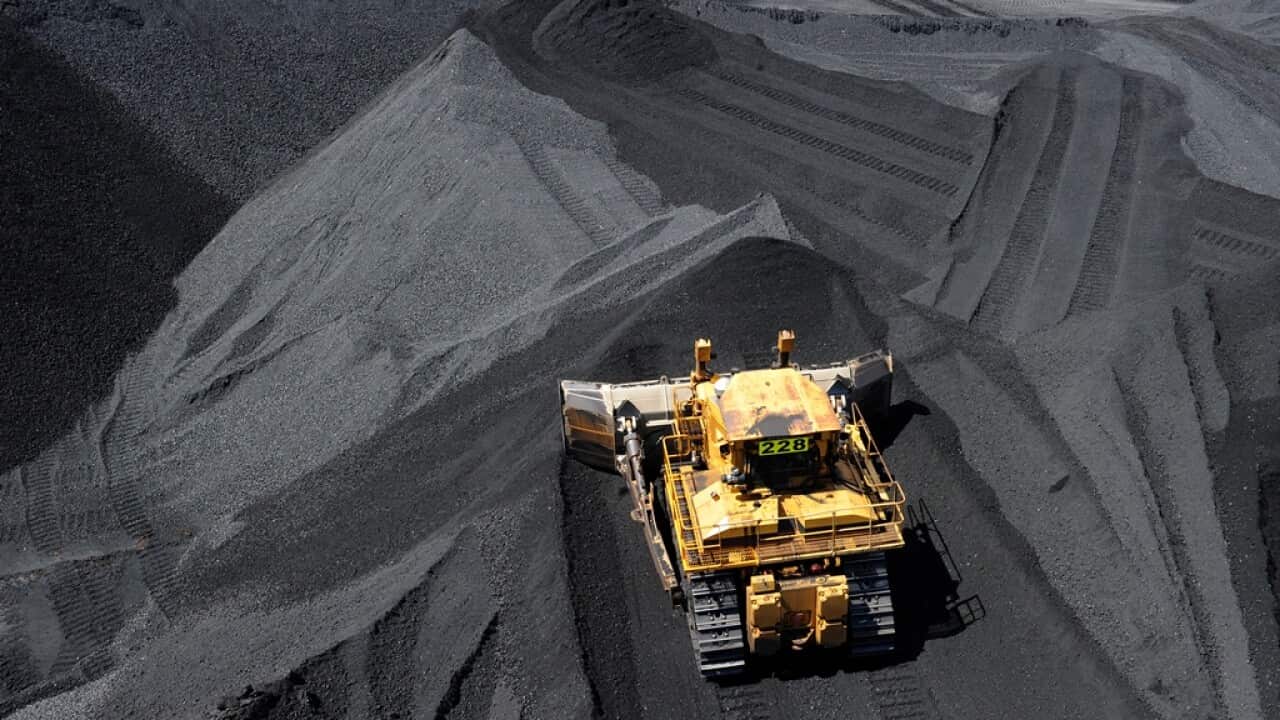
Prime Minister Abbott recently said “Our prosperity rides on the ore and gas and coal carriers steaming the seas to our north, just as surely today as once it rode on the sheep’s back”.
The poetic imagery of steam ships chugging away to distant lands, like a fleet of 19th century maritime horse-and-carts, has an old world charm. But aside from a Prime Minister determined to return to the past, the only thing old world in that voyage is the filthy cargo.
The love of coal is a love of all that is old. And yet we have freed children from the tyranny of labouring in coal mines. Isn’t it about time that we freed our cities and towns from the soot and toxic gases and carbon pollution that devastate our health and land?
Seeking the old coal world, where every man and woman knew their place, conservative politicians and their supporters are suffering from cognitive dissonance of a grand scale.
For a Prime Minister to so singularly back coal over harnessing the energy of the sun and wind there must be more to it than energy alone. Surely the importance of coal is not so great that our conservative politicians will even impede international efforts to grapple with global warming.
News that makes sense
Your trusted source for staying up-to-date with the world around you. Get free daily news updates and analysis, straight to your inbox.
It can’t be the benefits of coal to the economy. For all the talk of mining saving Australia, the reality is far less glowing. Even as coal mining has grown in Australia - and pollution with it - its share of GDP remains at just two per cent, up from 1.3 per cent in 1994. And according to the most recently available ABS data, only about 26,500 people work in coal mining or one quarter of one per cent of national employment.
While coal mining’s share of GDP rose by about 50 per cent between 1994 and 2007, its share of national employment fell by about 10 per cent over the same period. The incredible coal boom we keep hearing about isn’t actually delivering jobs.
Here’s the kicker: we are at the end point of the most employment-heavy part of the mining industry’s life cycle. During the mining boom, companies have been voraciously trying to fence off and set up as many new mine sites as possible. This is known as the ‘expansionary phase’. When the world is hungry for coal, businesses with little care for nature or global warming swoop in to dig it up and send it off. Once the mining industry enters its ‘production phase’ – the digging and shipping – the redundancies start and employment drops.
If it’s not jobs then it must be revenue. But again we are short-changed. The mining industry is around 85 per cent foreign-owned and around 80 per cent of profits are shipped offshore.
In other words, coal mining employs fewer and fewer Australian workers while sending almost all of its profit offshore. For all the talk of economic boom, Australia is getting short-changed.
While may think there were few things more damaging to our future than coal left in the ground, Australian investors have shown they do not want to support toxic, destructive and socially irresponsible businesses like coal mines.
Ordinary investors are increasingly demanding investments that exclude stocks like pornographers, weapons manufacturers, tobacco, uranium and coal. Responsible investment portfolios in Australia cover more than $152 billion. So large is the demand that the number of investment managers offering fossil-free portfolios to clients increased by over 50 per cent in the past year.
According to analysis commissioned by banking giant HSBC, demand for coal is changing, dragging down prices and putting Australia's coal reserves and infrastructure at risk of becoming stranded assets.
So why the focus on coal? The answer may lie in behavioural economics, and the concept of ‘cognitive dissonance’.
Cognitive dissonance is what happens when your brain encounters two things that simply cannot coexist. When the facts don’t fit the narrative. For example despite the proven science that smoking kills a smoker may justify their habit by telling themselves that smoking helps keep their weight in check and that there is a greater threat to their health from being overweight.
Seeking the old coal world, where every man and woman knew their place, conservative politicians and their supporters are suffering from cognitive dissonance of a grand scale.
Global warming stems from the ultimate market failure. Billions of people pursuing their own interests creating an incentive to pollute beyond what our planet can handle, and the solution needs to be imposed on us by an authority which has our nations’ and planet’s interests at heart.
If you’ve spent years believing that the market is unassailable, and then are presented with facts proving its fallibility, something’s gotta give. Easier, then, to believe that global warming is rubbish and that clean energy is a waste of time. The more conservative people invest themselves in this fantasy, the more powerful their belief in it becomes.
And thus, we reach the point we’re at now. Where our Prime Minister pines for an old world full of coal and steam boats, finding collegiality in his Canadian counterpart, while the rest of the world gets down to business slashing pollution and investing in 21st century energy solutions.
Dissonant indeed.
Dugald Murray is a senior economist at the Australian Conservation Foundation. He has spent several years working on climate policy.







