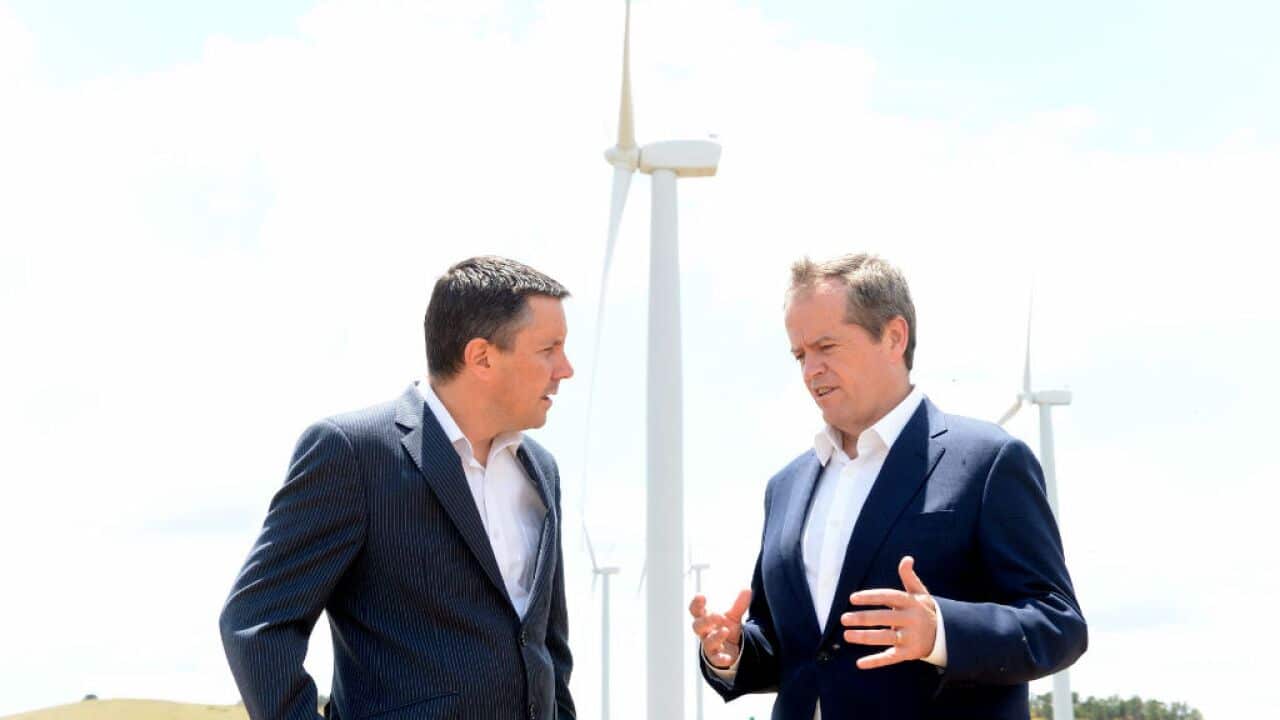
Last week Industry Minister Ian Macfarlane declared the Renewable Energy Target (RET) would remain “untouched” if a compromise deal on the policy could not be reached by the Government, industry and the ALP. Macfarlane’s comments come after a year-long process to cut the target, included repeated failed negotiations with the ALP. His statement opens the question, why is the ALP still negotiating at all?
Since it entered office, the Federal Government has been eagerly trying to cut the federal RET. The Government commissioned noted climate skeptic Dick Warburton to conduct a review of the policy, with Warburton recommending massive cuts to the target. The Government has refused some of Warburton’s more radical proposals, but has since been looking to reduce the large-scale component of the RET from its current target of having 41,000 GWh of installed renewable energy by 2020 to around 27,000 GWh. Research has found this would result in a loss of $8 billion dollars from the industry as well as thousands of jobs.
From a party of noted renewable energy skeptics these moves are somewhat unsurprising. What is odd though is why the ALP, who claim they want to ‘protect the RET’, have joined in on the party. In October last year the ALP formally entered negotiations with the Coalition, agreeing to allow a full exemption for the aluminium industry from the RET. In December the Opposition went even further, agreeing to a compromise position put forward by the Clean Energy Council which would cut the large-scale component of the RET to 35,000 GWh by 2020.
Opposition leader Bill Shorten last year said the party “agreed to engage in discussions on the basis that the government doesn’t try and wreck the renewable energy target.” Yet it seems like their very position is already having that impact. The uncertainty around the negotiations have lead to a significant slump in investment in renewable energy in Australia. 2014 saw a drop in investment of 70% based on 2013 levels, with renewable energy figures stating the sector was “paralysed” by the negotiations. By October last year only $238 million had been invested in renewable projects, putting Australian investment levels below countries such as Algeria, Myanmar, Thailand and Uruguay. Evidence presented at a Senate Estimates hearing last year said the negotiations had put back the industry by twelve years.
It is not as if the ALP’s policy will change much of this. A cut to 35,000GWh would have a huge impact. Analysis shows it could result in a loss of $4 billion in investment, as well as 4,000 job losses.
News that makes sense
Your trusted source for staying up-to-date with the world around you. Get free daily news updates and analysis, straight to your inbox.
What Macfarlane’s recent comments show is this is all completely unnecessary. If the ALP were negotiating to avoid even deeper cuts implemented by the Coalition and members of the cross bench that would be one thing, but its clear that is not going to happen. Both the Greens and the Palmer United Party have stayed firm in their opposition to any cuts, making it near impossible for the Coalition to pass anything without the ALP. It is for that reason the Coalition are engaging almost solely with the Opposition. If they could have found cross bench support they would have likely already done so.
The ALP has the opportunity to save the RET. Macfarlane has already made it very clear. A collapse in negotiations will lead to the continuation of the current policy — a return to certainty for the sector and a high level of investment for years to come. The window is wide open. If the ALP wants to ‘protect the RET’ then all they need to do is back off.
Simon Copland is a freelance writer and climate campaigner. He is a regular columnist for the Sydney Star Observer and blogs at The Moonbat.







