Australians travelling to Iraq or Syria could be guilty of a crime under the new terrorism laws announced by Prime Minister Tony Abbott on Tuesday.
Australians with family in those countries, such as Hosam Alzamily, told SBS they’re worried about the proposed legislation could mean for them.
Mr Alzamily came to Australia from Iraq 18 years ago and had planned to visit his family there in September.
He said he’s concerned that on his return he could find himself having to prove he wasn’t involved in any fighting.
“What do they need from me to prove that I have visited my family in the south of Iraq?” he said.
“I visit my sister there, my family there, you know?”
It will be up to individuals to convince authorities that they were in war zones for family or humanitarian reasons.
“I live with my family in peace here and my kids they've grown there and they've got good jobs there so we feel like we are happy but we need to go and see my family, like people who come from America go back to his home, England, same,” Mr Alzamily said.
“What is different between us and them?”
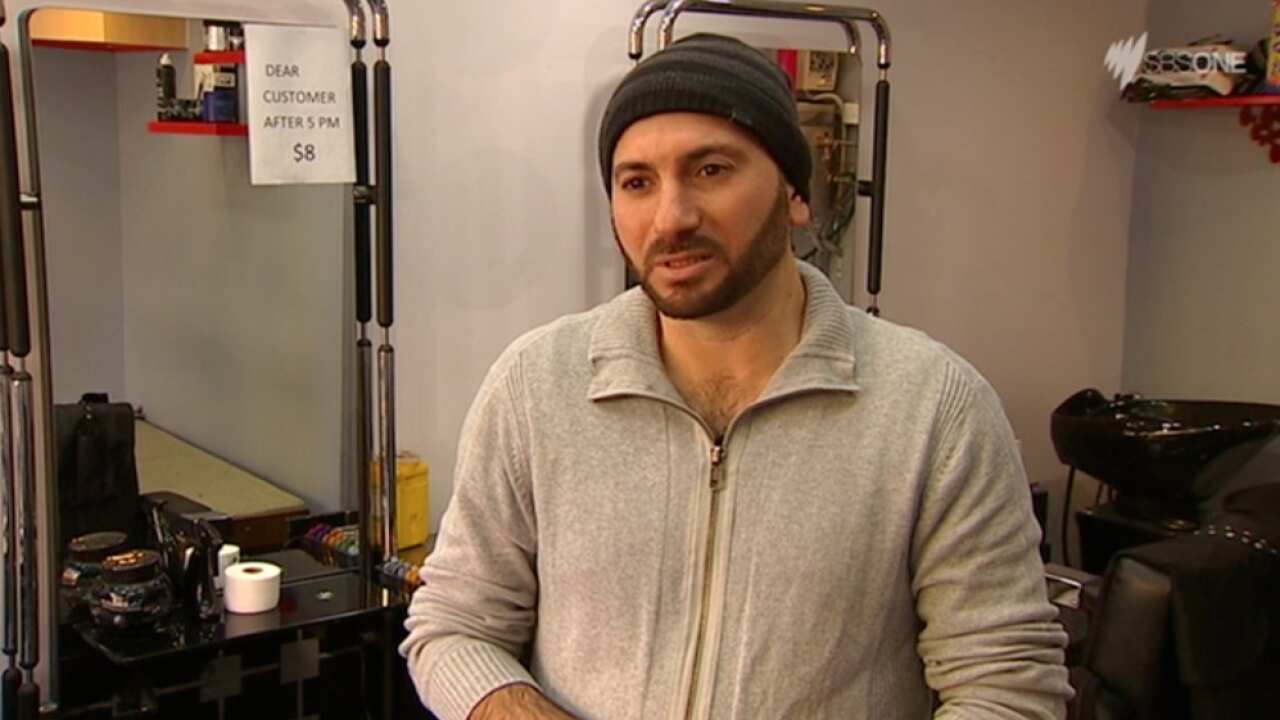
It is a similar story for barber Esan Mouali, who moved to Sydney from Baghdad 15 years ago.
He said his family is still there.
“If I want to go and visit my family, because all my family is in Iraq, I have to prove to the government here that I am going to visit my family or another family matter,” he said.
“I believe it is a bit hard and difficult to prove it.”
The government is yet to reveal what proof would be required for travellers to be able to establish their innocence or the range of penalties for those who travel for illegitimate purposes.
Security measures will also be tightened for anyone travelling overseas and airlines will be asked to provide advance passenger information for screening.
Facial recognition and biometric screening will used to scan everyone leaving the country.
Share


