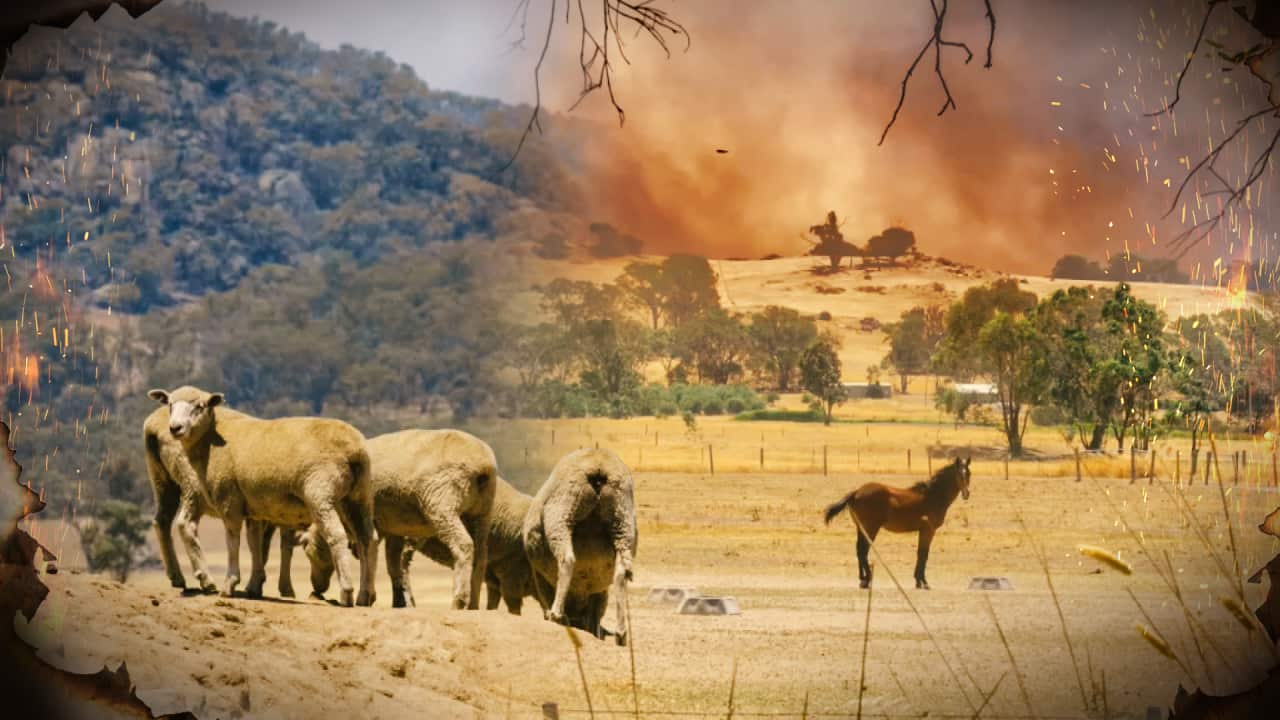
As bushfires continue to burn across Victoria, forcing families from their homes and destroying property, concerns are also mounting for animals feared injured or killed.
At least 390,000 hectares of Victoria have been burnt and more than 350 structures damaged, and police have confirmed the first death in the fire zone, a man yet to be formally identified.
Two major bushfires are expected to burn for weeks, which has locals worried about the well-being of animals across the state.
Shelley Stafford, a wildlife carer and shelter owner in regional Victoria, estimated that millions of wildlife could be killed by the fire, smoke and habitat destruction.
It is difficult to determine how many animals are killed in bushfires. One study funded by WWF Australia, following the Black Summer fires of 2019–20 — among the worst in Australia's history — estimated around three billion animals were killed or displaced.
News that makes sense
Your trusted source for staying up-to-date with the world around you. Get free daily news updates and analysis, straight to your inbox.
Researchers at Charles Sturt University, however, wrote in 2022 that many animals are likely to survive the immediate passage of a typical fire, with the greatest threats emerging in the aftermath as food and shelter disappear. But they also cautioned there was limited data on how wildlife survives catastrophic megafires, such as those seen during Black Summer.
The post-fire environment also concerns Stafford, who says animals may be displaced, while others return to burned habitats with little or no food.
"The animals will come out over the next couple of weeks. Then … it'll get worse," Stafford told SBS News.
Treating animals 'as best we can'
Stafford had been caring for a variety of species, including wombats and falcons, which were suffering from smoke inhalation and burns. The bush near her property in Buxton, north-east Melbourne, has a dense forest and tree canopy, which is "very good" for wildlife, but leaves and tree litter can also spread fires.
"If something bad happens, it can be fatal," she said.
"When I did the drive around today, it was horrendous. A lot of deceased wildlife."
Other animals with severe injuries have been euthanised, including a nearby paddock of sheep. She said she hasn't been able to leave her property to take injured animals to the vet.
"We can triage and try to attend to them as best we can. And then as soon as we can, we get them to a vet," she said.
"Hopefully, we can help them and get them assistance sooner now because some roads have reopened."
Concerns for livestock
Extreme weather also presents challenges for farmers and livestock owners.
Paul Long Cheng, associate professor in livestock nutrition and grazing management at the University of Melbourne, said fires and heatwaves can disrupt the supply of food.
"After bushfires, grazing can become limited for weeks or even months, meaning that livestock must rely almost entirely on fodder," he said.
"These risks are amplified when extreme events occur across multiple regions altogether at once, limiting the ability to source fodder from unaffected areas."
Producers can typically rely on different regions to balance food shortages, but that buffer is becoming "less reliable".
"Recent decades have seen an increase in the frequency and intensity of extreme heat, and it has become a less predictable event," he said.
"Planning protected fodder reserves ahead of extreme weather is one of the most practical and effective ways to safeguard livestock welfare under current and future conditions."
Stafford said regional communities would be leaning on each other for support.
"We have a small wildlife group in our area that we all connect through."
"Hopefully, if people come across injured wildlife or their own injured animals, if they make a call, we'll try and get them some help."
For the latest from SBS News, download our app and subscribe to our newsletter.







