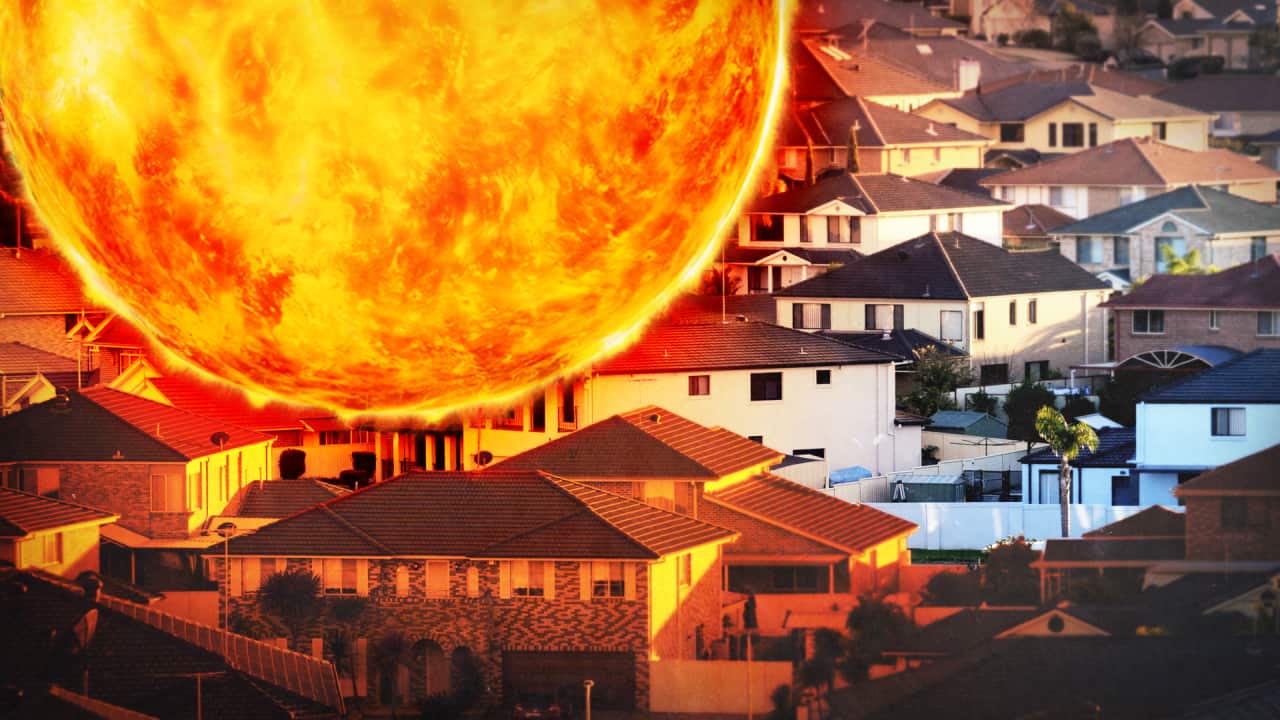
Parts of the country have been sweltering through a heatwave that's set to continue in Sydney this weekend, with temperatures of around 42C expected on Saturday.
But urban heat is not distributed equally. In some parts of Sydney — particularly the western suburbs, where temperatures during heatwaves can be several degrees higher than in the east — the forecast for Saturday is even warmer.
The impacts of heat inequality are exacerbated during a heatwave. So why do some suburbs experience that heat more acutely, and can anything be done about it?
Why is it hotter in some suburbs than others?
While western Sydney is frequently cited as an example of geographical heat inequality, similar dynamics can be observed in other parts of the country, such as Melbourne and Adelaide, with inland suburbs experiencing heatwaves more intensely than their coastal counterparts.
News that makes sense
Your trusted source for staying up-to-date with the world around you. Get free daily news updates and analysis, straight to your inbox.
Riccardo Paolini is an associate professor at UNSW's School of Built Environment. He said a combination of factors leads to some parts of a city being more vulnerable to heat than others.
In Sydney's case, he said the primary factor driving higher temperatures in the west compared to the coast during heatwaves was advection, hot air flowing from inland areas, blocking cooling sea breezes from reaching western suburbs.
"During a heat wave, this hot front penetrates farther and farther, up to the inner west, and therefore you have a greater prevalence of the heat wave over the western suburbs," he told SBS News.
This is compounded by the 'urban heat island' effect, in which urban areas are significantly warmer than rural areas due to the high density of hard surfaces, like buildings and roads that retain more heat than greener spaces.
These include pavements made of asphalt and concrete and dark roofing on houses and other buildings, combined with insufficient vegetation, green space and shade, particularly around homes.
"These very, very dark surfaces heat the air like the bottom of a pot heats the water when you're cooking pasta," Paolini said.
Why does it matter?
This increased vulnerability can have varied and significant effects on the individual and broader society, and can overlap with populations that experience socio-economic disadvantage, such as western Sydney.
Ollie Jay is a professor of heat and health at the University of Sydney.
He told SBS News that while there are areas that get hotter temperatures, often amplified by the built environment, it's also important to consider populations with higher vulnerability.
"So you've got people there that are more vulnerable to that level of heat stress," he said.
"People who are older, people who have a chronic disease, often people who don't have access to air conditioning, or all three of those things put together."
According to advocacy group Sweltering Cities, renters and low-income households are more likely to live in homes that don't provide good natural insulation or cooling, nor have access to cooling options such as air conditioning.
"A lot of people who are most vulnerable to the heat actually don't have access to air conditioning," Jay said.
Paolini said there was a correlation between high outdoor temperatures and physical activity, and that at a certain threshold, people simply stay at home or other indoor spaces that are cool.
"There's the effects of spending more money for electricity, bills for those who have air conditioning," he said.
"There's the sleep divide between coastal areas and inland areas, where people living in western suburbs have poorer sleep quality because of extreme heat during this period.
"It's getting worse over time."
One of the ways heat inequality is most acutely felt is when it comes to health.
"If we just think about the hospital cases [during a heatwave], both mortality and morbidity, then what we really see is that all of those numbers are massively amplified in people who are elderly … and people who have chronic diseases such as heart disease, kidney disease," Jay said.
Jay pointed out that beyond heat-related deaths, there were many other negative impacts below the surface when it came to negative health outcomes.
"You've got these other things that are happening inside the body when you get hot. It's not just your high body temperature. It's the fact that your heart has to work a lot harder to keep cool when you're exposed to the heat," he said.
"If you've got heart disease, that makes you much more susceptible to a heart attack. If you've got kidney disease, you're at much greater risk of kidney failure if you have dehydration. It's really quite complex and deep, broad impacts on human health and wellbeing across the lifespan."
As it stands, urban heat equality is set to intensify as the effects of climate change become more severe — with ocean temperatures continually rising and even less cooling sea breezes.
Paolini said Australian heatwaves are starting to more closely resemble those in Europe, which have excess heat-related mortality during extended heatwaves.
"So they don't have [temperatures of] 48C, as in Penrith, but they have eight days in a row when the night temperature doesn't drop below 28C or 30C, or even 32C in some cities. If you don't have air conditioning, this means that you cannot sleep, and then people who already have pre-existing medical conditions are exposed," he said.
"It's looking to a not-so-nice future for us, because urbanisation is increasing, density is increasing. With poor planning, that's where we are headed."
What can be done?
In Sydney’s west, there's been a growing push to plant more trees and increase tree canopy coverage to combat the urban heat island effect and reduce the impact of heatwaves.
Paolini said that while councils have focused on increasing the targets for tree canopy coverage, "in reality it's decreasing, because a lot of new developments, these urban sprawl developments, they chop off every tree and then they put out a few broomsticks without any room for the roots to grow".
"After 10 years, the tree is still a broomstick," Paolini said. "This means that the tree is not casting shadow over the street, and this means that the asphalt is absorbing a lot of solar radiation that then is dissipated by convection, so warming up there ... People want bigger houses, and this is eating up the space for the tree roots. That's a reality."
More broadly, Paolini pointed to projects like the Greater Sydney Heat Smart City Plan — led by council and contributed to by several research groups — aiming to mitigate extreme heat impacts across the region.
However, he said a lot of governance structures are fragmented, despite the problem being regional.
"So even if you put all your best landscaping and all the best urban planning in one council area, it will improve the situation, but it's like operating the air conditioning with the windows open."
Paolini said positive steps included a decrease in dark roofing as, since 2022, the National Construction Code included provisions for a minimum level of solar reflectance for new houses built. There's also a maximum solar absorptance — the amount of solar heat a roof takes in — of 64 per cent for new housing.
"It's a good start. The problem is, what do we do with what has already been built over the previous 50 years?"
Jay said it was vital that steps be taken to mitigate the "steady march" of climate change, such as decarbonising the economy and committing to the end of mass fossil fuel use.
"There's warming that's baked into the climate system that we're going to feel the effects for the next 30 years, at least, even if we were to stop using fossil fuels today," he said.
"So we've got to think about how we adapt.
“We can think about the way that buildings are built, making sure there's better glazing, there's fans installed, that you haven't got direct sunlight coming in. Better exterior blinds, better insulation in walls and roofs. These are the types of adaptations that reduce the amount of heat that gets into the indoor environment from the hot weather outside.”
For the latest from SBS News, download our app and subscribe to our newsletter.







