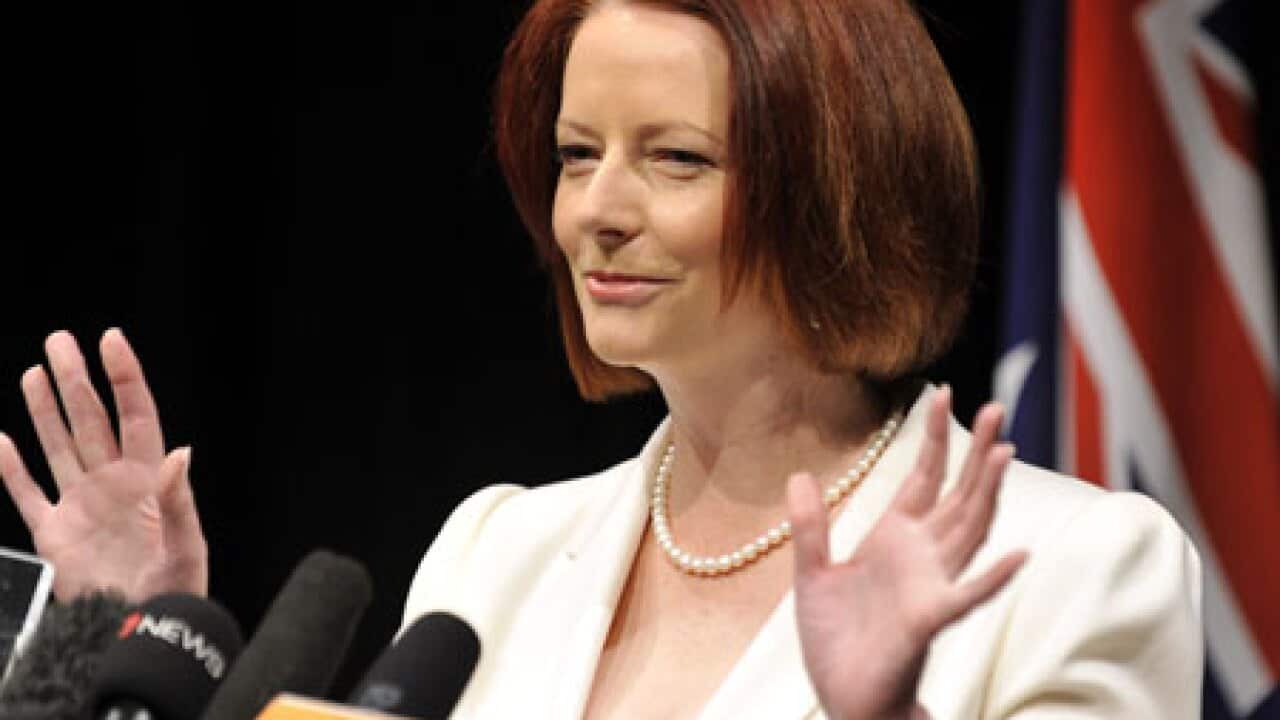
Although political leaders say faith is not relevant, SBS has discovered some Christians are urging the churches to rise up in response to the PM's admission that she is not religious.
Prime Minister Julia Gillard conceded she was not a 'religious person' and declared she would not 'pretend' to be for the sake of votes, but said she respected the beliefs of others.
SBS has obtained a notice posted on the Salvation Army's internal online bulletin board, written by a Toowoomba member but bearing no name.
Telemation graphic from Salvos bulletin board headed as an 'urgent call to prayer' the notice says members 'have all been alarmed at the sudden change of Prime Minister in our Country' and are 'concerned that Julia Gillard has openly declared she doesn't believe in God'.
It goes on to suggest that politically, morally and religiously the nation 'is in deep trouble'.
News that makes sense
Your trusted source for staying up-to-date with the world around you. Get free daily news updates and analysis, straight to your inbox.
'The sleeping giant must wake', it says. 'We MUST pray and declare the counsel of God'.
A Salvos spokeswoman says the organisation is apolitical and that doesn't represent its - or all members' - views.
Carol Price, from Sydney's World Day of Prayer Committee, says her community is talking about it. She believes faith is important.
"If they have strong moral values yes they can be effective and they can be very productive, but that core belief in something outside of yourself gives you a different dimension altogether," Ms Price told SBS.
Earlier today, Perth Archbishop Barry Hickey said Ms Gillard's atheism could influence Christian voters not to vote Labor at the August 21 poll.
"This is not an attack on one person. It's just a concern that faith and lack of faith do have consequences," he said.
Ms Gillard said she was someone who respected the religious views of others.
"In terms of the work that the Catholic church does, that other churches and religious groups do in our society I am a big respecter," she told reporters in Melbourne.
"And my history has been to be a big supporter." In her former role as education minister, Ms Gillard said she had worked respectfully with the Catholic education community.
"That's the approach I will continue to take as prime minister," she said, adding Labor had delivered record capital investment in the Catholic education system.
Mr Abbott, a Catholic who once studied to join the priesthood, distanced himself from Archbishop Hickey's comments.
"I'm not going to comment on anything that may have been said by any churchmen," he told reporters in Melbourne.
"I think that we should respect people's private religious views.
"I think that every contender and candidate in this election should be judged on competence and policies, not personal beliefs or religious convictions."
Mr Abbott said the coalition had no plans to change the tax status of charities, including church groups.
"I think that would inevitably hinder the good work that they do," he said.
Mr Abbott's religious bent could be a vote clincher but Archbishop Hickey said he would not seek to influence his flock on which way to vote.
"Some will undoubtedly vote for Mr Abbott because they appreciate his strong Christian faith," he said.
"We have church lobbies, mostly in Sydney and Canberra, that urge both major parties to protect the activities of the church, such as our huge education sector and our welfare sector."
Archbishop Hickey later clarified his comments on ABC Radio in Perth, saying he had made the comments to The West Australian three weeks ago.
"It mightn't have been expressed as well as I would have liked but I wasn't attacking Julia.
"I think she's declared herself, she's honest, she said she would respect religious beliefs and I think that's all good."
But Archbishop Hickey said he did have a problem with a secularist view that was growing in Europe and pushing religious views aside.
"Long term I am concerned about a secularist viewpoint." Archbishop Hickey said it was not his intention to influence voters to vote one way or another.







